
 8 Min Read
Junk food has become a regular part of many modern diets. Fast food meals, packaged snacks, sugary drinks, and highly processed foods are convenient and widely available. However, frequent consumption of these foods can have a serious impact on health. The harmful effects of junk food are not limited to weight gain. They can affect the heart, liver, digestive system, mental health, and overall energy levels.
Understanding junk food and its harmful effects is the first step toward making smarter choices for long-term well-being. Many junk foods are high in sugar, unhealthy fats, sodium, and artificial additives. At the same time, they often lack essential nutrients such as fibre, vitamins, and minerals. It is increasingly clear that junk food is harmful to health in ways that go far beyond the weighing scale. Over time, this nutritional imbalance can lead to several chronic health problems. Recognising the effects of junk food on health can help people make better dietary choices and protect their long-term wellbeing.
Synopsis
- What Makes Junk Food Harmful?
- What’s in Junk Food and Why It Is Harmful
- 10 Harmful Effects of Junk Food
- How Junk Food Affects Different Body Systems
- Special Focus: Effects of Junk Food on Children and Teenagers
- Junk Food and Children: Possible Risk
- How to Reduce Junk Food Intake
- Healthy Alternatives to Popular Junk Foods
- When Should You See a Doctor?
- Conclusion
What Makes Junk Food Harmful?
Junk food is usually made using highly processed ingredients. These foods are designed to taste appealing but often provide very little nutritional value. They may contain excess sugar, refined carbohydrates, trans fats, and high amounts of salt. These components can disrupt the body’s natural metabolic balance when consumed regularly.
What’s in Junk Food and Why It Is Harmful
|
Component |
Common Sources |
Possible Health Risk |
|
Trans fats |
Fried foods, packaged snacks |
Heart disease and high cholesterol |
|
Refined sugar |
Soft drinks, desserts, candy |
Diabetes, obesity, and tooth decay |
|
Excess sodium |
Chips, instant noodles, fast food |
High blood pressure and kidney strain |
|
Artificial additive |
Processed meats, flavoured drinks |
Gut imbalance and inflammation |
|
Empty calories |
Most processed snacks |
Nutritional deficiency and fatigue |
These ingredients contribute to many junk food health risks when consumed frequently.
10 Harmful Effects of Junk Food
-
Weight Gain and Obesity
-
Type 2 Diabetes
-
Heart Disease and High Cholesterol
-
High Blood Pressure
-
Digestive Disorders
-
Fatty Liver Disease
-
Mental Health Problems
-
Cognitive Decline and Memory Problems
-
Skin Problems
-
Nutritional Deficiencies and Chronic Fatigue
1. Weight Gain and Obesity: Junk food is usually high in calories but low in nutrients. Regular intake can lead to excessive calorie consumption. Over time, this may result in weight gain and increase the risk of obesity.
2. Type 2 Diabetes: Sugary beverages and processed foods can cause rapid spikes in blood sugar levels. Frequent spikes may lead to insulin resistance. This increases the risk of developing type 2 diabetes.
3. Heart Disease and High Cholesterol: Many fast foods contain saturated fats and trans fats. These fats can raise low density lipoprotein cholesterol levels in the body. High cholesterol is a major risk factor for heart disease and stroke.
4. High Blood Pressure: Junk foods often contain large amounts of sodium. Excess sodium can raise blood pressure levels and place additional strain on the heart and blood vessels.
5. Digestive Disorders: Most processed foods lack fibre. A diet low in fibre may lead to digestive problems such as constipation, acid reflux, and irritable bowel symptoms. It may also disrupt the balance of healthy gut bacteria.
6. Fatty Liver Disease: Excess sugar and unhealthy fats can cause fat to accumulate in the liver. This may lead to non-alcoholic fatty liver disease. If not managed early, it can progress to serious liver complications.
7. Mental Health Problems: Recent research suggests that diets high in ultra-processed foods may affect brain health. High intake of junk food has been linked to symptoms of depression, anxiety, and mood changes.
8. Cognitive Decline and Memory Problems: Poor dietary habits may also affect brain function. Excess sugar and unhealthy fats can impact concentration, memory, and overall cognitive performance over time.
9. Skin Problems: Highly processed foods may trigger inflammation in the body. This can worsen skin conditions such as acne and dullness. Diets high in sugar may also accelerate skin ageing.
10. Nutritional Deficiencies and Chronic Fatigue: When junk food replaces balanced meals, the body may not receive enough essential nutrients. This can lead to deficiencies in vitamins and minerals. As a result, people may experience fatigue, poor immunity, and reduced overall health.
How Junk Food Affects Different Body Systems
The impact of junk food extends to several organs and systems in the body.
|
Body System |
Key Effect |
Associated Condition |
|
Cardiovascular |
Raises LDL cholesterol |
Heart disease and stroke |
|
Endocrine |
Blood sugar spikes |
Type 2 diabetes |
|
Digestive |
Disrupts gut microbiome |
IBS, constipation |
|
Liver |
Fat accumulation |
Non-alcoholic fatty liver disease |
|
Brain |
Alters dopamine response |
Mood changes and cravings |
|
Skin |
Inflammation |
Acne and dull skin |
Special Focus: Effects of Junk Food on Children and Teenagers
Children and adolescents are particularly vulnerable to the effects of junk food on health. During growth years, the body needs balanced nutrition to support physical and mental development. Excess junk food intake can interfere with this process.
Junk Food and Children: Possible Risk
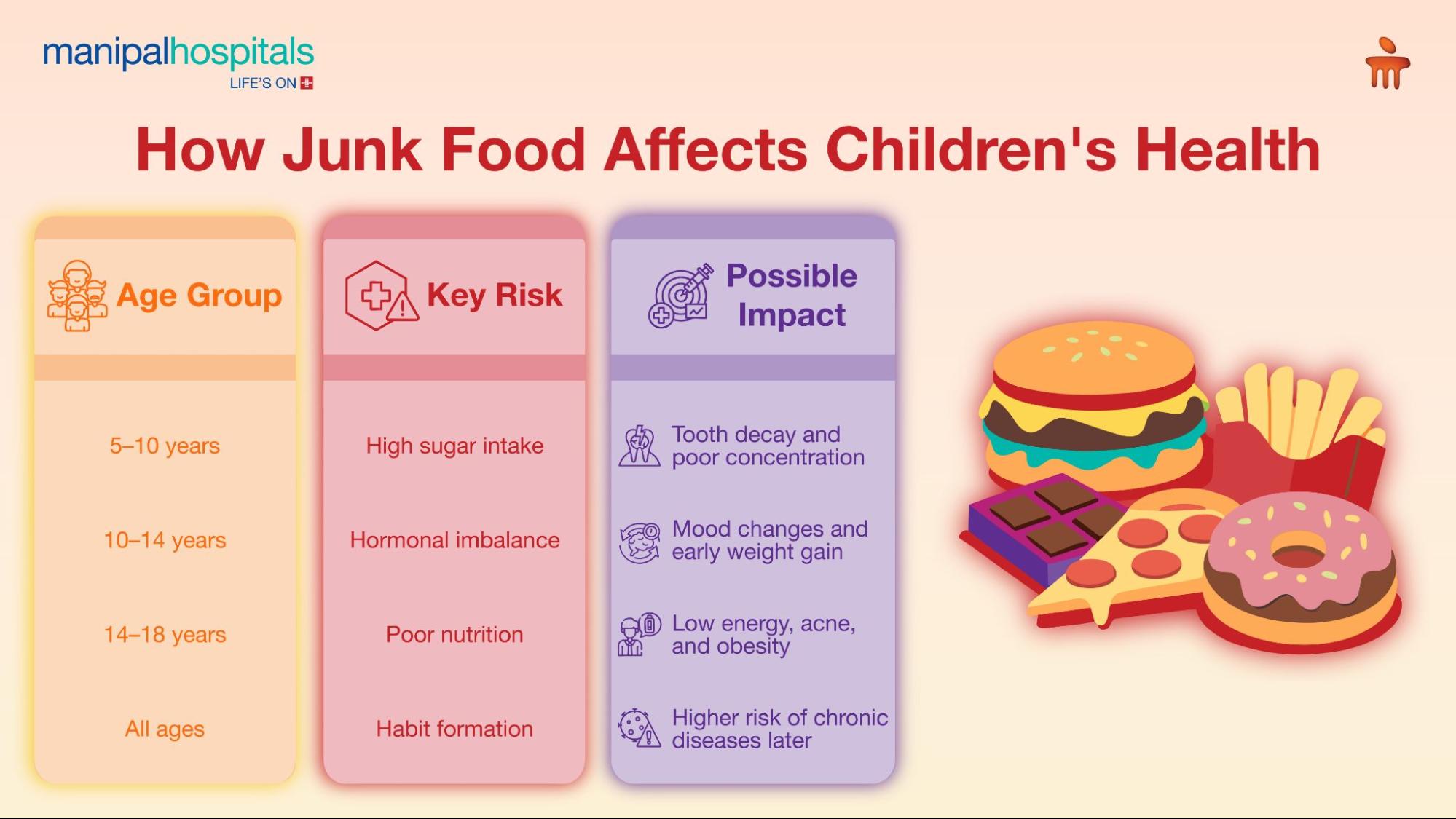
Children and teenagers are especially vulnerable to the harmful effects of junk food. Here is how it impacts different age groups:
-
Ages 5–10: High sugar intake from candies, soft drinks, and snacks can lead to tooth decay and poor concentration in school.
-
Ages 10–14: Frequent junk food consumption may trigger hormonal imbalances, contributing to mood changes and early weight gain.
-
Ages 14–18: Poor nutrition during teenage years can result in low energy levels, acne, and increased risk of obesity.
-
All ages: Perhaps most importantly, early junk food habits are hard to break and can significantly raise the risk of chronic diseases like diabetes and heart disease later in life.
Encouraging balanced eating habits from a young age is one of the most effective ways to protect long-term health.
How to Reduce Junk Food Intake
Making small changes in daily habits can help reduce dependence on junk food. A balanced diet that includes whole foods supports long term health.
Here are some practical steps:
-
Choose home-cooked meals whenever possible
-
Replace sugary drinks with water, coconut water, or lemon water
-
Eat fruits, nuts, and seeds instead of packaged snacks
-
Read food labels to check sugar and salt content
-
Plan meals in advance to avoid unhealthy choices
-
Maintain regular meal timings to reduce cravings
Consulting a qualified nutritionist can also help develop a personalised diet plan.
Healthy Alternatives to Popular Junk Foods
Simple swaps can make meals healthier without compromising taste.
|
Junk Food Craving |
Healthier Alternative |
Benefit |
|
Potato chips |
Roasted makhana or nuts |
High fibre and protein |
|
Soft drinks |
Coconut water or lemon water |
Natural hydration |
|
Instant noodles |
Vegetable poha or oats |
More fibre and nutrients |
|
Chocolate bars |
Dark chocolate |
Lower sugar and antioxidants |
|
Fried snacks |
Baked vegetable cutlets |
Lower fat intake |
When Should You See a Doctor?
Frequent consumption of unhealthy foods may lead to symptoms that should not be ignored. It may be helpful to consult a healthcare professional if you experience:
-
Unexplained weight gain
-
Persistent fatigue
-
High cholesterol levels
-
Digestive discomfort
-
Rising blood sugar levels
Early medical advice can help prevent long-term complications and improve overall health.
Conclusion
Junk food may be convenient and appealing, but frequent consumption can have serious health consequences. The harmful effects of junk food can impact multiple organs and increase the risk of chronic diseases over time. Choosing balanced meals, limiting processed foods, and maintaining healthy eating habits can support long-term well-being.
If you are concerned about your diet, weight changes, or lifestyle-related health issues, you can book an appointment with a nutritionist at Manipal Hospitals. They can help you make informed choices and build a healthier eating routine.
FAQ's
Junk food is bad because it is high in sugar, unhealthy fats, sodium, and artificial additives while offering little to no nutritional value. Regular consumption can lead to obesity, heart disease, diabetes, digestive issues, and even mental health problems over time.
The 5 harmful effects of junk food include weight gain and obesity, increased risk of type 2 diabetes, high cholesterol and heart disease, poor digestive health, and nutritional deficiencies leading to chronic fatigue. These effects can worsen significantly with frequent consumption.
Research suggests that diets high in ultra-processed foods may influence mood and brain function. Poor dietary patterns may increase the risk of anxiety, depression, and reduced concentration.
Excess junk food intake in children can lead to obesity, poor concentration, dental problems, and nutritional deficiencies. It may also increase the risk of chronic diseases later in life.
Eating junk food occasionally is generally acceptable when part of a balanced diet. However, regular consumption should be avoided to reduce long term health risks.
Daily consumption of junk food may increase the risk of obesity, diabetes, heart disease, fatty liver disease, and digestive disorders.
Share this article on: