
 5 Min Read
Seizures are more common than many people realise. According to the WHO, nearly 10% of people worldwide experience at least one seizure during their lifetime. Around 50 million people globally live with epilepsy, a condition characterised by recurrent seizures.
Seizures can occur suddenly and may be frightening to witness. Whether caused by epilepsy or other medical conditions, knowing how to respond calmly can make a significant difference.
Understanding simple seizure first aid steps can help prevent injury and keep the person safe until the seizure passes, allowing bystanders to respond confidently and effectively.
Synopsis
What Happens During a Seizure?
A seizure occurs when there is a sudden surge of abnormal electrical activity in the brain. This can temporarily affect how a person moves, behaves, feels, or responds to their surroundings.
Seizures may occur due to several reasons, including -
-
Epilepsy
-
Head injuries
-
Brain infections or tumours
-
Stroke
-
Poisoning
-
High fever in children (febrile seizures)
-
Low blood sugar or metabolic imbalances
-
Alcohol withdrawal
-
Certain medications
Seizures can vary widely in appearance and severity. Some cause noticeable shaking and loss of consciousness, while others may involve brief staring spells or unusual movements.
Common Signs and Symptoms of a Seizure
The symptoms of seizures may vary depending on the type of seizure and the area of the brain involved.
Common symptoms include:
-
Sudden loss of consciousness
-
Uncontrolled jerking or shaking of arms and legs
-
Stiffness of the body
-
Blank staring or unresponsiveness
-
Confusion after the episode
-
Drooling or difficulty speaking
-
Sudden falls
Some people may experience warning signs known as an aura, such as unusual smells, sensations, or feelings, before the seizure begins.
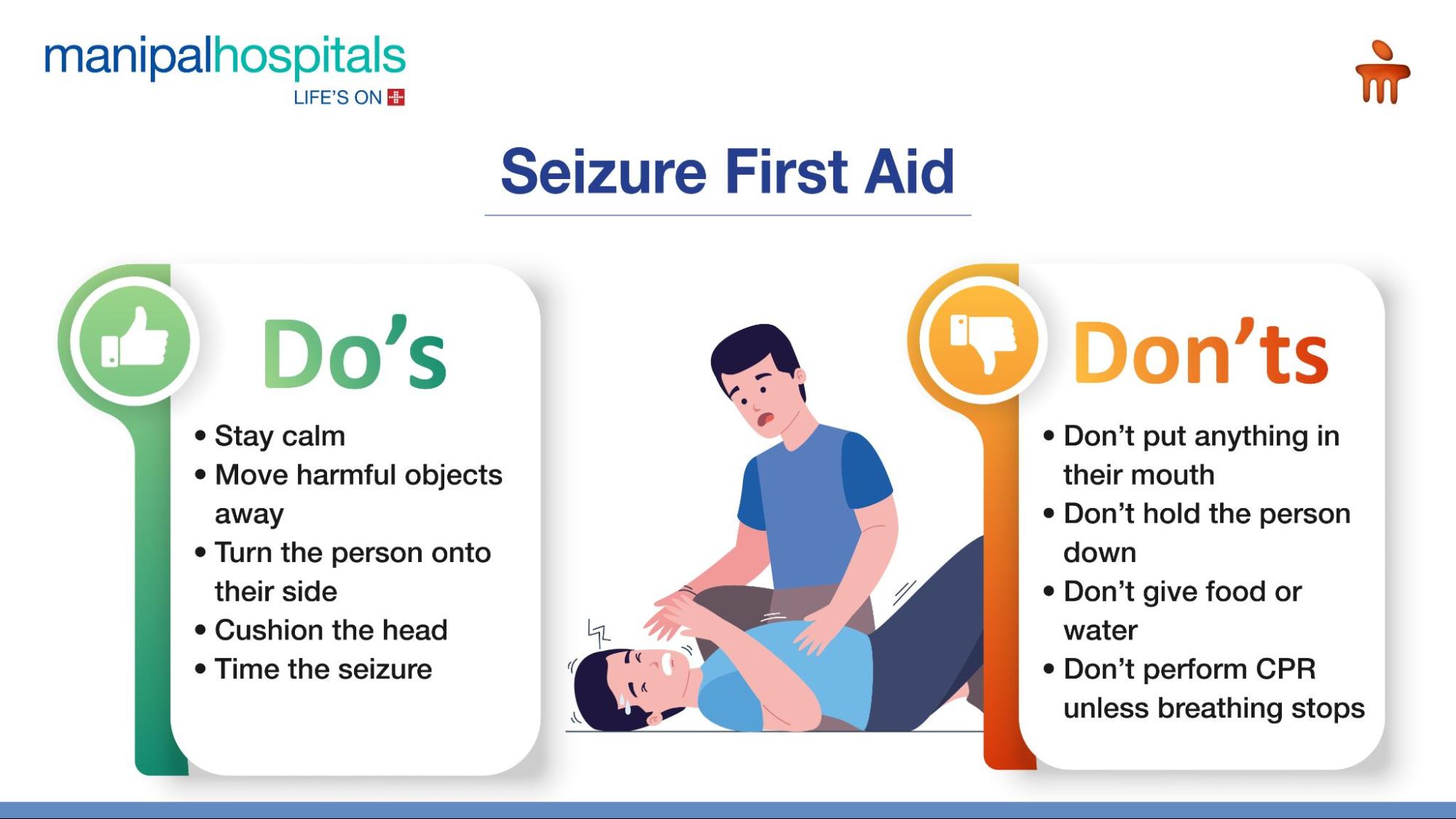
Seizure First Aid: What to Do
Knowing the first aid management of seizures can help prevent injury and keep the person safe until the episode stops.
-
Stay Calm and Ensure Safety: Remain calm and stay with the person. Move sharp or hard objects away that could cause injury during involuntary movements.
-
Gently Turn the Person on Their Side: If possible, gently turn the person onto their side to help keep the airway clear and reduce the risk of choking on saliva or vomit.
-
Cushion the Head: Place something soft, such as a folded cloth or jacket, under the person's head to protect it from impact.
-
Loosen Tight Clothing: Loosen tight collars, ties, or clothing around the neck to make breathing easier.
-
Note the time of the Seizure: Most seizures last 30 seconds to two minutes. If the seizure continues for more than five minutes, seek emergency medical help immediately.
These steps form the core of first aid treatment for seizures and help reduce the risk of injury until professional medical care is available.
What Not to Do During a Seizure
Avoid the following actions:
-
Do not put anything in the person’s mouth: A person cannot swallow their tongue, and forcing objects into the mouth can cause injury.
-
Do not restrain the person’s movements: Holding them down may lead to muscle or bone injuries.
-
Do not offer food, water, or medication during the seizure: Wait until the person is fully alert, as giving anything earlier may cause choking.
-
CPR is not usually required: Perform CPR only if the person does not start breathing after the seizure ends.
Allow the seizure to run its course while ensuring the person remains safe.
What to Do After a Seizure
Once the seizure stops, the person may feel confused, tired, or disoriented.
You can help by:
-
Keeping them in the recovery position (lying on their side)
-
Speaking calmly and reassuring them
-
Explaining what happened once they regain awareness
-
Allowing them to rest
Staying with them until they are fully alert and helping them get home safely if the seizure occurred outside.
When To Seek Emergency Medical Help
Immediate medical attention is necessary if:
-
The seizure lasts longer than five minutes
-
Another seizure occurs soon after the first
-
The person has difficulty breathing or waking up after the seizure
-
The seizure occurs in water
-
The person is injured during the seizure
-
It is the first known seizure the person has experienced
-
The person is pregnant or has diabetes
Prompt medical care helps identify underlying causes and prevents complications.
Conclusion
Witnessing a seizure can be distressing, but knowing the correct response can make a vital difference. Simple seizure first aid steps, such as protecting the person from injury, placing them on their side, and staying calm, can help keep them safe.
Understanding seizure response helps caregivers, teachers, and community members act confidently during emergencies. At Manipal Hospitals, experienced neurologists provide comprehensive care for seizure disorders and epilepsy, helping patients achieve better seizure control and quality of life.
FAQ's
No. Seizures can occur due to many reasons, such as infections, head injuries, high fever, or metabolic problems. Epilepsy is diagnosed when a person experiences recurrent, unprovoked seizures.
Most seizures last 30 seconds to two minutes and stop on their own. If a seizure lasts longer than five minutes or repeats without recovery in between, seek emergency medical help.
No. It is common for a person to feel sleepy, confused, or disoriented after a seizure. Allow them to rest and recover while keeping them on their side and monitoring their breathing and overall condition.
Yes. Many people with epilepsy can successfully control seizures with anti-seizure medications prescribed by a neurologist. With proper diagnosis, regular medication, and follow-up care, many patients can lead active and normal lives.
Stay calm, protect the person from injury, and turn them onto their side if possible. Do not put anything in their mouth, and stay with them until the seizure stops. Seek medical help if the seizure lasts longer than five minutes.
Share this article on: