
 5 Min Read
Could a tiny stone in your gallbladder silently put your health at risk? Many people believe that only large gallstones are harmful, but even small stones can sometimes move into the bile ducts and cause serious complications. Understanding which size of gallbladder stone is dangerous can help patients recognise symptoms early and seek timely treatment.
Gallstones (cholelithiasis) are hardened deposits that form inside the gallbladder. This article explains how gallstones are classified by size, the complications different stones may cause, common symptoms, and when surgery may be recommended.
Synopsis
Gallbladder Stone Size: What the Numbers Mean
Gallstones can vary greatly in size, ranging from a few millimetres to several centimetres. Doctors often categorise gallstones by size to better understand their potential behaviour and risk of complications.
-
Small stones: less than 5 mm
-
Medium stones: 5–20 mm
-
Large stones: greater than 20 mm
In rare cases, gallstones may grow larger than 3–4 cm, which is among the largest sizes reported clinically.
Which Gallstone Sizes Are Most Dangerous?
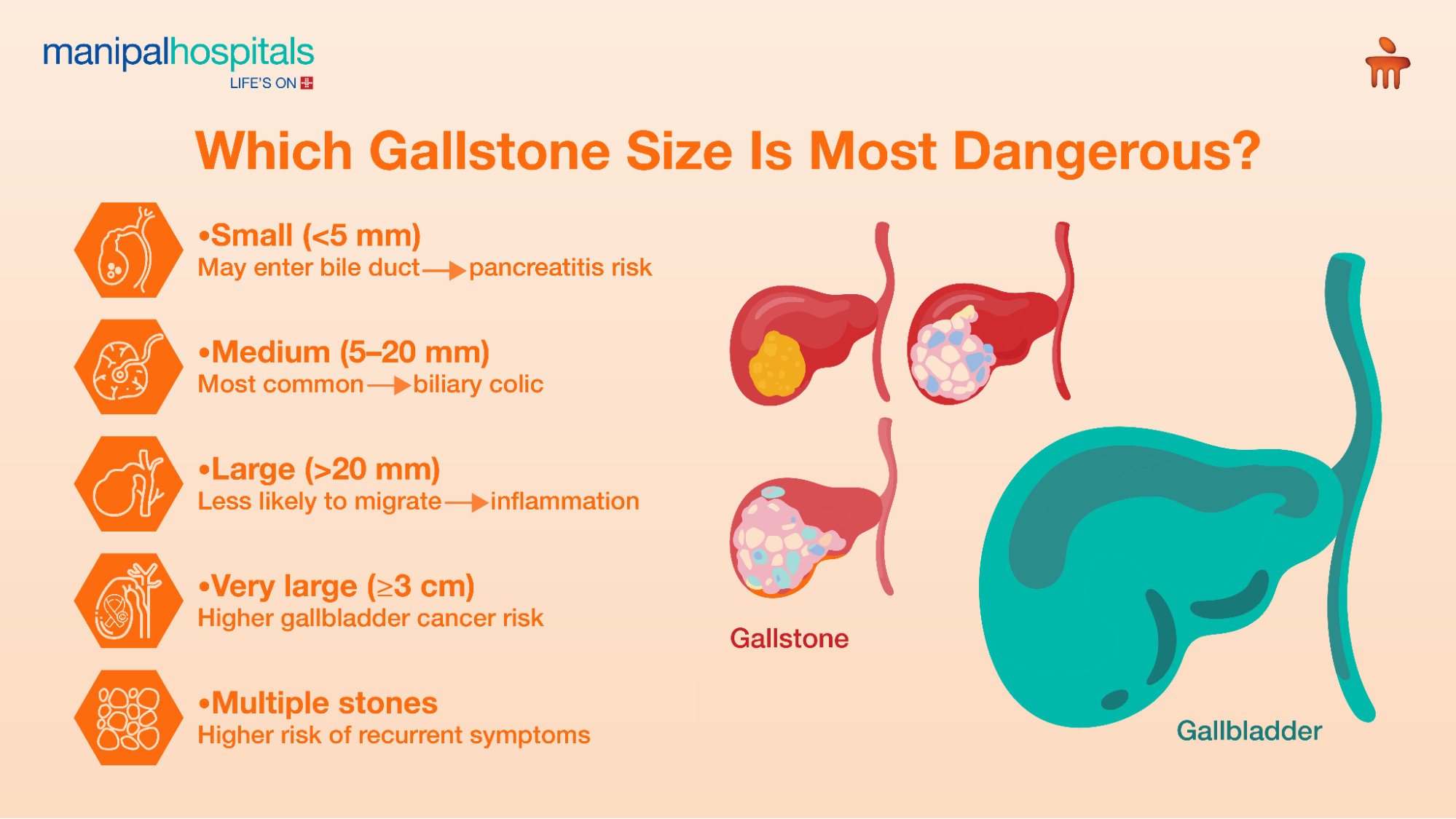
No gallstone size is completely safe. The risk of complications depends on stone size, the number of stones, and whether symptoms are present.
-
Less than 5 mm: Small stones can more easily pass into the bile duct and may cause bile duct obstruction, jaundice, or acute pancreatitis.
-
5–20 mm: These stones most commonly cause symptomatic gallstone disease, including biliary colic and acute cholecystitis.
-
Greater than 3 cm: Gallstones larger than 3 cm have been associated with a higher risk of gallbladder carcinoma, although the overall risk remains low.
-
Multiple stones (any size): Having multiple stones may increase the likelihood of recurrent symptoms or bile duct blockage.
Symptoms of Gallbladder Stones
About 80% of gallstones remain asymptomatic and may be discovered incidentally during imaging tests. When symptoms occur, they may include:
Sudden, severe pain in the upper right abdomen (biliary colic)
-
Nausea and vomiting
-
Fever or chills
-
Jaundice (yellowing of the skin and eyes)
-
Dark urine and pale stools
-
Bloating or discomfort after eating fatty foods
Seek immediate medical attention if severe abdominal pain occurs along with fever or jaundice, as these may indicate a serious complication.
How Are Gallstones Diagnosed?
Gallstones are usually diagnosed through imaging tests and clinical evaluation. Common diagnostic methods include:
-
Abdominal ultrasound - the most commonly used test for detecting gallstones
-
CT scan or MRI - may be used in certain cases to evaluate complications or unclear findings.
-
MRCP (Magnetic Resonance Cholangiopancreatography) - a specialised MRI scan used to detect stones in the bile ducts.
-
Blood tests - may help detect infection, inflammation, or bile duct obstruction.
Early diagnosis helps doctors determine whether monitoring, medication, or surgery is required.
When Is Surgery Recommended for Gallbladder Stones?
Doctors do not consider only the gallbladder stone size for surgery. They also evaluate symptoms, possible complications, the number of stones, and the patient’s overall health.
Surgery may be recommended in the following situations:
-
Symptomatic gallstones (any size): Laparoscopic cholecystectomy, a minimally invasive procedure to remove the gallbladder, is the most common treatment for patients who experience symptoms.
-
Large asymptomatic stones (≥ 3 cm): Preventive surgery may sometimes be considered because larger stones have been associated with a slightly increased risk of gallbladder cancer.
-
Patients with diabetes: For patients with diabetes, surgery may be advised earlier if symptoms develop, as complications can progress more rapidly.
-
Emergency complications: Conditions such as acute cholecystitis, pancreatitis, or cholangitis require urgent medical treatment and may need emergency surgery regardless of stone size.
Conclusion
Gallstones of every size can carry some level of risk. Small stones may migrate into the bile ducts and cause pancreatitis, while larger stones may contribute to chronic inflammation of the gallbladder. Knowing which size of gallbladder stone is dangerous helps guide timely treatment decisions and appropriate care.
If you experience symptoms such as persistent abdominal pain, nausea, or jaundice, seek medical evaluation promptly. Early diagnosis and appropriate treatment can help prevent serious complications and improve long-term digestive health.
At Manipal Hospitals, the Gastroenterology Department offers comprehensive care for gallstone disease, including detailed evaluation, advanced diagnostics, and personalised treatment plans.
FAQ's
Any gallstone causing symptoms such as severe abdominal pain, fever, or jaundice requires prompt medical evaluation and surgical review. Asymptomatic stones larger than 3 cm may also be considered for preventive removal.
Gallstones can occasionally grow up to 3–4 cm or more in rare cases. Larger stones are associated with chronic gallbladder inflammation and may carry a small increased risk of gallbladder cancer.
Yes. Stones smaller than 5 mm can sometimes move into the bile duct, which may lead to complications such as bile duct blockage or pancreatitis. Medical evaluation and monitoring are recommended.
Some small cholesterol stones may dissolve with medications such as ursodeoxycholic acid (UDCA), although treatment can take months, and recurrence is common. Laparoscopic gallbladder removal remains the most definitive treatment for symptomatic gallstones.
People with gallstones are often advised to avoid high-fat foods, fried items, full-fat dairy products, and refined sugars, as these can trigger gallbladder contractions and pain. A balanced, low-fat, high-fibre diet is generally recommended.
Share this article on: