 5 Min Read
Imagine experiencing the worst headache of your life, far more intense than a typical headache. Within minutes, vision blurs, speech slurs, and confusion sets in. These early symptoms of brain haemorrhage are often ignored, but every minute of delay increases the risk of permanent brain damage.
A brain haemorrhage is life-threatening and a leading cause of mortality and disability. Globally, one in four people over the age of 25 will experience a stroke in their lifetime. Intracerebral haemorrhage accounts for over 28% of all incident strokes, with 23% of cases occurring in people aged 15–49 years and more than 68% in people under 70 years of age.1
Recognising the brain haemorrhage symptoms early can save brain cells, preserve function, and improve survival. This blog explains what a brain haemorrhage is and the critical brain bleed symptoms everyone should know.
Synopsis
What Is a Brain Haemorrhage?
A brain haemorrhage is a type of stroke that occurs when a weakened blood vessel in or around the brain ruptures. The rupture causes bleeding that damages the surrounding brain tissue. This bleeding increases pressure inside the skull, reduces oxygen supply, and rapidly disrupts essential brain functions.
There are several types of brain haemorrhage, depending on where the bleeding occurs:
-
Intracerebral haemorrhage (bleeding inside brain tissue)
-
Subarachnoid haemorrhage (bleeding around the brain)
-
Subdural haemorrhage (bleeding between the brain surface and skull covering)
Severity varies depending on the brain haemorrhage causes. Many people remain unaware of risk factors until a sudden rupture occurs.
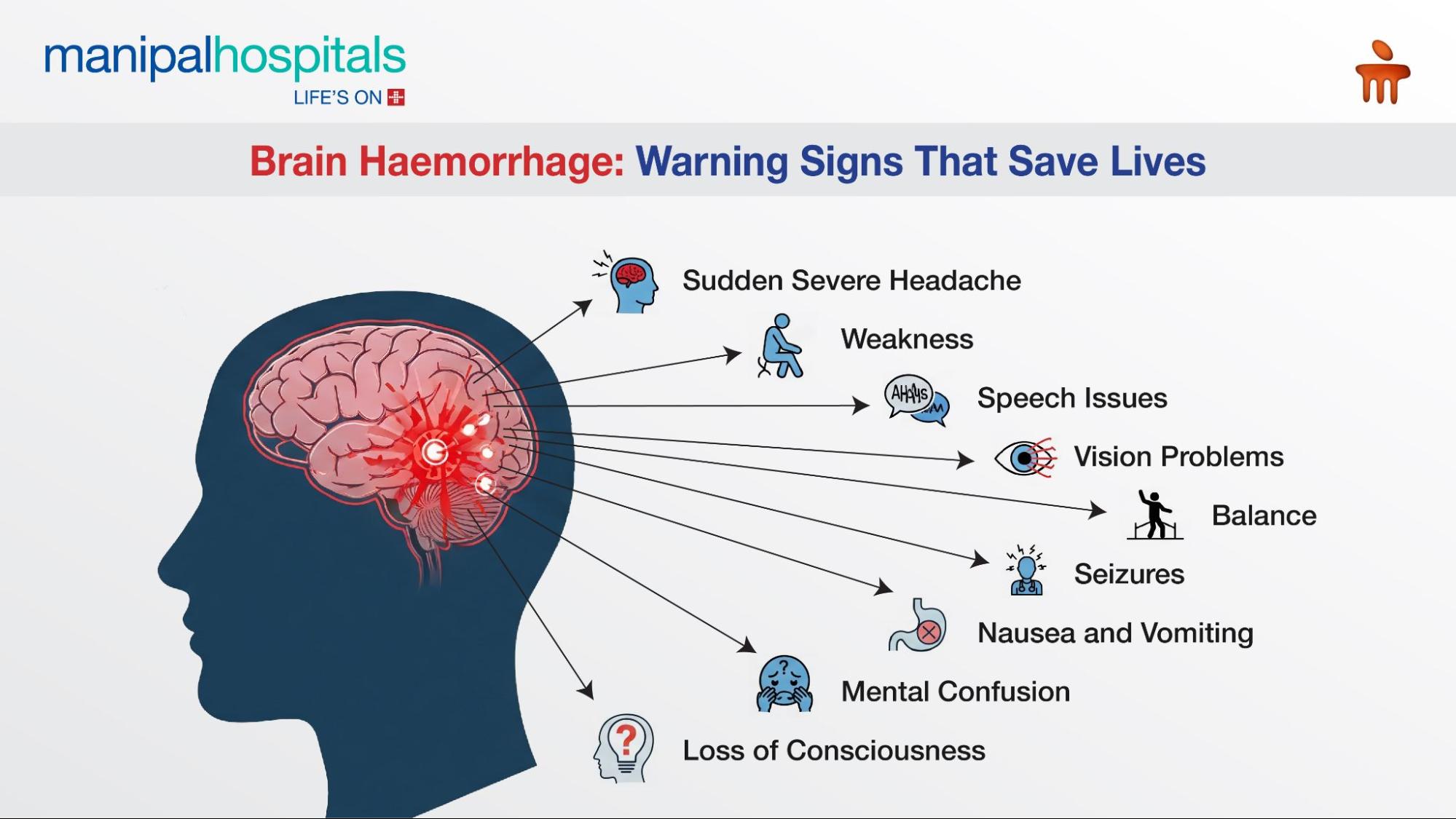
Critical Warning Signs of Brain Haemorrhage
The brain haemorrhage symptoms can appear suddenly and worsen quickly, making early detection crucial.
-
Sudden Severe Headache - Often described as a “thunderclap headache”, this is a classic sign, especially in subarachnoid haemorrhage. It may feel like a sudden, violent burst of pain that peaks instantly.
-
Weakness or Numbness - Unexplained weakness on one side of the body or facial drooping may indicate a neurological problem. Inability to move an arm or leg is also a warning sign.
-
Speech Issues - Difficulty speaking, understanding language, slurred speech, or sudden confusion may indicate disrupted brain function.
-
Vision Problems - Sudden blurred vision, double vision, or vision loss may occur in one or both eyes, depending on the affected brain area.
-
Balance - Dizziness, difficulty walking, loss of balance, or collapsing can signal a brain bleed.
-
Seizures - Occasionally, a seizure can occur in someone without a history of epilepsy, indicating a major red flag.
-
Mental Confusion - Mental disorientation, such as difficulty staying alert or remembering recent events, may indicate serious neurological distress.
-
Nausea and Vomiting - Increased pressure inside the skull often triggers vomiting alongside a headache.
-
Loss of Consciousness - In severe cases, a person may faint or slip into a coma.
Other symptoms may include neck stiffness, light sensitivity, breathing difficulty in severe cases, or loss of sensation or coordination.
Remember the acronym BE FAST to spot warning signs:
B – Balance: Sudden loss of balance
E – Eyes: Sudden vision changes
F – Face: Face drooping or uneven smile
A – Arms: Arm weakness
S – Speech: Speech difficulty
T – Time: Time is critical
Call emergency services immediately if you notice any of these signs and note when the symptoms first started.
Brain Haemorrhage Treatment: Why Time Is Critical
Brain haemorrhage treatment depends on the size, location, and cause of the bleed. The primary goal is to stop bleeding, reduce pressure, and protect brain tissue.
Treatment may include:
-
Emergency medications to control blood pressure
-
Drugs to reduce brain swelling
-
Reversal of blood thinners
-
Surgical interventions to remove blood or repair vessels
-
Intensive monitoring in a neurological ICU
-
Rehabilitation therapy after stabilisation
The earlier treatment begins, the greater the chance of survival and recovery.
Conclusion
A brain haemorrhage is a medical emergency where hesitation can be life-threatening. The symptoms of brain haemorrhage may appear suddenly or subtly, but they should never be ignored. Acting quickly can prevent permanent brain injury, reduce disability, and significantly improve survival. If you suspect a brain bleed in yourself or someone else, seek emergency medical help immediately.
At Manipal Hospitals, rapid diagnosis and advanced brain haemorrhage treatment can make the difference between recovery and irreversible damage. When it comes to brain haemorrhage, every second truly matters.
FAQ's
The first symptom is often a sudden, extremely severe headache described as the worst headache of one’s life. It may appear instantly and be accompanied by nausea, confusion, vision changes, or weakness, signalling an urgent medical emergency requiring immediate care.
Brain haemorrhage causes include uncontrolled high blood pressure, head trauma, ruptured aneurysms, blood clotting disorders, vascular malformations, and use of blood-thinning medications. Lifestyle factors such as smoking and substance abuse can also increase the risk of a rupture.
Yes, brain haemorrhage treatment is possible and often life-saving when started quickly. Emergency care may involve medications, surgery, and intensive monitoring. Early intervention reduces brain damage, improves survival rates, and increases the chances of meaningful neurological recovery.
Recovery time varies depending on the size and location of the bleed, age, and overall health. Some people recover within weeks, while others require months of rehabilitation. Long-term therapy may be needed to regain speech, movement, and cognitive function.
Yes, symptoms can sometimes develop gradually, particularly in subdural haemorrhage or smaller intracerebral bleeds. A person may experience increasing headache, confusion, weakness, or balance problems for hours or days. Even slow-progressing brain bleed symptoms are dangerous and should prompt urgent medical evaluation.
Share this article on: