8 Min Read
A sudden sting followed by sharp pain can quickly turn an ordinary moment into a worrying situation. Scorpions are commonly found in warm regions and often hide in places like shoes, piles of wood, or dark corners of homes and gardens. While many stings cause only temporary discomfort, some can trigger stronger reactions that affect the body beyond the sting site. When that happens, understanding how the scorpion sting affects the body, recognising warning signs early, and knowing what actions to take can make a significant difference in preventing complications.
This blog explains the symptoms to watch for, the first aid steps that can help immediately after the sting, and the medical treatments doctors may use when symptoms become severe.
Synopsis
- What Is a Scorpion Sting?
- Which Scorpions Are Dangerous in India?
- How Scorpion Venom Affects the Body
- Symptoms of a Scorpion Sting
- First Aid for Scorpion Sting
- Medical Treatment for Scorpion Stings
- Antivenom: The Antidote for Severe Stings
- Preventing Scorpion Stings
- When to Seek Emergency Medical Care
- Conclusion
What Is a Scorpion Sting?
Scorpions use the stinger at the end of their tail to inject venom when they feel threatened or are accidentally touched. The venom injected by these stingers contains certain poisons that overstimulate your nervous system and affect multiple essential body functions.
There are certain factors that increase the severity of the sting:
-
Species of the scorpion
-
Quantity of venom injected
-
Health and age of the individual
-
Location of the sting
Children and old people tend to react more severely than healthy adult individuals.
Doctors also check the pulse rate and heart rate, blood pressure, and breathing patterns to detect early signs of complications caused by the venom.
Which Scorpions Are Dangerous in India?
India is home to over 90 species of scorpions. The one we worry about most is the Indian Red Scorpion (Hottentotta tamulus), found in Maharashtra, Karnataka, Tamil Nadu, Kerala, Rajasthan, Madhya Pradesh, Gujarat, and Andhra Pradesh.
This scorpion carries venom that affects the heart and lungs. A sting from this species, especially in a child, is a medical emergency.
How Scorpion Venom Affects the Body
The venom injected by these stingers has certain neurotoxins that act on the nerve cells and overstimulate your nervous system. This overstimulation makes your body release more stress hormones, such as adrenaline, affecting your heart rate, blood pressure, and breathing, and also makes your body restless and sweat profusely.
Doctors observe these changes carefully. Monitoring pulse vs. heart rate helps determine whether the heart is functioning normally after the sting. If the pulse detected in the arteries does not match the electrical rhythm of the heart, differences between heartbeats vs. pulse rate may become noticeable.
Another parameter sometimes examined in medical evaluation is heart rate vs pulse pressure, which provides insight into how effectively blood is circulating through the arteries.
This understanding of physiological responses enables healthcare providers to quickly identify the severity of the sting and start the treatments immediately.
Symptoms of a Scorpion Sting
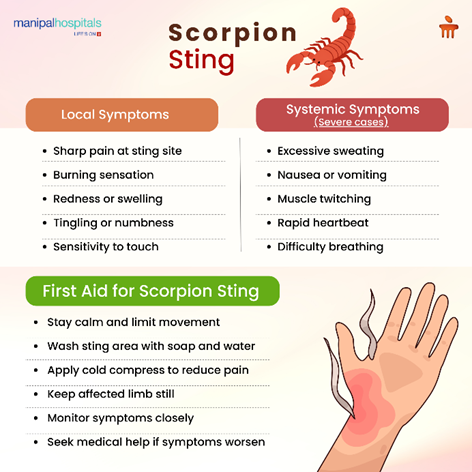
The sting of a scorpion can lead to mild or more serious effects on the whole body. These symptoms are divided into two categories: local and systemic effects.
Local Symptoms
The majority of stings produce symptoms in the area of the sting, which include:
-
Sharp pain
-
Burning pain
-
Redness of the area
-
Tingling
-
Numbness around the area of the sting
-
Sensitivity to touch
These symptoms appear within a few minutes and may improve over a few hours.
Systemic Symptoms
In some situations, venom spreads through the bloodstream and affects other organs. Possible symptoms include:
-
Excessive sweating
-
Nausea or vomiting
-
Muscle twitching or restlessness
-
Rapid heartbeat
-
Difficulty breathing
Gastrointestinal Symptoms
In some cases, venom can affect the digestive system. Symptoms may include:
-
Abdominal pain
Autonomic Symptoms
Severe venom reactions can also affect the body’s automatic functions. Symptoms may include:
-
Excessive sweating
-
Increased salivation
-
Uncontrollable shivering or chills
During hospital observation, clinicians monitor pulse rate vs heart rate closely. They may also compare heartbeat vs. pulse rate to detect irregular heart rhythms. If circulation becomes unstable, analyzing heart rate and blood pressure helps determine whether additional treatment is necessary.
First Aid for Scorpion Sting
First aid right away can help with pain and lower the risk of problems until professional help is available.
Steps that are suggested are:
-
Stay calm: Anxiety may increase heart rate and spread venom faster through the body.
-
Clean the sting site: Wash the area with soap and water to reduce infection risk.
-
Apply a cold compress: Ice wrapped in a cloth can help reduce pain and swelling.
-
Limit movement: Keeping the affected limb still may slow venom circulation.
-
Observe symptoms carefully: Seek medical help immediately.
Medical Treatment for Scorpion Stings
The medical treatment for scorpion stings varies according to the body’s response to the scorpion’s venom. Most cases of mild scorpion stings require observation and pain relief, but in moderate and severe cases, patients are taken to hospitals for further medical treatment. Because the clinical manifestations of scorpion envenomation and the severity of the symptoms vary among patients, it is advised to seek medical help in all cases.
The medical treatment for scorpion stings varies according to the body’s response to the scorpion’s venom. Most cases of mild scorpion stings require observation and pain relief, but in moderate and severe cases, patients are taken to hospitals for further medical treatment. Because the clinical manifestations of scorpion envenomation and the severity of the symptoms vary among patients, it is advised to seek medical help in all cases, and consulting top accident and emergency care doctors Manipal Hospital Sarjapur Road can ensure prompt and appropriate treatment.
Pain Management
Doctors may prescribe pain relief medication for those who are experiencing a lot of pain at the point of the sting.
Monitoring Vital Signs
Patients with severe symptoms are monitored for a few hours. The doctors keep track of the patients’ blood pressure, respiration rate, and heart rate regularly to check the stability of cardiovascular functions.
Doctors can tell if blood flow matches the heart's electrical activity by comparing the pulse vs heart rate.
Medications
Depending on symptoms, doctors may prescribe:
-
Antihistamines to reduce allergic reactions
-
Sedatives to control agitation or muscle spasms
-
Blood pressure medication if circulation becomes unstable
Treatment for Severe Cases
Patients with moderate to severe symptoms are often kept under observation in the hospital. Doctors monitor heart rhythm using an ECG, track blood pressure changes, and watch for breathing difficulties. Intravenous fluids, oxygen support, medications to control blood pressure, and drugs that calm nerve overstimulation may be used depending on the symptoms. Antivenom is indicated for treatment of severe envenomation.
Recovery
Mild symptoms often improve within a few hours. However, systemic reactions may require hospital monitoring for 24-48 hours. Children and elderly patients sometimes need longer observation.
Antivenom: The Antidote for Severe Stings
Antivenom is considered the most effective treatment for severe scorpion stings. Antivenom is injected into the bloodstream and works best for patients who are treated early. This is the reason why antivenom is recommended by medical practitioners for patients who begin to experience severe heart and brain problems. This is more so for children, who are short and whose immune system requires that they be treated early.
Before giving antivenom, doctors and nurses carefully check the clinical signs to see how bad the reaction is and how to best treat it.
Preventing Scorpion Stings
When it comes to prevention, you might not be able to completely avoid scorpions, but there are things you can do to greatly lower your risk of getting stung. Some steps you can take to avoid problems are:
-
Check shoes and clothing before wearing them
-
Avoid walking barefoot outdoors at night
-
Seal cracks in walls or floors where scorpions may hide
-
Keep homes and gardens free from debris
-
Wear gloves when gardening or handling firewood
These simple habits can help minimise accidental encounters.
When to Seek Emergency Medical Care
Many scorpion stings are not that serious, but you should never ignore some signs. If someone has any of the following symptoms, they need to see a doctor right away:
-
Severe or worsening pain
-
Breathing difficulties
-
Muscle twitching or convulsions
-
Persistent vomiting
-
Rapid or irregular heartbeat
-
high blood pressure followed by sudden drop
When such symptoms appear, doctors evaluate the patient carefully. If abnormalities appear in the cardiac, neurological, or respiratory evaluation, then advanced treatment or antivenom therapy may be required.
Conclusion
Scorpion stings may vary from mildly painful to potentially lethal, depending on the species of scorpion and how your body reacts to its venom.
Two things matter most: knowing what to do immediately after a sting and seeking medical care without delay when warning signs appear.
If your symptoms don’t improve after a scorpion sting or if you think you require expert advice on the same, it is recommended to visit best accidental and emergency care at Manipal Hospital Sarjapur Road.
FAQ's
Yes, the severity of a scorpion sting depends on the species found in a region. Areas with highly venomous species tend to see more serious reactions.
Yes, some symptoms can develop several hours after the initial sting. This is why monitoring the person for worsening signs is important.
Most home remedies are not recommended and may irritate the skin. Basic first aid and medical advice are safer approaches.
Most people recover completely without long-term effects. Serious complications are uncommon when treatment is given on time.
Identifying the scorpion can help doctors assess the sting's risk level. However, it should only be done if it can be done safely.
Share this article on: