5 Min Read
A myocardial infarction, commonly known as a heart attack, is a critical medical emergency that occurs when blood flow to a part of the heart muscle is blocked. This blockage is often caused by formation of a blood clot in the coronary artery, which deprives the heart muscle of oxygen and nutrients, and leads to cell damage or even death. This blog gets into details about myocardial infarction, and highlights its symptoms (such as chest pain) along with the essential myocardial infarction treatment approaches.
Synopsis
What is Myocardial Infarction?
Myocardial infarction usually happens when coronary arteries become narrowed due to build-up of plaque, which restricts adequate flow of oxygenated blood to the heart. Sometimes, a plaque may rupture and expose its contents to the bloodstream, which can trigger the formation of a blood clot. This can block the artery completely and lead to a heart attack.
Understanding what is myocardial infarction involves knowing its symptoms and the critical importance of timely intervention (ideally within 3 hours), leading to successful myocardial infarction treatment outcomes.
Myocardial Infarction Symptoms
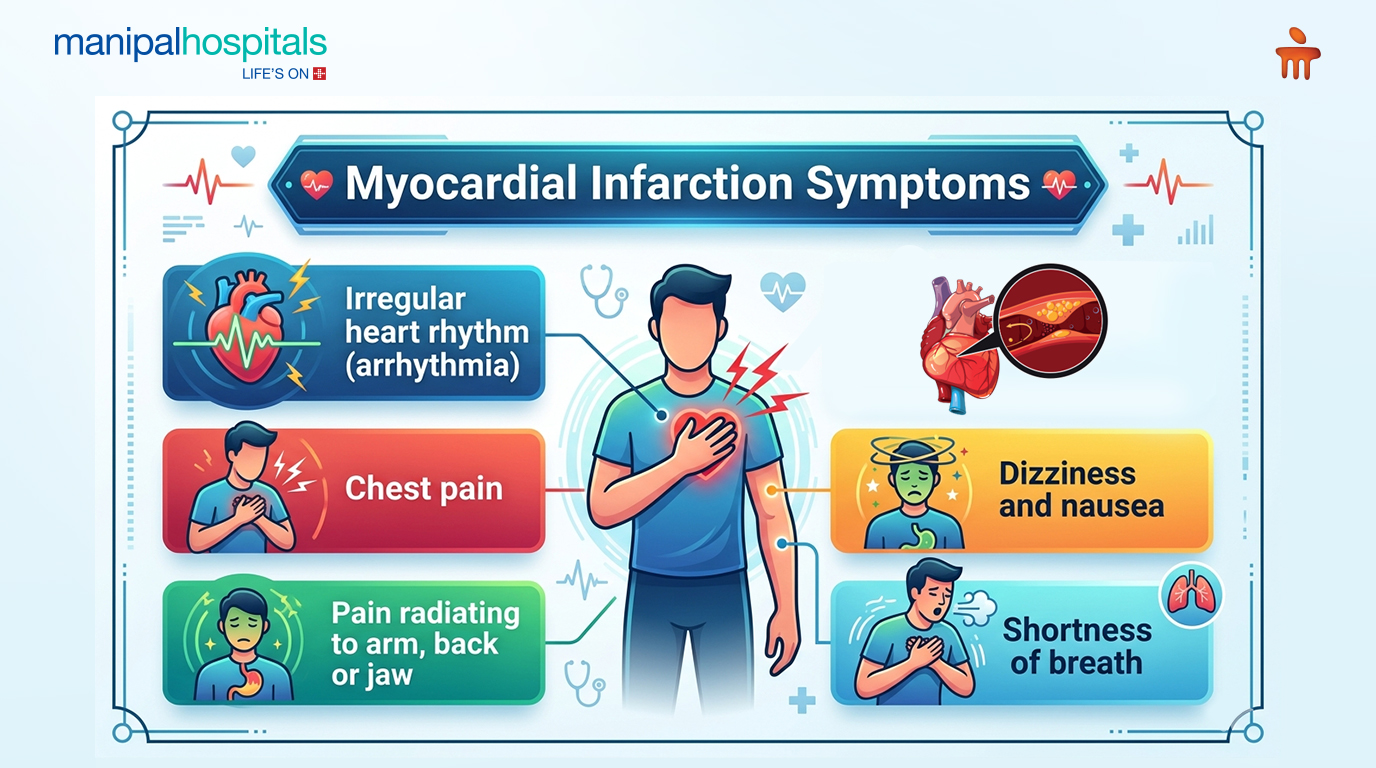
Recognising the warning signs of a heart attack is crucial for getting timely intervention, which can be life-saving. Some of the important myocardial infarction symptoms to watch out include:
-
Chest Pain: Squeezing, pressure, or pain in the centre of the chest.
-
Pain in Other Areas: Discomfort radiating to arms, back, neck, jaw, or stomach.
-
Shortness of Breath: May occur with or without chest discomfort.
-
Other symptoms: Profuse sweating, nausea, dizziness, or unusual fatigue.
Early recognition and treatment within the first 3 hours, called golden hour, can significantly reduce heart muscle damage.
Types of Myocardial Infarction
Types of myocardial infarction are classified primarily by ECG findings:
-
STEMI (ST-Elevation Myocardial Infarction): Complete blockage of artery requiring immediate reperfusion and Percutaneous Coronary Intervention (PCI).
-
NSTEMI (Non-ST-Elevation Myocardial Infarction): Partial blockage of artery, also requiring urgent medical attention and PCI management.
Diagnosis of Myocardial Infarction
Myocardial infarction requires early and accurate diagnosis. Some of the most commonly used diagnostic procedures include:
-
Electrocardiogram (ECG): To record heart's electrical activity.
-
Blood Tests: Measuring cardiac enzymes like troponin.
-
Coronary Angiography: To visualise coronary arteries and identify blockages.
Myocardial Infarction Treatment
The primary goal of myocardial infarction treatment is to restore blood flow quickly to minimise damage. Myocardial infarction treatment usually involves the following approaches:
-
Medications: Antiplatelets, anticoagulants, statins, beta-blockers, and nitro-glycerine are used, as per doctor guidance, to manage blood flow and heart function.
-
Reperfusion Therapy:
-
Angioplasty and Stenting (PCI): A common emergency procedure where a balloon opens the blocked artery and a stent is placed to keep it open.
-
Bypass Surgery (CABG): For multiple or severe blockages of blood vessels, commonly LAD and LMCA, are grafted to bypass the blocked coronary arteries and restore blood flow.
-
Complications of Myocardial Infarction
Myocardial infarction is a serious heart condition and it can cause a range of complications over a period of time. Some of the complications include arrhythmias, cardiac arrest, which are considered as immediate complications. Other, more long-term complications may include reduced pumping ability of the heart, and progression towards heart failure. These make timely intervention of myocardial infarction treatment all the more important.
Conclusion
Recovery after a myocardial infarction typically involves medical follow-up, lifestyle changes, and cardiac rehabilitation. Recognising myocardial infarction symptoms early and seeking early medical attention is urgent for improving outcomes and saving lives. If you or a loved one are experiencing symptoms that could indicate a myocardial infarction, or if you need expert cardiac care, it is crucial to seek timely medical advice. Visit the Cardiology department at Manipal Hospitals Salt Lake, and book an appointment with our expert cardiologists today for comprehensive heart evaluation and treatment.
FAQ's
Early recognition of symptoms and immediate medical attention are paramount. Timely treatment, especially within the first hour, can significantly reduce heart muscle damage and improve recovery and therapy outcomes, potentially saving lives.
A myocardial infarction is a serious health emergency, but with some simple lifestyle modifications, it can be prevented. A heart-healthy diet, regular exercise, and abolishing habits like smoking and drinking can go a long way towards better care. If you are at risk of heart disease, then get health check-ups regularly.
Unmanaged diabetes, hypertension, and high levels of cholesterol in blood, and early age MI in families can significantly increase the risk of myocardial infarction. This explains the need for managing these risk factors efficiently to avoid complications related to heart attacks and MI itself.
Common myocardial infarction symptoms include chest pain (squeezing, pressure), pain radiating to the arms, back, neck, jaw, or stomach, shortness of breath, cold sweat, nausea, and dizziness. Prompt recognition of these symptoms are critical.
Yes, family history of myocardial infarction or heart disease is a significant risk factor for future heart attacks. In such cases, regular health check ups and consistent preventive measures should be adapted to avoid complications.
Share this article on: