4 Min Read
The coronary angiogram procedure is a powerful method that helps visualise the heart's blood vessels, thereby aiding in early and accurate diagnosis of heart disease. With cardiovascular diseases being a significant health challenge, an angiogram helps cardiologists pinpoint issues for timely intervention, boasting a high success rate in diagnosing coronary artery disease before it can progress towards serious complications that will need more specialised interventions. This blog is a comprehensive account of coronary angiogram, diving deep into details about the procedure, associated risks and more.
Synopsis
Understanding Coronary Angiogram
It is crucial to have a proper understanding about the coronary angiogram procedure to understand when and for what it could be necessary.
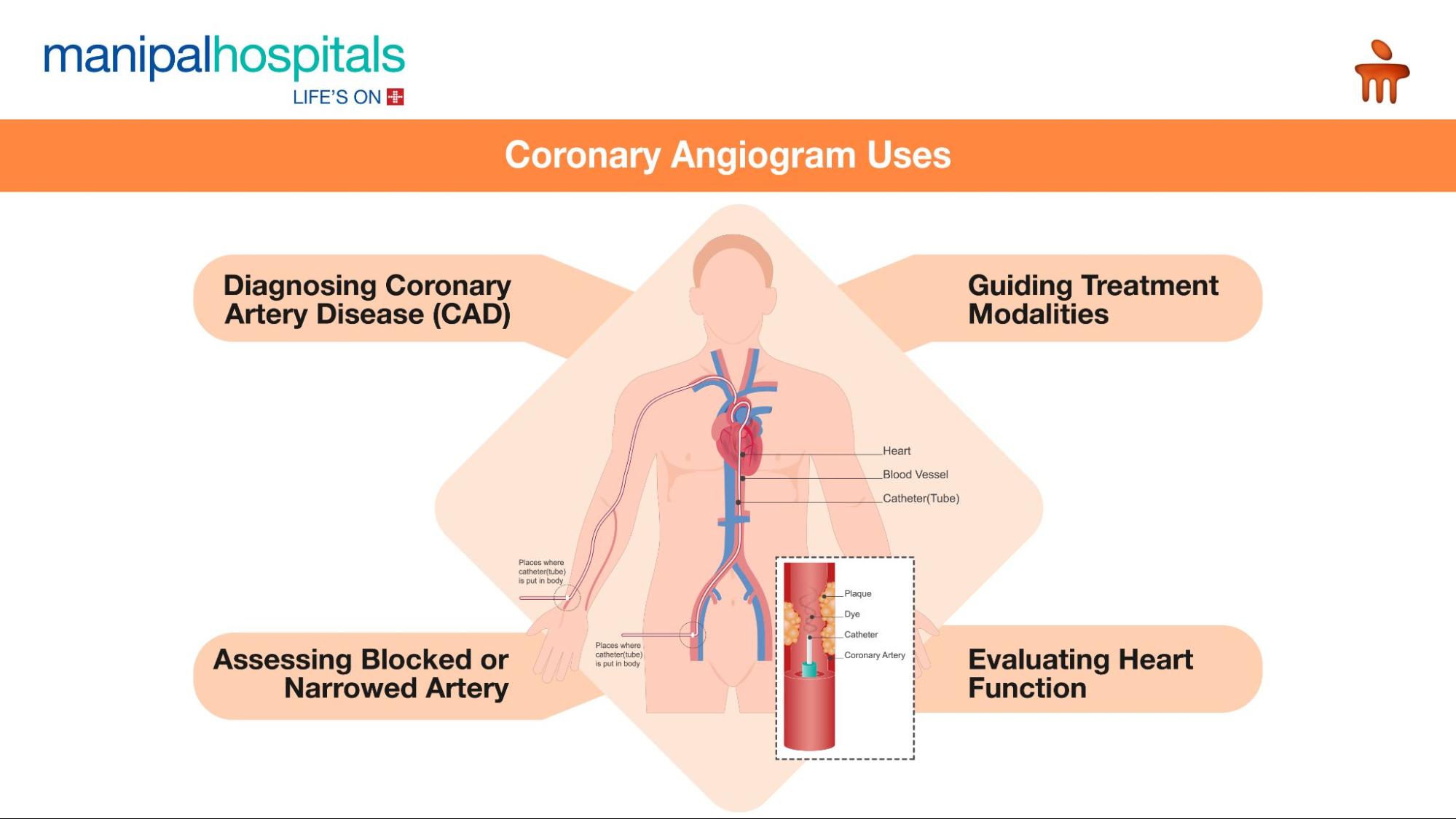
Coronary angiogram is a medical imaging procedure which is performed to examine blood flow through the coronary arteries. This imaging test is often performed to detect blockages caused by coronary artery disease (CAD), which is one of the most widely occurring cardiac diseases worldwide. This procedure is crucial for diagnosing symptoms like chest pain or fatigue, to help guide treatment from medication to surgery.
Types of Coronary Angiogram
Coronary angiogram is mainly of two types, such as:
-
Conventional Coronary Angiogram: This gold-standard procedure involves inserting a catheter into an artery (e.g., wrist or groin), guiding it to the heart, and injecting a contrast dye. X-ray images then provide real-time visualization of blockages in the heart, which are then corrected by the doctor using appropriate procedures.
-
CT Coronary Angiogram (CTCA): Also known as computed tomography coronary angiogram, this non-invasive test uses an advanced CT scanner and injected contrast dye to create detailed 3D images of the coronary arteries. It is valuable for screening or when conventional angiography is not immediately indicated, offering insights into a CT coronary angiogram’s benefits.
How is a Coronary Angiogram Procedure Performed?
The coronary angiogram procedure involves careful preparation that involves several steps. They include:
-
Fasting: Before a coronary angiogram procedure, you may be asked to stop eating a few hours before, though it is not mandatory.
-
Medical Examination: Before the procedure, you will be made to undergo certain medical checks, and will be having a discussion on your allergies with your doctor.
-
Sedation and Catheterization: During the procedure, you may or may not receive mild sedation, and a catheter is inserted into an artery through your wrist or groin, guided to the heart, where contrast dye is injected for X-ray imaging of blood flow. This typically takes 15-30 minutes. Afterward, the catheter is removed, and pressure is applied to the insertion site, requiring several hours of lying flat.
- Procedure site - The procedure can happen in two ways:
-
Radial access (wrist):
-
If the procedure is done through the wrist (radial artery), a tight dressing or compression band is applied over the puncture site to prevent bleeding. Since this area is easier to control and has lower bleeding risk, patients can usually sit up and walk almost immediately after the procedure.
- Femoral access (groin):
If the procedure is done through the groin (femoral artery), the puncture site is larger and deeper. To avoid bleeding, patients are advised not to walk or move much for a few hours (typically 4–6 hours) and may need to lie flat. This allows proper clotting and healing at the site.
-
Recovery: Recovery from a coronary angiogram procedure is much quicker, allowing faster return to normal activities. As CT is non-invasive, it allows immediate return to daily activities.
Potential Risks and Complications
Coronary angiogram is a generally safe procedure that carries minimal risk. However, some rare cases may include bleeding/infection at the insertion site, allergic reactions, kidney damage, or very rarely, heart attack/stroke. A CT coronary angiogram procedure involves lower risks, mainly radiation exposure (minimized by modern scanners) and dye allergies.
Recovery and Rehabilitation after Coronary Angiogram
Recovery after a coronary angiogram procedure varies. For conventional angiograms, rest for 24-48 hours, avoid strenuous activity, keep the insertion site clean, and drink fluids. In the long-term, your angiogram results guide treatment, emphasizing a heart-healthy lifestyle that includes a balanced diet, regular exercise, smoking cessation, and stress management.
Conclusion
Manipal Hospitals Salt Lake supports your cardiac health journey with comprehensive care. Our expert team takes every precaution to ensure patient safety, as the diagnostic benefits significantly outweigh any minimal risks. Manipal Hospitals Salt Lake offers comprehensive evaluation and personalized care to support your heart health. If you have concerns about your cardiac health, seek timely medical advice. Book an appointment today with our cardiac experts today!
FAQ's
Coronary angiogram can take anywhere between 30 to 60 minutes. Conventional angiogram can take this amount of time, whereas CT angiogram usually takes lesser time.
A coronary angiogram is a diagnostic test which is used to check for blockages or narrowing of the heart’s arteries. Based on its results, further treatment is planned.
Coronary angiogram is a gold standard diagnostic test in finding out heart blockages.
Coronary angiogram is not considered a surgical procedure, but rather a diagnostic, and sometimes therapeutic, procedure. It can be performed either by minimally interventional means or no intervention at all.
A coronary angiogram is principally a diagnostic procedure that helps find artery blockage or narrowing, whereas bypass surgery is a surgical procedure through which a new pathway is created to bypass the blocked artery and improve flow of blood.
Share this article on: