4 Min Read
Kidney pain, often a distressing and misunderstood symptom, signals discomfort in your body's vital filtering organs. Understanding the symptoms of kidney pain, identifying common causes, and seeking timely expert advice for kidney pain treatment are crucial for your well-being. Manipal Hospitals empowers you with knowledge for informed health decisions.
Synopsis
What does kidney pain feel like?
Kidney pain often feels like a dull ache or sharp pain in the back, below the rib cage, on one or both sides. It may radiate to the abdomen or groin. Deeper and higher than typical back pain, it affects about 1 in 10 people, frequently due to kidney stones. Common kidney pain symptoms that may accompany include:
-
Fever and chills
-
Nausea and vomiting
-
Pain during urination
-
Frequent urge to urinate
-
Cloudy, dark, or foul-smelling urine
-
Blood in the urine (haematuria)
-
Fatigue
What causes kidney pain?
Kidney pain can stem from various issues, ranging from common
infections to more complex conditions. Identifying specific kidney pain causes is crucial for effective kidney pain treatment. Common kidney pain causes include:
-
Kidney stones- Hardened mineral deposits that cause excruciating pain as they pass. The recurrence is high without preventative measures.
-
Urinary Tract Infections (UTIs) and kidney infection (Pyelonephritis)- Untreated UTIs can spread to the kidneys, causing inflammation and pain. Early detection can improve treatment outcomes.
-
Polycystic Kidney Disease (PKD)- A genetic disorder where fluid-filled cysts grow in the kidneys, causing pain as they enlarge.
-
Kidney injury or trauma- Direct impact or injury to the kidney area can result in significant pain.
-
Blood clots- A clot in the renal artery or vein can restrict blood flow and cause sudden, severe pain.
-
Kidney cancer- Kidney tumours can also cause pain, especially in the later stages.
How is kidney pain treated?
Kidney pain treatment may include medications, lifestyle changes, or medical procedures to address the root cause. Common treatment approaches include:
-
Medications- Pain relievers, antibiotics for kidney infections or UTIs, and other prescribed medicines based on the cause of pain.
-
Increased fluid intake- Adequate hydration may help prevent dehydration-related issues and support kidney function.
-
Kidney stone management- Small stones may pass naturally with hydration and medication, while larger stones may require procedures such as lithotripsy or surgical removal.
-
Treatment for infections- Kidney infections are treated with appropriate antibiotics and medical monitoring to prevent complications.
-
Diet and lifestyle modification- Reducing salt intake, maintaining a balanced diet, and following kidney-friendly habits may support long-term kidney health.
-
Medical procedures- In certain cases, procedures may be required to treat blockages, severe kidney stones, or structural problems affecting the kidneys.
-
Regular monitoring- Follow-up tests and consultations help track kidney function and prevent recurrence of symptoms.
When to seek a professional?
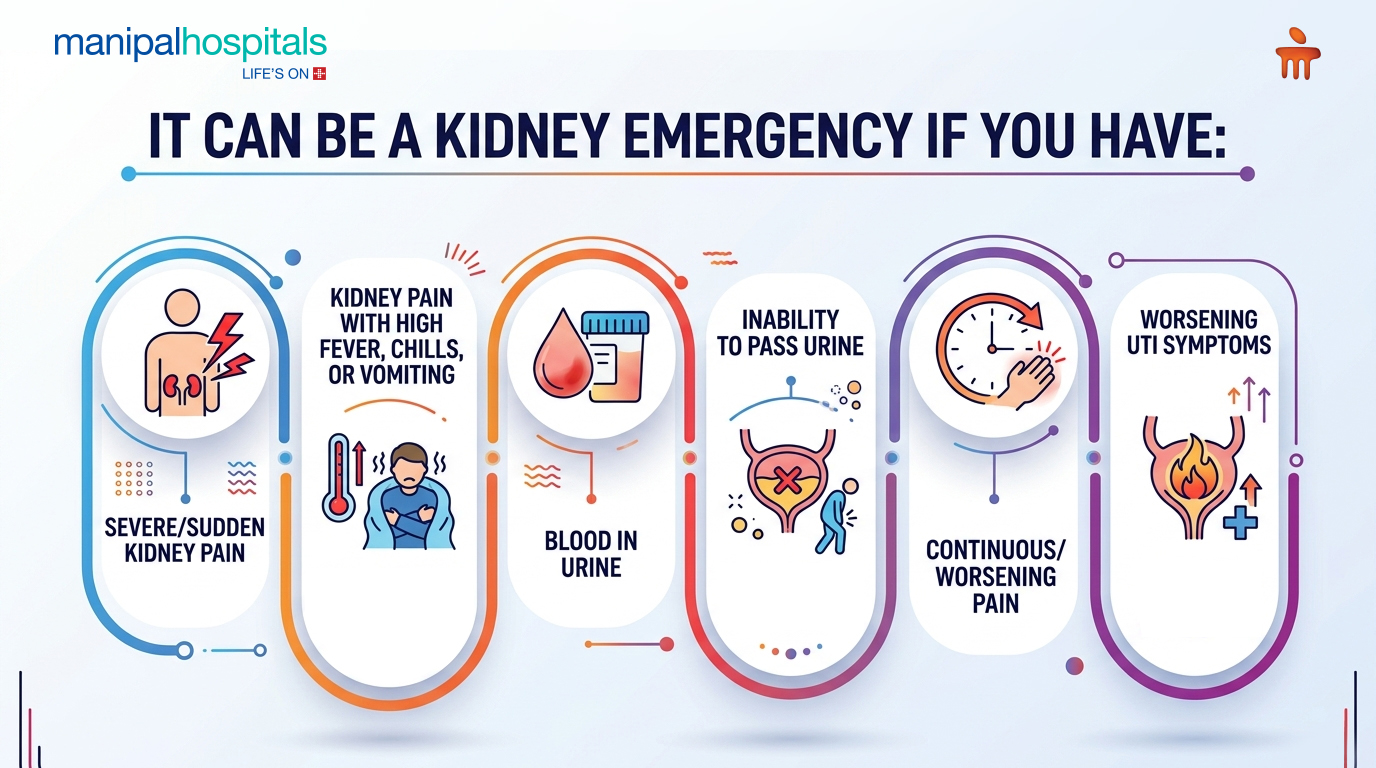
While mild aches may resolve, certain kidney pain symptoms require immediate medical attention. While delaying diagnosis can lead to serious complications, including permanent kidney damage, early intervention can significantly improve recovery rates and prevent long-term kidney issues. Do not wait to consult a healthcare professional, especially a specialist, if you experience:
-
Severe or sudden kidney pain
-
Kidney pain accompanied by high fever, chills, or persistent vomiting
-
Blood in your urine
-
Inability to pass urine
-
Pain that does not subside or worsens
Symptoms of a UTI that persist or worsen after home care
Care essentials
|
Do's |
Don'ts |
|
Stay well-hydrated by drinking plenty of water, especially if you're prone to kidney stones. |
Don't ignore kidney pain, thinking it will go away on its own. |
|
Maintain a balanced diet rich in fruits and vegetables. |
Don't self-medicate with over-the-counter pain relievers for prolonged periods without consulting a doctor, as some can impact kidney function. |
|
Seek medical advice promptly if you experience persistent or severe kidney pain. |
Don't delay seeking medical help for symptoms like fever, chills, or blood in urine alongside kidney pain. |
|
Undergo regular health check-ups, especially if you have a family history of kidney disease. |
Don't consume excessive amounts of sodium or highly processed foods, which can strain kidney health. |
Conclusion
Manipal Hospitals offers comprehensive, compassionate care for all kidney conditions. At Manipal Hospitals, each skilled kidney specialist in Salt Lake uses state-of-the-art diagnostic tools and advanced kidney pain treatment for personalised care. From minimally invasive kidney stone management (over 95% success rate) to treating infections and chronic conditions, our focus is your optimal health outcome. If you're experiencing kidney pain or concerning symptoms, seek expert medical advice from our experienced nephrology team at Manipal Hospitals Salt Lake today.
FAQ's
While dehydration itself may not directly cause kidney pain, it can contribute to conditions like kidney stones or UTIs, which may cause pain, discomfort, urinary issues, and require timely medical evaluation and appropriate treatment.
Diagnosis typically involves a physical examination, urine tests, blood tests, and imaging studies like ultrasound, CT scan, or MRI to identify the cause. Doctors may also review medical history and symptoms for accurate evaluation.
Home remedies might offer temporary relief for mild symptoms, but they are not a substitute for professional medical diagnosis and kidney pain treatment, especially for severe or persistent pain.
Back pain is usually localised to the muscles and spine, often affected by movement. Kidney pain is deeper, higher up in the flank area, and usually constant, regardless of movement.
The duration of kidney pain varies greatly depending on its cause. It can be momentary, last for hours, or persist for days until the underlying condition is treated.
Share this article on: