4 Min Read
Paralysis, the loss of muscle function, significantly impacts daily life and independence. This comprehensive guide details its early signs, common paralysis causes, and emphasises timely medical intervention for optimal paralysis treatment. The goal of this blog is to empower you with the required knowledge on the condition, ensuring you seek help from a neurologist when needed.
Synopsis
What is paralysis?
Paralysis is the inability to move muscles due to nervous system damage, often in the spinal cord or brain. It can be partial or complete, temporary or permanent. Different forms of this condition include:
-
Monoplegia (one limb)
-
Hemiplegia (one side)
-
Paraplegia (lower half)
-
Quadriplegia (all four limbs)
Early signs of paralysis
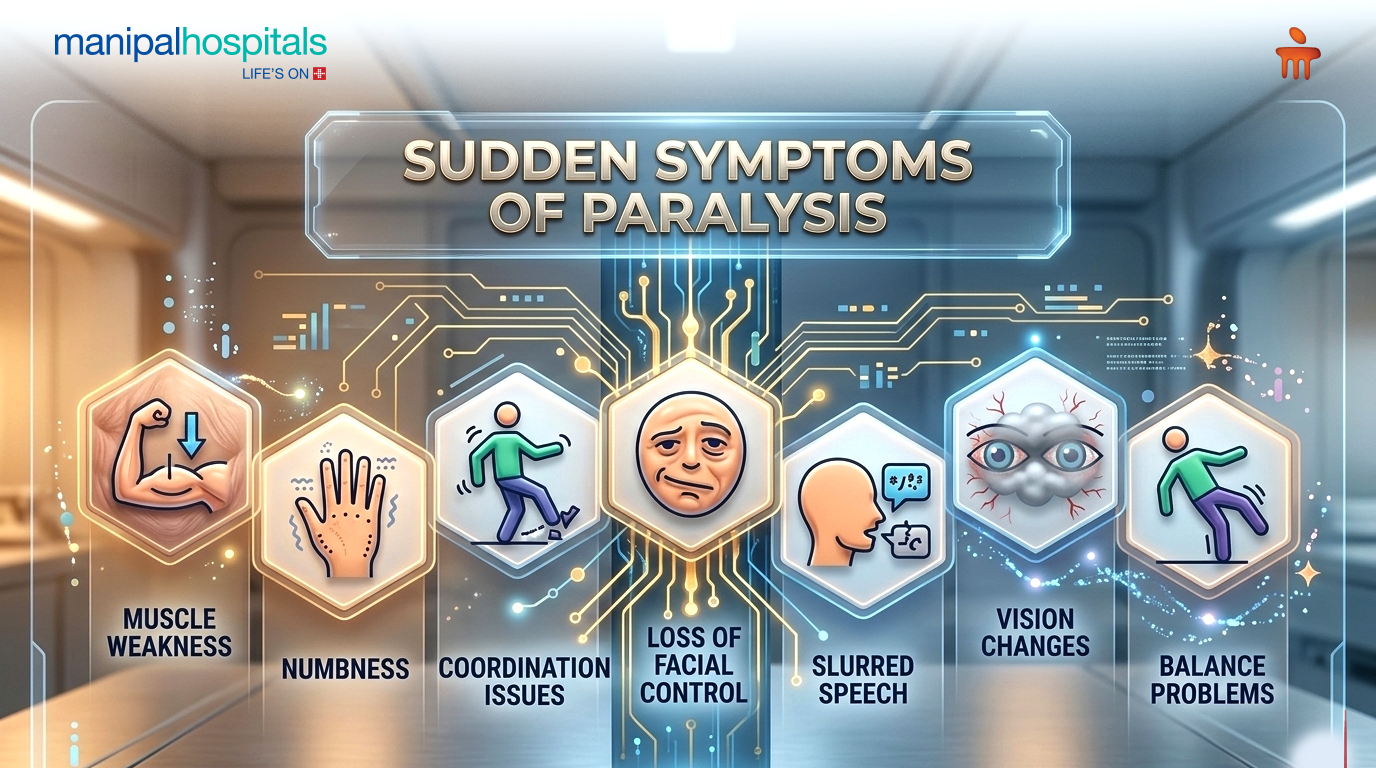
Recognising early paralysis symptoms is crucial for prompt diagnosis. Seek the advice of an expert if these signs appear suddenly:
-
Numbness
-
Coordination issues
-
Loss of facial control
-
Slurred speech
-
Vision changes
-
Balance problems
Common causes of paralysis
Paralysis is a symptom of an underlying condition. The various conditions that can be listed under paralysis causes include:
-
Stroke- A leading cause globally, where interrupted brain blood flow leads to oxygen deprivation. Early intervention improves outcomes for up to 30% of patients.
-
Spinal Cord Injury (SCI)- Trauma-induced damage disrupting brain-body communication.
-
Neurological Disorders- Conditions such as Multiple Sclerosis (MS), Guillain-Barré Syndrome (GBS), Amyotrophic Lateral Sclerosis (ALS), and Cerebral Palsy (CP).
-
Other Causes- Traumatic brain injuries, brain or spinal cord tumours, and certain toxins.
When to seek medical help?
Early diagnosis can improve the success rates of paralysis treatment by up to 25% for progressive conditions.Hence, it is important to seek immediate medical attention in case of suspected spinal/head injury or sudden and rapid onset of:
-
Muscle weakness
-
Balance issues
-
Speech problems
-
Vision changes
Diagnosing paralysis
Diagnosing paralysis involves a physical and neurological examination. Key tools include:
-
MRI and CT scans for brain/spinal cord insights
-
Nerve Conduction Studies (NCS)
-
Electromyography (EMG) for nerve/muscle activity
-
Blood tests for underlying conditions
How is paralysis treated?
Paralysis treatment calls for a holistic approach. Strategies include emergency intervention, medication for symptom management, and comprehensive rehabilitation (including physiotherapy, occupational therapy, speech therapy). Apart from these, assistive devices, psychological support, and surgical options also play a major role in the healing process. This can help over 80% of patients regain significant function.
Conclusion
Understanding the paralysis causes and recognising early paralysis symptoms can help in seeking timely medical intervention and improving outcomes. If you or your loved ones experience signs of paralysis or have concerns about a neurological condition, consult our expert neurology team at Manipal Hospitals Salt Lake. Manipal Hospitals offers you a detailed evaluation, accurate diagnosis, and a personalised treatment plan designed to support better recovery and quality of life.
FAQ's
The possibility of a cure depends on the underlying cause. Some paralysis cases may recover significantly, while severe spinal cord injuries or progressive neurological diseases may require long-term rehabilitation and management for functional improvement.
Partial paralysis (paresis) means you still have some control over your muscles, but they are weakened. Complete paralysis means you have no control over the affected muscles. The extent of paralysis depends on the severity and location of nerve damage.
Rehabilitation is a highly individualised process. It can range from a few weeks to several months or even years, depending on the cause, severity of paralysis, individual recovery rate, and commitment to therapy. Continuous therapy often helps maximise long-term outcomes.
While not all causes of paralysis are preventable, maintaining a healthy lifestyle can reduce risks by managing blood pressure, cholesterol, and diabetes, following a balanced diet, exercising regularly, avoiding smoking, limiting alcohol, and preventing injuries.
Caregiving can be demanding. Support is available through specialised caregiver support groups, counselling services, respite care options, and educational resources provided by healthcare institutions like Manipal Hospitals. It's crucial for caregivers to also prioritise their own well-being.
Share this article on: