6 Min Read
As we age, our bodies go through natural changes. It is easy to dismiss a slight tremor, a shuffle in gait, or a sudden difficulty with handwriting as just a part of ‘getting old’. However, some of these seemingly benign changes can be early warning signs of Parkinson's disease, pointing to a progressive neurological condition. Recognising these subtle cues early is paramount, as timely intervention can significantly impact the quality of life for those affected. This blog guides you in detail through Parkinson's disease's early signs.
Synopsis
What is Parkinson's Disease?
Parkinson's Disease (PD) is a chronic, progressive neurological disorder that primarily affects dopamine-producing neurones in a specific area of the brain called the ‘substantia nigra’. The gradual loss of these neurones leads to a deficiency of dopamine, a neurotransmitter that is crucial for smooth, coordinated muscle movement. This deficiency gives rise to the characteristic Parkinson's disease symptoms, which worsen over time.
Early warning signs of Parkinson's
Many early indicators of Parkinson's Disease are non-specific and can be easily overlooked or attributed to normal ageing. However, timely recognition of Parkinson's Disease early signs is crucial for prompt diagnosis and management. When combined, these symptoms give a clearer view of the condition.
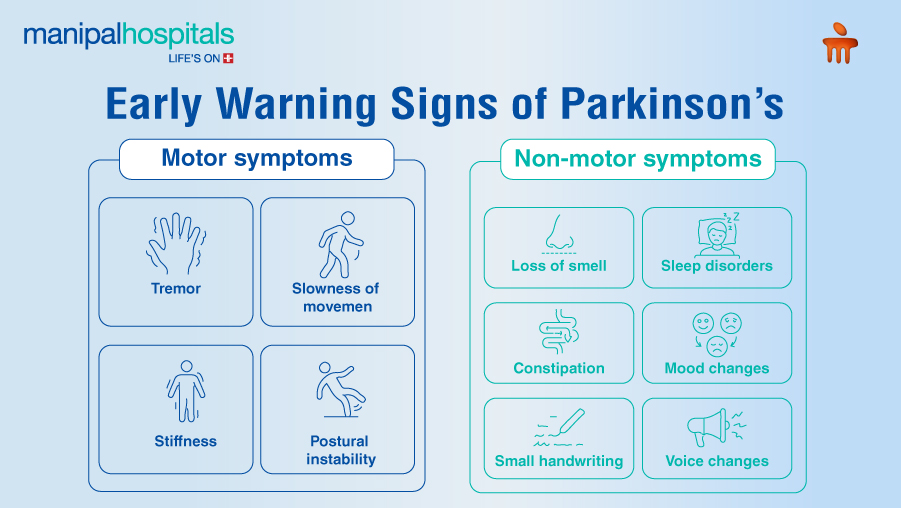
Motor symptoms: the visible clues
Motor symptoms of Parkinson’s Disease mainly affect movement, balance, and muscle control, gradually impacting daily activities:
-
Tremor – Often the most recognisable sign, tremors in hands cause elderly individuals to panic. However, one must remember that a Parkinson's tremor typically occurs at rest, often starting in one limb, hand, or finger, and may resemble a ‘pill-rolling’ motion.
-
Bradykinesia (slowness of movement) – This makes simple tasks difficult and time-consuming. You might notice a reduction in spontaneous movement, difficulty initiating movements, or a general slowing down. For instance, getting out of a chair or walking might become challenging.
-
Rigidity (stiffness) – Muscle stiffness can occur in any part of the body, leading to a limited range of motion and pain. When a doctor examines the limb, it often moves in stiff ‘cogwheel’ jerks.
-
Postural instability – As the disease progresses, individuals may develop impaired balance and coordination, increasing the risk of falls. This might manifest as a stooped posture or a forward lean.
Non-motor symptoms: the hidden clues
These symptoms can appear years before motor symptoms and are often the first signs of Parkinson's disease:
-
Loss of smell (anosmia) – A decreased ability to smell certain foods or odours, not related to a cold or flu.
-
Sleep disorders – Specifically, REM sleep behaviour disorder, where individuals act out their dreams, often with vocalisations or violent movements.
-
Constipation – Persistent and unexplained constipation can be an early indicator.
-
Mood changes – depression, anxiety, and apathy are common non-motor symptoms.
-
Small handwriting (micrographia) – Handwriting might become progressively smaller and cramped.
-
Voice changes (hypophonia) – The voice may become softer, monotonous, or hoarse.
Why early diagnosis matters
While there is no cure for Parkinson's disease, early diagnosis and intervention are critical for managing symptoms and significantly improving a patient's quality of life. Studies indicate that with early, comprehensive care and personalised treatment plans, the progression of motor symptoms can be managed effectively, allowing patients to maintain an active lifestyle and independence for many years. In fact, advancements in diagnostic tools and therapeutic approaches mean that over 70% of patients can effectively manage their motor symptoms, leading to a profound improvement in their daily living.
Timely consultation with a specialised neurologist or a movement disorder specialist in Kolkata can lead to an accurate diagnosis, enabling access to treatments that alleviate symptoms and slow progression. Early intervention can help delay the onset of more severe symptoms and enhance overall well-being.
Parkinson's vs essential tremor: difference to note
There are some key differences between Parkinson's Disease and essential tremor.
|
Parkinson’s Disease |
Essential Tremor |
|
Tremors usually occur at rest. |
Tremors mainly occur during movement |
|
Often affects one side first |
Usually affects both sides equally |
|
Associated with stiffness and slow movement |
Mainly causes shaking without stiffness |
|
Tremors commonly affect hands, legs, or chins. |
Tremors mostly affect hands, head, and voice. |
|
Symptoms gradually worsen over time |
Tremors may remain stable for years |
Care essentials
Managing Parkinson's involves a holistic approach. Here are some essential guidelines:
-
Consult a specialist – Seek advice from a neurologist or movement disorder specialist experienced in Parkinson's disease.
-
Stay active – Regular exercise, including walking, swimming, and balance exercises, can help maintain mobility and flexibility.
-
Maintain a healthy diet – A balanced diet rich in fibre and fluids can help manage non-motor symptoms like constipation.
-
Prioritise sleep – Address sleep issues with your doctor, as good sleep is crucial for overall health.
-
Seek support – Connect with support groups; sharing experiences can be incredibly helpful.
-
Avoid self-diagnosis – Many symptoms can mimic other conditions. A professional diagnosis is vital.
-
Do not ignore symptoms – If you notice persistent or worsening symptoms, do not dismiss them as normal ageing.
-
Do not delay seeking help – the earlier the diagnosis, the more effectively symptoms can be managed.
-
Never hesitate to ask questions – be proactive in your care and discuss all concerns with your healthcare team.
Conclusion
Globally, Parkinson's disease affects approximately 10 million people, making it the second most common neurodegenerative disorder after Alzheimer's. While it can occur at any age, about 1% of the population over 60 years old is diagnosed with the condition. Manipal Hospitals offers holistic Parkinson’s disease care through skilled neurologists, advanced diagnostic facilities, and customised treatment approaches aimed at improving long-term symptom management and quality of life.
If you or a loved one is experiencing Parkinson’s symptoms, it is crucial to seek timely medical advice from a reputed movement disorder specialist Kolkata provides. Book an appointment with the expert team of neurologists at Manipal Hospitals Salt Lake today to receive an accurate diagnosis, personalised treatment, and comprehensive care.
FAQ's
The exact cause is unknown, but a combination of genetic and environmental factors is believed to play a role, leading to the loss of dopamine-producing neurons in the brain.
Although Parkinson’s disease has no definitive cure at present, several treatment options can effectively control symptoms, slow functional decline, and improve mobility, independence, and overall quality of life for individuals living with the condition.
Diagnosis is primarily clinical, based on a neurological examination and evaluation of symptoms. There are no definitive blood tests or imaging scans, though scans may be used to rule out other conditions.
The key Parkinson's vs essential tremor difference lies in when the tremor occurs. Parkinson's tremors typically happen at rest, while essential tremors usually occur during movement or when trying to hold a posture.
Yes, there are various medications, surgical options like Deep Brain Stimulation (DBS), and lifestyle therapies (physical therapy, occupational therapy, speech therapy) that can significantly help manage Parkinson's disease symptoms.
Share this article on: