7 Min Read
Knee problems are one of the most common problems affecting millions worldwide. Among these, swollen knee, which is characterised by the accumulation of water on knee, can be a cause of significant discomfort. Other than pain, accumulation of water on the knee can limit mobility and make performing daily tasks difficult. This blog goes into detail about swollen knee due to accumulation of fluid on knee, further addressing an important concern – can a swollen knee be dangerous?
Synopsis
Understanding Swollen Knee
A swollen knee occurs when excess fluid accumulates in or around the knee joint. This leads to noticeable swelling, pain, and stiffness, and significantly limits mobility. This accumulation of water on the knee can happen within the joint capsule (effusion) or in the surrounding soft tissues, leading to a visibly enlarged knee and may even signal towards knee inflammation. Early diagnosis and treatment are keys to effective management and achieve long-term relief from pain.
Causes of a Swollen Knee
When your knee swells up, it is often a symptom of injury, arthritis, or infection. Identifying the root cause is essential for effective treatment.
Injuries
-
Ligament/Meniscus Tears: Common sports-related injuries can cause significant knee swelling, instability, or locking.
-
Fractures: Breaks in any of the bones around the knee joint can cause severe pain and swollen knee.
-
Bursitis: Inflammation of the small fluid-filled sacs around the knee can lead to localised knee inflammation and swelling.
Arthritic Conditions
-
Osteoarthritis: Wear and tear of cartilage often leads to chronic knee swelling, stiffness, and pain.
-
Rheumatoid Arthritis: An autoimmune disease causing chronic inflammation and persistent knee swelling.
-
Gout/Pseudo-gout: Crystal deposits causing sudden, severe pain and intense swollen knee and knee inflammation.
Infections
Septic Arthritis: A serious bacterial or fungal infection causing painful knee swelling, fever, and chills. This requires urgent medical attention to prevent joint damage.
Symptoms Accompanying Knee Swelling
Swollen knee in itself is a symptom of underlying knee problems, and it is often accompanied by other symptoms. Some of them include:
-
Pain: Ranging from a dull ache to sharp, intense pain.
-
Stiffness: Difficulty bending or straightening the knee.
-
Warmth and Redness: The skin around the knee may feel warm and appear reddish, particularly with knee inflammation or infection.
-
Limited Range of Motion: Accumulation of fluid on knee can physically restrict the knee's movement.
-
Difficulty Bearing Weight: Putting weight on the affected leg might become difficult.
-
Fever and Chills: These systemic symptoms can indicate towards infection.
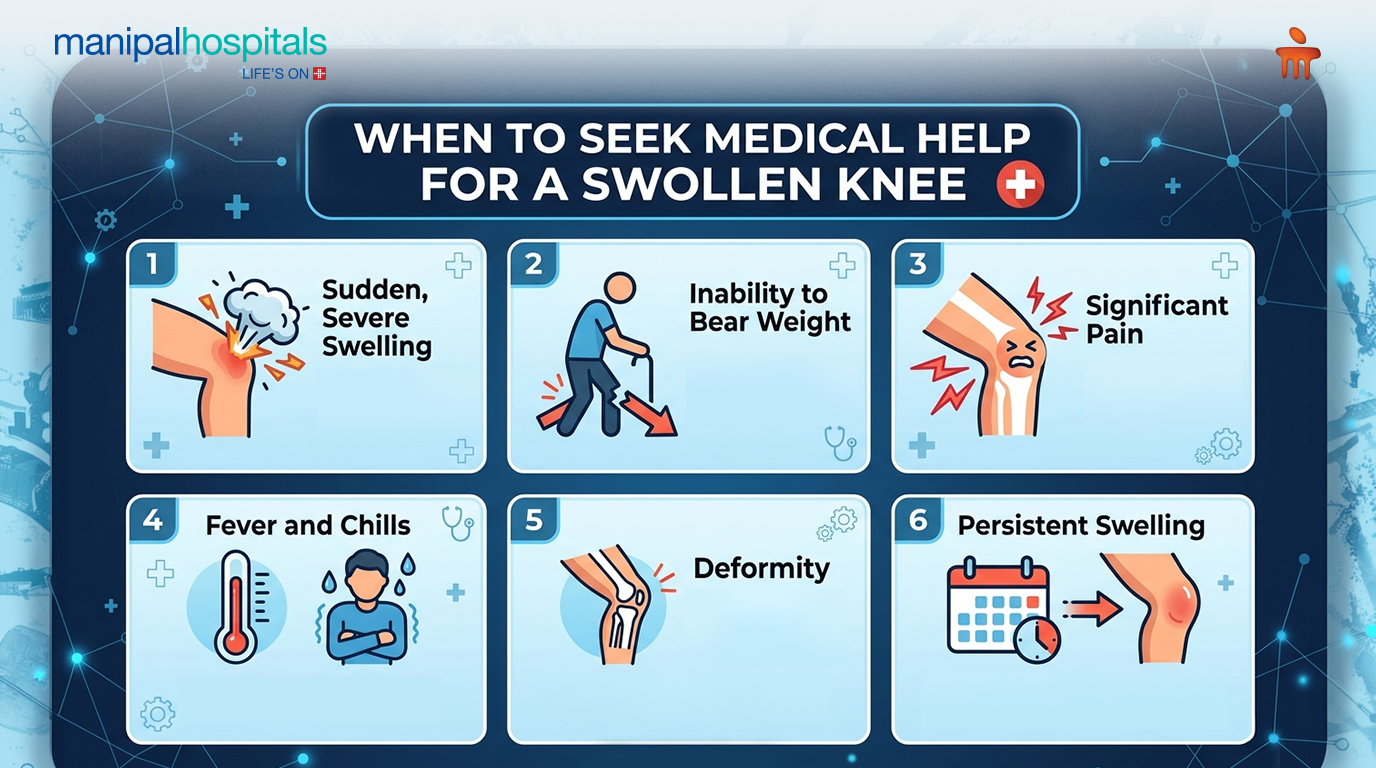
When to Seek Medical Help for a Swollen Knee
Many wonder, "Can a swollen knee be dangerous?" The answer is yes, potentially. While some minor swelling might resolve with rest, certain symptoms warrant immediate medical evaluation. Delaying care can lead to worsened outcomes. Seek medical help immediately if you notice:
-
Sudden, Severe Swelling: Especially after an injury or without apparent cause.
-
Inability to Bear Weight: If you cannot put any weight on your knee.
-
Significant Pain: Excruciating pain which does not improve with home care.
-
Fever and Chills: Accompanied by redness and warmth around the knee, indicating a possible infection.
-
Deformity: If your knee looks visibly deformed or out of alignment.
-
Persistent Swelling: If the knee swelling does not decrease after a few days of rest and elevation.
Diagnosis for Swollen Knee
Accurate diagnosis is the first step towards effective treatment. Typically, physical examination and imaging tests like X-rays, MRI, and Ultrasound are employed for getting an accurate diagnosis. Arthrocentesis (joint aspiration) can analyse fluid for signs of infection, inflammation, or crystals (e.g., for gout). Blood tests may be ordered to check for inflammatory markers or autoimmune conditions.
Swollen Knee Treatment
Treatment for a swollen knee depends entirely on its underlying cause. For swollen knee caused due to injury, RICE protocol (Rest, Ice, Compression, and Elevation), is the first line of treatment, followed by medications (NSAIDs for pain and knee inflammation), physical therapy, and injections (corticosteroid, hyaluronic acid). Fluid aspiration can provide immediate relief. For severe injuries or advanced arthritis, surgery like arthroscopy or joint replacement may be necessary.
Conclusion
A swollen knee demands attention, and understanding its symptoms and causes is the first step towards recovery. At Manipal Hospitals Salt Lake, our experienced orthopaedic specialists are dedicated to providing accurate diagnosis and personalised treatment plans to help you regain mobility, with lasting pain relief. If you are experiencing swollen knees and any of the other accompanying symptoms mentioned above, do not delay! Visit Manipal Hospitals Salt Lake for comprehensive personalised orthopaedic care.
FAQ's
The most common causes responsible for a swollen knee are injuries, fractures, degenerative conditions like osteoarthritis, certain underlying conditions, and inflammation.
It is possible to find relief for swollen knee at home through RICE protocol and pain medications. These are usually the first line of treatment, and may sometimes be followed by physiotherapy and injections.
You should consult a doctor for your swollen knee if you experience symptoms like sudden, severe or persistent swelling, redness, deformity, instability or inability to bear weight in the affected leg, and extreme pain.
A swollen knee usually does not need to be resolved by surgery if medications, RICE protocol and physiotherapy are effective in bringing relief. However, for a swollen knee accompanied by symptoms like extreme pain, deformity, or fracture, surgical intervention might be necessary.
Yes, autoimmune conditions like rheumatoid or psoriatic arthritis, lupus and spondyloarthritis may be responsible for swollen knees and joints.
Share this article on: