8 Min Read
People rarely think about their pee until something feels wrong. However, the colour of your urine is like a real-time dashboard for your health. Depending on the shade, from a clear straw yellow to a deep amber, your body is telling you exactly how much water it needs.
Changes in colour are usually the very first indicator that you are running low on fluids. Along with a darker shade, you might notice urine dehydration symptoms like a burning feeling when you go, dizziness, headaches, and a dry mouth. Symptoms related to dehydration and urine changes are often managed by the Nephrology department, which specialises in kidney and urinary health.
People frequently ask things like:
-
Can dehydration cause blood in urine?
-
Does dehydration cause painful urination?
-
Can dehydration cause frequent urination?
The short answer is yes. Falling short on water can impact your urinary tract in ways you might not expect. This blog explains what to look for, how your urine color changes, and simple habits to stay properly hydrated.
Synopsis
- What Happens to the Body During Dehydration?
- Understanding Urine Colour: What Is Normal?
- Common Urine Dehydration Symptoms
- Can Dehydration Cause Blood in Urine?
- Does Dehydration Cause Painful Urination?
- Can Dehydration Cause Frequent Urination?
- Signs of Severe Dehydration You Should Never Ignore
- How Much Water Does the Body Actually Need
- Spotting Dehydration in Kids
- When Should You See a Doctor?
- Conclusion
What Happens to the Body During Dehydration?
Dehydration occurs when the body loses more fluid than it takes in. The body needs water for almost all processes, such as regulating temperature, digestion, blood circulation, kidney function, and waste elimination.
As a way of retaining the little fluids in the body, the kidneys make more concentrated urine, which explains why dehydrated urine appears darker in colour.
Understanding Urine Colour: What Is Normal?
Healthy, well-hydrated urine is usually a pale, clear yellow thanks to a natural pigment called urochrome. When your fluid levels drop, that pigment becomes heavily concentrated.
|
Urine Colour |
What It Means |
|
Clear |
Highly hydrated (or maybe drinking a bit too much water) |
|
Pale Yellow |
Perfect, healthy hydration |
|
Dark Yellow |
Mild dehydration, time to grab a glass of water |
|
Amber or Honey |
Moderate dehydration: your body is actively asking for fluids |
|
Dark Brown |
Severe dehydration, or potentially a liver issue |
|
Pink or Red |
Possible blood in your urine needs checking |
|
Cloudy |
It could mean an infection or highly concentrated waste |
Common Urine Dehydration Symptoms
Other physical symptoms often accompany changes in urine.
Typical urine dehydration symptoms include the following:
-
Dark-colored urine: Concentrated waste shows you’re not drinking enough water.
-
Strong smell: The fluid levels drop, and the smell gets stronger.
-
Going less often: Your body reclaims water to protect your organs, leaving your bladder empty for longer stretches.
-
Dry mouth and thirst: The classic first signs that your salivary glands are running low on fluid.
-
Headaches: When dehydration occurs rapidly, your brain screams out at you.
-
Fatigue: When dehydrated, there is an early depletion of energy levels.
-
Dizziness: Dehydration affects the regulation of blood pressure.
-
Muscle Cramps: The electrolyte imbalance brings about painful cramps in the muscles.
Some people ignore these symptoms until they become severe. Listening to your body early can prevent complications.
Can Dehydration Cause Blood in Urine?
It is a scary thing to notice, and a very common question is, can dehydration cause blood in urine?
In direct terms, severe dehydration can heavily irritate your bladder lining and the tubes of your urinary tract. It also drastically spikes your risk of developing kidney stones and urinary tract infections (UTIs). Both of these conditions can cause micro-tears or intense irritation that results in blood appearing in your pee.
However, you should never simply assume blood is just from a lack of water. It can also point to deeper infections, kidney issues, or bladder conditions. If your urine looks pink, red, or the colour of cola, you need to see a healthcare professional immediately.
Does Dehydration Cause Painful Urination?
Many patients also ask, "Does dehydration cause painful urination?" Yes, dehydration can sometimes make urination uncomfortable.
When urine becomes highly concentrated:
-
It contains more waste chemicals
-
The bladder lining may become irritated
-
Burning sensations can occur
Dehydration can also increase the likelihood of urinary infections, which commonly cause painful urination.
Can Dehydration Cause Frequent Urination?
At first glance, this sounds backward. Usually, a lack of water means you pee less often. However, can dehydration cause frequent urination?
Yes, under specific conditions. When your urine becomes highly concentrated and acidic, it acts as a direct irritant to the bladder wall. This irritation can cause your bladder muscles to spasm, giving you a false, frequent urge to rush to the bathroom even if your bladder is nearly empty.
Additionally, if your dehydration has triggered an underlying urinary tract infection, frequent urination is one of the classic side effects.
Signs of Severe Dehydration You Should Never Ignore
Severe dehydration can become dangerous if untreated.
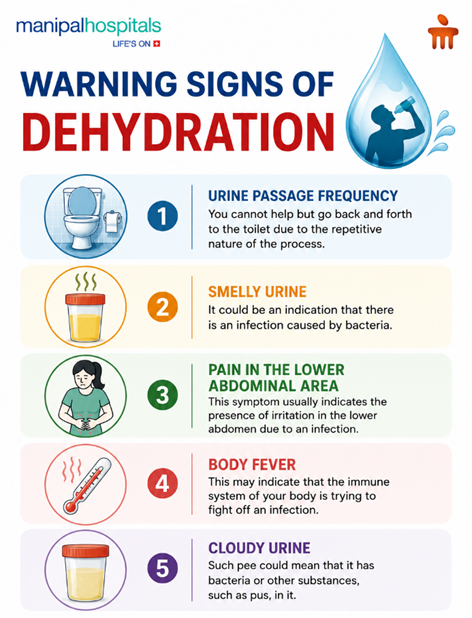
Warning Signs Include:
-
Urine passage frequency: You cannot help but go back and forth to the toilet due to the repetitive nature of the process.
-
Smelly Urine: It could be an indication that there is an infection caused by bacteria.
-
Pain in the lower abdominal area: This symptom usually indicates the presence of irritation in the lower abdomen due to an infection.
-
Body fever: This may indicate that the immune system of your body is trying to fight off an infection.
-
Cloudy urine: Such pee could mean that it has bacteria or other substances, such as pus, in it.
Children and older adults are especially vulnerable to dehydration complications.
How Much Water Does the Body Actually Need
There is no single "perfect" number because your needs change based on your size, the climate, and how active you are. However, standard health guidelines suggest aiming for:
-
Men: Roughly 3 to 3.7 liters a day.
-
Women: Roughly 2 to 2.7 liters a day.
If you are working out hard, lifting heavy items, or living in a hot area, you will need to increase these targets to balance out what you lose through sweat.
Spotting Dehydration in Kids
Children run out of fluids much faster than adults do. If your little one is down with a bug or running around in hot weather, keep a close eye out for these signs:
-
Dry, cracked lips and a dry mouth.
-
Crying but not actually producing any tears.
-
Fewer wet nappies or not going to the toilet as much as usual.
-
A sunken look around their eyes.
-
Seeming unusually sleepy, floppy, or just incredibly cranky.
If you notice these, start giving them small, frequent sips of water or a rehydration drink right away.
When Should You See a Doctor?
Mild dehydration is easily fixed by drinking water. However, you should contact a doctor or visit a clinic if you notice any of these warning signs:
-
Your urine stays dark and concentrated even after drinking plenty of water for a few hours.
-
You notice any pink, red, or dark blood in your pee.
-
Pain or a burning feeling persists every time you use the bathroom.
-
You develop a fever, severe chills, or uncontrollable vomiting that prevents you from keeping liquids down.
-
You feel severe weakness, confusion, or extreme dizziness.
For individuals experiencing severe symptoms or complications, professional medical centres can provide targeted support. Seeking medical attention or finding specialised treatment ensures you get quick access to therapies like IV fluids, electrolyte balance corrections, and swift screening for underlying kidney or urinary tract infections.
Conclusion
Understanding how dehydrated urine appears in terms of colour will allow you to detect when you are suffering from dehydration early on. Urine with a dark yellow or amber colour indicates dehydration. In addition to these signs, other symptoms of dehydration include fatigue, headaches, dizziness, and dry mouth.Professional dehydration treatment in Salem can determine the reasons for your symptoms and help you hydrate safely. Staying hydrated is the easiest way to ensure good health in general. If dehydration symptoms affect your urinary health, experts in nephrology at Manipal Hospitals can provide detailed evaluation and personalised care.
FAQ's
The reason is that dehydration leads to a greater concentration of toxic compounds in urine, thus causing a strong odour and dark colour of the liquid because the volume of the body's water decreases.
Dehydration might cause decreased blood flow to the brain, leading to irritability, lack of focus, drowsiness, headaches, and impaired mental clarity.
Yes, morning urine tends to be darker since no drinking takes place overnight during sleep time.
Yes, dehydration causes increased concentration of mineral compounds in the urine, which may result in stone formation.
Indeed, it can. People tend to forget about thirst while spending a lot of time inside air-conditioned rooms.
Share this article on: