7 Min Read
Is your stress making its way onto your plate? Do you often find yourself eating more than your body needs, only to feel bloated or sick to your stomach afterwards? If your answer is yes, you may be experiencing a binge eating disorder. If you are wondering what binge eating disorder is, it is a condition that causes you to compulsively eat large amounts of food, often very quickly and without control.
Many people draw similarities between binge eating and other eating disorders, such as bulimia nervosa, which involve consuming large quantities of food followed by vomiting and excessive exercise to compensate. However, in binge eating disorder, individuals typically do not engage in purging or excessive physical activity. Instead, if they feel guilty or ashamed after a binge, they go through phases of severe food restriction. This often has the opposite effect, as it creates stronger urges to binge, leading to a repetitive cycle of binge eating. Over time, this cycle may contribute to physical health concerns such as obesity, diabetes, high blood pressure, and other metabolic complications that often require comprehensive care through the Internal Medicine Department.
Synopsis
Common Symptoms to Look Out For
Individuals with binge eating disorder are often assumed to be overweight or obese. However, this assumption isn’t always true, as the disorder can affect people of any body shape and size, including those who are at a normal weight. Eating disorders, such as binge eating disorder, are classified as mental health conditions that have less to do with one’s body shape and more to do with how a person feels about their body.
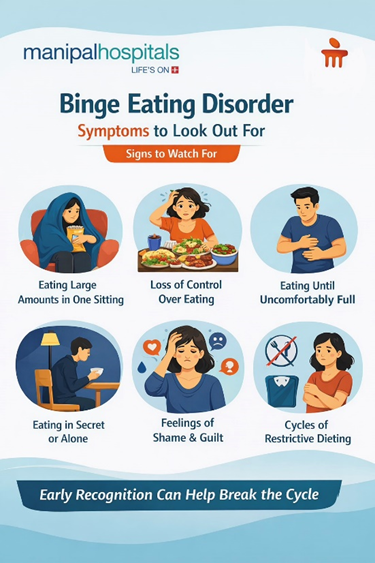
Some of the common binge eating disorder symptoms include:
-
Eating large quantities of food in a short period of time, often in one sitting
-
Feeling a loss of control over how much you eat
-
Eating very fast until you feel full to the point of discomfort
-
Eating alone or discreetly
-
Eating despite feeling full or when not physically hungry
-
Experiencing a whirlwind of emotions such as shame, disgust, guilt or depression about your eating habits
People with binge eating disorder may experience some or all of these symptoms. In some cases, the condition can be short-lived or occur intermittently.
However, if left untreated, it may continue affecting the individual for many years. The severity of the condition is generally assessed based on the extent to which it affects an individual’s state of mind and ability to function normally in day-to-day life.
Key Causes and Risk Factors
There is no specific reason why an individual may develop binge eating disorder, as the causes tend to vary from person to person. However, various factors may increase an individual’s risk of developing this condition. These include family history, previous dieting behaviours, obesity, past trauma, body image issues, and mental health conditions such as stress, anxiety, depression, and substance use disorders. For some people, eating becomes a way to cope with emotional distress. For others, differences in brain chemicals like dopamine and serotonin, which are linked to reward, as well as an increased sensitivity to hunger and appetite cues, can make them more susceptible to developing binge eating disorder.
How is binge eating disorder diagnosed?
As binge eating disorder is classified as a mental health condition, your doctor may refer you to a mental health professional and recommend a thorough psychological evaluation. Individuals seeking a binge eating disorder diagnosis near Salem or other locations may undergo detailed assessments conducted by qualified mental health professionals and physicians. During the evaluation, you may be asked questions about your behaviours, thoughts, and feelings related to your food and eating habits. Your answers to these questions are analysed based on the criteria outlined in the Diagnostic and Statistical Manual of Mental Disorders (DSM-5). Besides these questions, individuals may also be requested to undergo a physical health evaluation to check for other associated conditions caused by binge eating disorder, including high cholesterol, high blood pressure, diabetes, electrolyte imbalances, and heart-related issues, among others. Tests may include blood and urine tests, a physical examination, and, in some cases, consultation with a sleep specialist.
Management and Treatment Options
A multidisciplinary team of doctors, including general physicians, mental health professionals, and dieticians, can help in binge eating disorder treatment. The most effective treatment options typically include talk therapy and prescription medications. Talk therapy comprises a range of approaches, such as:
-
Cognitive Behavioural Therapy (CBT): This approach aims to address the loss of control over an individual’s food intake, generally triggered by self-image concerns and a negative or depressed state of mind. By offering effective methods to maintain healthy eating patterns, CBT helps people cope better with this condition and regain control over their eating behaviour.
-
Integrated Cognitive-Affective Therapy (ICAT): This is an approach specially designed for individuals with binge eating disorder and bulimia nervosa. By helping people regulate their emotions, ICAT enables them to develop structured meal plans and monitor their daily eating habits.
-
Dialectical Behavioural Therapy (DBT): This approach is designed to help individuals manage extreme stress or anxiety. By combining cognitive behavioural techniques with mindfulness, DBT focuses on allowing people to understand and accept difficult situations while developing better emotional balance and a positive mindset.
-
Interpersonal Psychotherapy (IPT): This is a short-term therapy focused on identifying and addressing issues in an individual’s interpersonal relationships that may make them vulnerable to developing binge eating disorder. For example, loneliness due to a lack of social support or conflicts with friends, family, or partners can cause some people to turn to food for comfort.
Conclusion
While therapy is generally considered the first line of binge eating disorder treatment, certain antidepressants such as Fluoxetine (Prozac), Sertraline (Zoloft), and Escitalopram (Nexito/Cipralex) are often used to support treatment. These medications not only help reduce the frequency of binge episodes but also play a role in impulse control. Additionally, they help address underlying depression and anxiety that lead to the development of this condition. In some cases, appetite suppressants may also be prescribed to break the vicious cycle of binge eating. To date, Lisdexamfetamine (Vyvanse) is known to be the only FDA-approved drug for binge eating disorder globally. However, its availability in India remains limited.
If you are finding it hard to control your urge to binge, a detailed diagnosis might help. Get in touch with our specialists at Manipal Hospital Salem for expert evaluation and guidance.
FAQ's
Binge eating is influenced by not just one, but multiple physical and psychological factors. These include hormonal and blood sugar imbalances, anxiety, stress, restrictive eating and changes in the brain’s reward pathways. It is often difficult for individuals to break the cycle of binge eating without appropriate guidance and support.
Occasional overeating is typically infrequent and can happen to anyone during festivals, vacations or social gatherings. Binge eating, on the other hand, is a frequent occurrence that brings about feelings of guilt, shame and loss of control, making individuals feel deeply uncomfortable over time.
Yes, binge eating disorder can affect people of all body types, including those who are at a normal weight. However, most individuals who binge eat tend to gain weight over time and are at a higher risk of developing diabetes and other metabolic disorders.
If binge eating episodes become too frequent and repeatedly cause emotional or physical distress, it may be time for an individual to seek medical help. Since loss of control over food is a common symptom of binge eating disorder, many individuals find it difficult to maintain a healthy pattern of eating without professional support.
Yes, recovery is possible, although not always straightforward. While some people may relapse or take longer than others to recover, it is still achievable. Rather than relying on willpower alone, recovery from this condition is about receiving appropriate therapy, medical guidance, and consistent emotional support. Timely intervention by experts at Manipal Hospital Salem helps individuals regain control over their eating behaviours and build a healthier relationship with food.
Share this article on: