5 Min Read
Menstrual disorders are among the most common health concerns affecting women across different age groups. From adolescence to perimenopause, changes in the menstrual cycle can signal normal hormonal shifts or underlying medical issues. Our gynaecologists in Patiala emphasise that understanding menstrual disorders early helps women recognise what is normal for their bodies and when medical attention is necessary.
This comprehensive guide explores common menstrual disorders, including irregular periods, painful periods, and abnormal menstrual bleeding, explains their causes, highlights warning signs, and clearly outlines when to see a gynaecologist. By increasing awareness, women can take timely steps toward better reproductive and overall health.
Synopsis
- What Are Menstrual Disorders?
- Irregular Periods: Causes and Concerns
- Painful Periods and Severe Period Pain
- Abnormal Menstrual Bleeding
- Premenstrual Syndrome (PMS)
- Premenstrual Dysphoric Disorder (PMDD)
- Stress and Menstrual Cycle Connection
- Home Remedies for Period Pain
- When to See a Gynaecologist
- Diagnosis of Menstrual Disorders
- Treatment Options for Menstrual Disorders
- Lifestyle Changes That Improve Menstrual Health
- Conclusion
What Are Menstrual Disorders?
Menstrual disorders refer to a wide range of conditions that affect the regularity, duration, flow, or pain associated with menstruation. While mild discomfort is common, persistent or severe symptoms may indicate an underlying problem.
Common Features of Menstrual Disorders
-
Changes in cycle length or frequency
-
Excessive or very light bleeding
-
Severe period pain interfering with daily activities
-
Emotional and physical symptoms before periods
Recognising menstrual disorders early allows for timely diagnosis and effective management.
Irregular Periods: Causes and Concerns
Irregular periods occur when the menstrual cycle varies significantly in length or skips months entirely. Occasional irregularity can be normal, but frequent changes may indicate a hormonal imbalance.
Common Causes of Irregular Periods
-
Hormonal fluctuations
-
Stress and menstrual cycle disruptions
-
Thyroid disorders
-
Polycystic ovary syndrome (PCOS)
Persistent irregular periods are one of the most reported menstrual disorders and should not be ignored.
Painful Periods and Severe Period Pain
Understanding Painful Periods
Painful periods, also known as dysmenorrhea, involve cramping pain in the lower abdomen that may radiate to the back or thighs. While mild cramps are common, severe period pain can be debilitating.
Period Cramps Causes
-
Excess prostaglandin production
-
Endometriosis
-
Uterine fibroids
-
Pelvic inflammatory disease
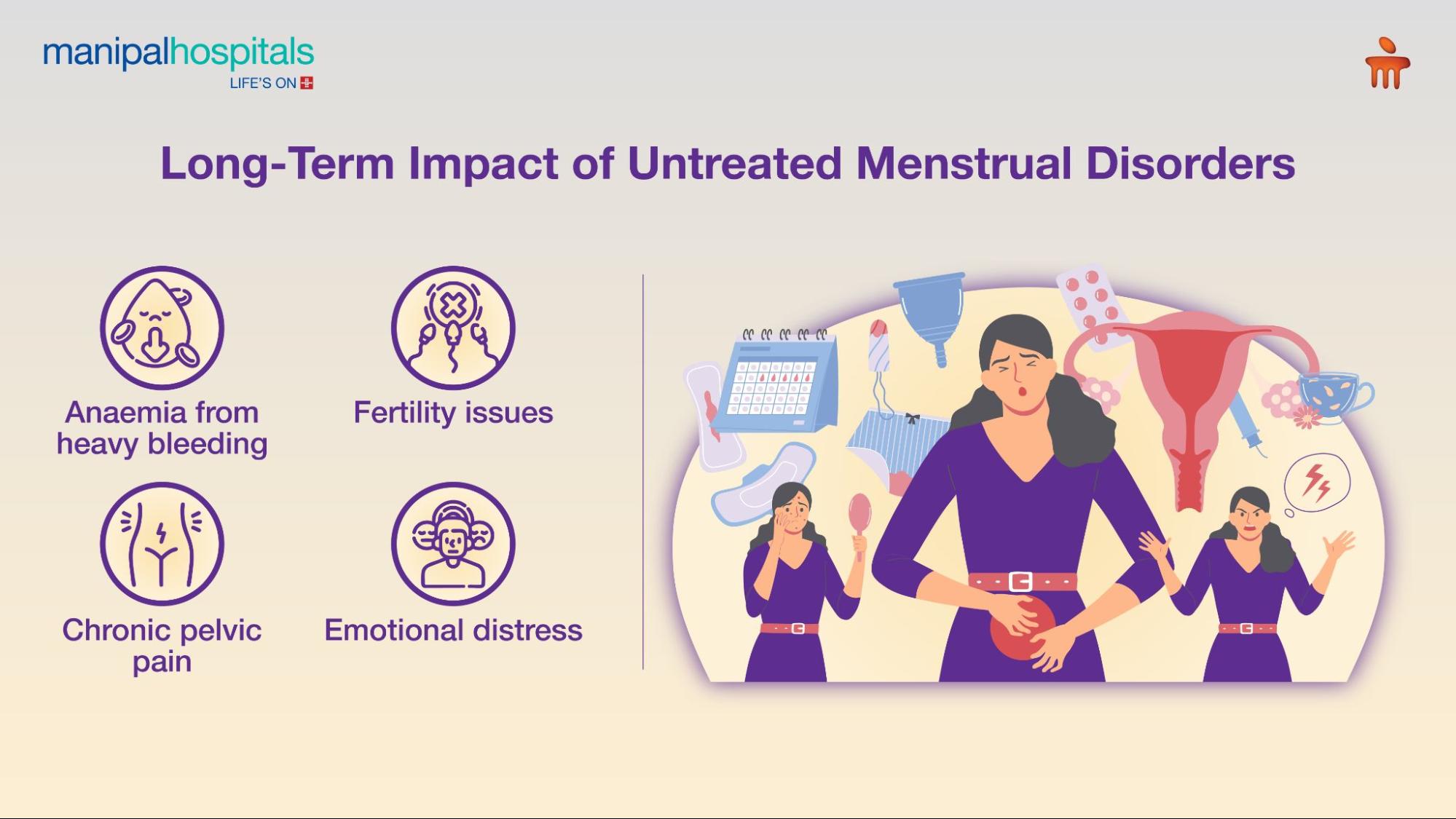
When painful periods consistently affect work, school, or sleep, they may indicate a more serious form of menstrual disorders.
Abnormal Menstrual Bleeding
Abnormal menstrual bleeding refers to unusually heavy, prolonged, or unpredictable bleeding patterns.
Signs of Abnormal Menstrual Bleeding
-
Bleeding between periods
-
Periods lasting longer than seven days
-
Passing large blood clots
-
Extremely heavy flow requiring frequent pad changes
Such symptoms are key indicators of menstrual disorders and require proper evaluation.
Premenstrual Syndrome (PMS)
Premenstrual syndrome (PMS) includes physical and emotional symptoms occurring one to two weeks before menstruation.
Common PMS Symptoms
-
Mood swings and irritability
-
Breast tenderness
-
Fatigue
While premenstrual syndrome (PMS) is common, severe symptoms that disrupt daily life may require medical support.
Premenstrual Dysphoric Disorder (PMDD)
Premenstrual dysphoric disorder (PMDD) is a severe form of PMS with significant emotional and psychological symptoms.
Symptoms of PMDD
-
Severe depression or anxiety
-
Extreme mood changes
-
Difficulty concentrating
-
Sleep disturbances
Premenstrual dysphoric disorder (PMDD) is a serious menstrual disorder that often requires specialised treatment.
Stress and Menstrual Cycle Connection
The relationship between stress and menstrual cycle health is well established. Chronic stress affects hormone production, which can worsen menstrual disorders.
How Stress Impacts Menstruation
-
Delayed or missed periods
-
Increased period pain
-
Worsening PMS symptoms
Managing stress is an important part of controlling menstrual disorders effectively.
Home Remedies for Period Pain
For mild symptoms, home remedies for period pain can provide relief and complement medical care.
Helpful Home Remedies
-
Warm compresses on the abdomen
-
Light exercise and stretching
-
Herbal teas such as ginger or chamomile
-
Adequate hydration
While home remedies for period pain help many women, persistent symptoms still require professional evaluation.
When to See a Gynaecologist
Knowing when to see a gynaecologist is crucial for managing menstrual disorders safely.
Seek Medical Help If You Experience:
-
Severe period pain not relieved by medication
-
Very heavy or prolonged bleeding
-
Irregular periods lasting several months
-
Symptoms of premenstrual dysphoric disorder (PMDD)
Our gynaecologists in Ranchi encourage women not to delay consultation, as early treatment prevents complications.
Diagnosis of Menstrual Disorders
Accurate diagnosis helps determine the cause of menstrual disorders.
Common Diagnostic Methods
|
Test |
Purpose |
|
Blood tests |
Check hormone levels |
|
Ultrasound |
Detect fibroids or cysts |
|
Pap smear |
Screen cervical health |
|
Hormonal evaluation |
Identify imbalances |
Early diagnosis ensures targeted and effective treatment.
Treatment Options for Menstrual Disorders
Treatment depends on the type and severity of menstrual disorders.
Common Treatment Approaches
-
Hormonal medications
-
Pain management therapy
-
Lifestyle modifications
-
Treatment of underlying conditions
Women seeking expert care often consult the best gynaecologist in Patiala or trusted specialists closer to home for personalised treatment plans.
Lifestyle Changes That Improve Menstrual Health
Healthy habits can significantly reduce the impact of menstrual disorders.
Beneficial Lifestyle Practices
-
A balanced diet rich in iron and calcium - Supports healthy blood levels, strengthens bones, balances hormones, and reduces fatigue commonly associated with menstrual disorders and heavy bleeding.
-
Regular physical activity - Improves blood circulation, reduces menstrual cramps, stabilises hormones, enhances mood, and helps maintain a healthy and consistent menstrual cycle.
-
Stress management techniques - Practices like yoga, meditation, or deep breathing lower cortisol levels, support hormonal balance, and reduce stress-related menstrual irregularities.
-
Adequate sleep - Allows the body to regulate hormone production, improves energy levels, supports immune function, and helps stabilise menstrual cycle patterns.
Such changes help regulate hormones and ease painful periods naturally.
Conclusion
Menstrual disorders are common but should never be dismissed as “normal suffering.” From irregular periods and painful periods to abnormal menstrual bleeding and premenstrual dysphoric disorder (PMDD), each symptom offers valuable insight into reproductive health. Understanding warning signs and knowing when to see a gynaecologist empowers women to seek timely care. With proper diagnosis, lifestyle changes, and expert guidance, most menstrual disorders can be effectively managed, improving comfort, confidence, and quality of life.
FAQ's
Common menstrual disorders include irregular periods, painful periods, abnormal menstrual bleeding, PMS, and PMDD.
Occasional irregular periods may be normal, but frequent irregularity should be evaluated.
Yes, stress and menstrual cycle health are closely linked, often worsening symptoms.
Home remedies for period pain help mild symptoms but may not be enough for severe conditions.
You should seek care if symptoms are severe, persistent, or interfere with daily life, preferably from experienced specialists like our gynaecologists in Ranchi.
Share this article on: