8 Min Read
Many women find themselves trapped in a frustrating cycle: they eat mindfully and work out regularly, and yet the numbers on the scale refuse to budge, or worse, they keep climbing. It can feel like your body is actively working against you. If this scenario sounds familiar, it is crucial to know that this isn't a failure of willpower or a matter of "trying harder."
Medical science has evolved to recognize that what was long called Polycystic Ovary Syndrome (PCOS) is actually a much broader, systemic condition now officially classified as Polyendocrine Metabolic Ovarian Syndrome (PMOS). Globally, PMOS affects 1 in 8 women, amounting to over 170 million individuals. Yet, because the old name focused narrowly on the ovaries, up to 70% of individuals remain undiagnosed. PMOS alters your body's hormonal and metabolic environment, making it incredibly easy to store fat and significantly harder to lose it. The condition frequently manifests as stubborn weight gain concentrated around the abdomen, often referred to as "PMOS belly."
To manage this condition effectively, we need to understand its underlying causes. This blog explains the reasons behind weight gain in PMOS, its consequences, and medically sound advice on achieving weight loss with PMOS.
Synopsis
What is PMOS?
PMOS stands for Polyendocrine Metabolic Ovarian Syndrome. It is a hormonal and metabolic condition that affects women during their reproductive years. The name was recently updated through a large global consensus process because the old term, Polycystic Ovary Syndrome, wrongly suggested that cysts on the ovaries were the central problem. In reality, the condition involves multiple hormone systems, metabolism, and the ovaries, not just cysts.
Typical features include irregular periods, higher levels of male-type hormones (androgens), and ovaries that show many small follicles on ultrasound. But the condition goes beyond reproduction. A key part is insulin resistance, where cells don’t respond well to insulin. The pancreas then produces more insulin to keep blood sugar in check. High insulin promotes fat storage, especially around the abdomen, and also nudges the ovaries to make more androgens. This loop makes weight gain more likely and weight loss more difficult.
When obesity is also present, the health risks rise further; type 2 diabetes, heart disease, and fertility problems all become more common.
Causes of PMOS Weight Gain
PMOS leads to weight gain through several interrelated mechanisms. These are not limited to lifestyle choices but encompass fundamental biological processes.
-
Insulin Resistance and Hyperinsulinemia
The majority of women with PMOS have some degree of insulin resistance, present even in many lean individuals. Compensatory hyperinsulinemia enhances fat creation (lipogenesis) and inhibits fat breakdown (lipolysis), particularly in abdominal adipose tissue. This makes PMOS weight gain insidious and weight loss challenging.
-
Neuroendocrine and Hormonal Imbalance
Altered gonadotropin-releasing hormone (GnRH) pulsatility leads to raised luteinising hormone (LH) levels relative to follicle-stimulating hormone (FSH). This stimulates the ovarian theca cells to produce excess androgens. Elevated androgens can increase appetite, alter body composition toward central adiposity, and impair carbohydrate and fat metabolism.
-
Altered Energy Expenditure
Women with PMOS may exhibit a reduced basal metabolic rate and lower diet-induced thermogenesis. Even a modest caloric excess can result in weight gain, and the tendency to store energy as fat is heightened.
-
Chronic Low-Grade Inflammation
PMOS is associated with a pro-inflammatory state, with elevated cytokines and oxidative stress markers. This chronic inflammation not only exacerbates insulin resistance but may also disrupt satiety signals and promote further fat accumulation.
-
Emotional and Psychological Factors
Anxiety, depression, and disordered eating patterns are more prevalent in PMOS. These can lead to emotional eating or reduced physical activity, contributing to weight gain over time. The psychological burden of visible symptoms like hirsutism and PMOS weight gain can further affect quality of life.
PMOS and Obesity
PMOS and obesity have a reciprocal relationship. Excess body fat produces its own hormones and inflammatory signals, which amplify insulin resistance and raise androgen levels further. This makes PMOS symptoms worse.
At the same time, PMOS makes it easier to gain weight and harder to lose it. Losing even a modest amount of weight, around 5 to 10% of body weight, can improve menstrual regularity, lower insulin and androgen levels, and reduce long-term health risks. Weight management in PMOS is not about appearance. It is part of medical care.
A simple day of eating might look like this:
-
Breakfast: A bowl of steel-cut oats with chia seeds and fresh berries. The fibre helps slow down sugar absorption.
-
Mid-morning: An apple with a spoon of unsweetened peanut butter. The fat and protein blunt the fruit’s sugar rise.
-
Lunch: Brown rice, grilled chicken, and a mix of vegetables. This provides protein and slow-release carbs.
-
Afternoon snack: Greek yoghurt with ground flaxseeds. The combination supports fullness and gut health.
-
Dinner: A lentil soup with a salad on the side. Nutrient-dense but not heavy.
-
Bedtime: A cup of warm turmeric milk or herbal tea. It’s a calming end to the day without affecting insulin.
The idea is not to be perfect every day, but to build a pattern that keeps blood sugar more stable and reduces cravings over time.
A Practical PMOS Diet Plan
There is no single perfect diet for PMOS, but a few principles tend to help. The main goal is to keep blood sugar and insulin levels steady and to lower inflammation.
Meals that combine low glycaemic index carbohydrates with protein and healthy fats work well. Whole grains, vegetables, legumes, nuts, seeds, olive oil, lean meats, and fish are useful building blocks. Foods that cause sharp blood sugar spikes, like sugary snacks, refined flour, and heavily processed items, tend to worsen insulin resistance and cravings.
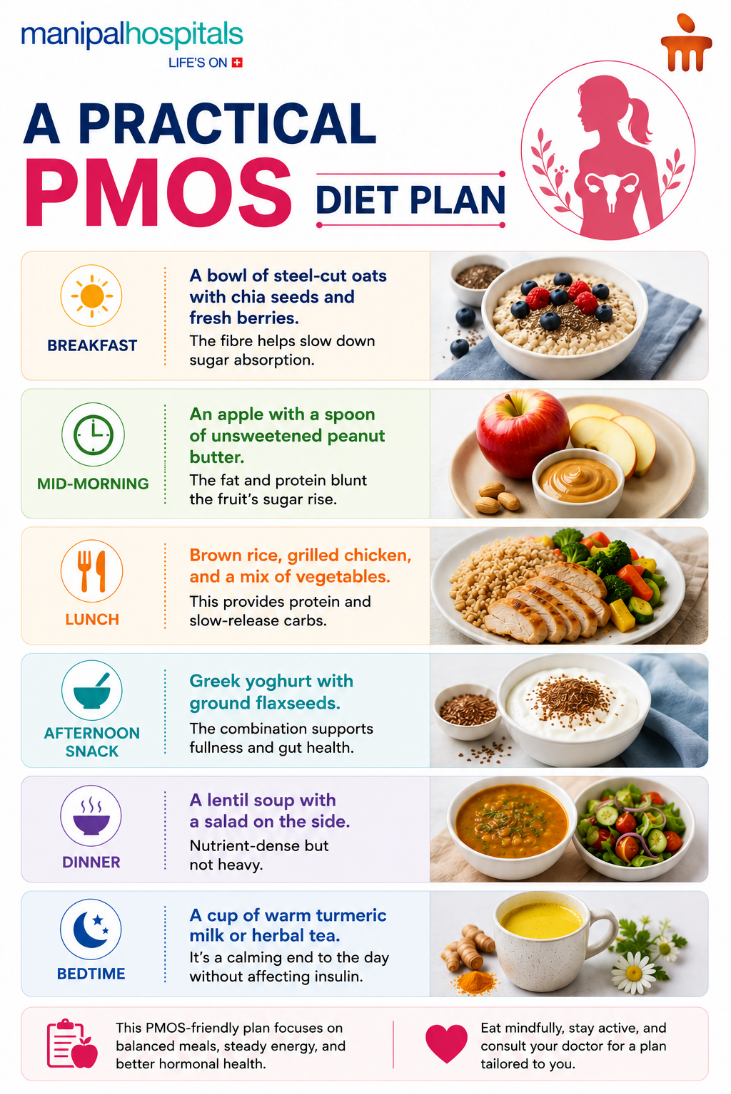
A simple day of eating might look like this:
-
Breakfast: A bowl of steel-cut oats with chia seeds and fresh berries. The fibre helps slow down sugar absorption.
-
Mid-morning: An apple with a spoon of unsweetened peanut butter. The fat and protein blunt the fruit’s sugar rise.
-
Lunch: Brown rice, grilled chicken, and a mix of vegetables. This provides protein and slow-release carbs.
-
Afternoon snack: Greek yoghurt with ground flaxseeds. The combination supports fullness and gut health.
-
Dinner: A lentil soup with a salad on the side. Nutrient-dense but not heavy.
-
Bedtime: A cup of warm turmeric milk or herbal tea. It’s a calming end to the day without affecting insulin.
The idea is not to be perfect every day, but to build a pattern that keeps blood sugar more stable and reduces cravings over time.
Weight Loss With PMOS: What Actually Helps
Extreme diets rarely work long-term in PMOS. Achieving sustainable weight loss with PMOS requires addressing the underlying endocrine issues through a combination of lifestyle adjustments and medical guidance:
-
A mix of exercise types
Combining aerobic activity (like brisk walking or cycling) with resistance training (weights or bodyweight exercises) is helpful. Resistance exercise improves how the body responds to insulin and builds muscle, which burns more energy at rest. Aiming for about 150 minutes of moderate activity each week is a reasonable target.
-
Regular meals
Skipping meals can backfire by dropping blood sugar too low and triggering stronger cravings later. Eating at fairly regular times helps keep insulin and hunger signals more level.
-
Sleep and stress
Poor sleep and high stress raise cortisol, a hormone that encourages belly fat storage and worsens insulin resistance. Prioritising rest and finding realistic ways to lower stress, like short walks, time away from screens, or talking to a counsellor, matter more than many people realise.
-
Medical options
Lifestyle changes are the foundation, but sometimes they aren’t enough on their own. Medications that help the body use insulin better (like metformin or inositols), hormonal treatments to regulate cycles, or newer weight management medications may be prescribed.
When Medical Management is Needed
For many women, medical support becomes an important part of managing PMOS. Treatment is matched to the person’s specific situation, whether the main concern is irregular cycles, excess hair growth, fertility, or metabolic health.
Options may include:
-
Insulin sensitisers to lower insulin levels and support ovulation
-
Hormonal medicines to regulate periods and protect the uterine lining
-
Anti-androgen medicines for acne or excess hair growth
-
Ovulation induction if pregnancy is desired
-
In some cases, GLP-1 receptor agonists for weight and metabolic health are used under specialist supervision
A multidisciplinary team, including gynecologists, endocrinologists, dietitians, and mental health professionals, often gives the best results. Early, consistent care lowers the chance of later complications.
Risks of Leaving PMOS Unmanaged
If you don’t address the metabolic and hormonal sides of PMOS, you can develop several long-term problems:
-
Type 2 diabetes
-
High blood pressure, unhealthy cholesterol levels, and heart disease
-
Infertility and pregnancy complications
-
Endometrial hyperplasia and endometrial cancer, from months of missed periods and unopposed oestrogen
-
Non-alcoholic fatty liver disease and sleep apnoea
A 5 to 10% drop in body weight can start to reverse some of these risks. The focus is not on rapid transformation, but on consistent, small shifts that add up.
Day-to-day Tips for Managing PMOS
-
Find a form of movement you can stick with, aiming for consistency rather than intensity.
-
Build meals around the principles that keep blood sugar stable, but don’t aim for perfection.
-
Track changes in your cycle, weight, and mood. Share these notes with your doctor.
-
If symptoms aren’t improving with lifestyle alone, seek medical advice sooner rather than later.
-
Pay attention to mental health. Anxiety and depression are real parts of PMOS and deserve care just as much as the physical symptoms.
When to See a Specialist
It’s a good idea to seek a specialist's input if:
-
Weight keeps going up despite consistent effort, or won’t budge
-
Periods remain irregular or stop for 3 months or more
-
Acne, hair growth, or hair loss worsens
-
Conception is difficult after 6–12 months
-
There are signs like dark skin patches (acanthosis nigricans), high fasting sugar, and rising blood pressure
Accessing PMOS treatment in Old Airport Road, Bangalore, connects you with a team that looks at the full picture, metabolic, hormonal, and ovarian health, rather than just one piece.
Conclusion
Weight gain in PMOS is not just about calories. It’s tied to insulin resistance, hormone changes, and inflammation. The shift in name from PCOS to PMOS reflects that the disorder is a polyendocrine and metabolic condition, not just an ovarian one. A combination of sensible eating, regular activity, medical care when needed, and attention to emotional health makes weight loss and better health achievable. If you’re struggling with symptoms, consulting a gynecologist can be an important step toward diagnosis and treatment. You can also reach out to Manipal Hospital Old Airport Road and connect with our experienced gynecology specialists for expert care.
FAQ's
Insulin resistance and high insulin levels slow fat breakdown, encourage fat storage (especially around the middle), and affect appetite signals. Hormonal imbalances add to the difficulty.
A diet that focuses on low glycaemic index foods, enough protein, healthy fats, and plenty of fibre helps keep insulin levels steadier and reduces cravings, which supports gradual weight loss.
Exercise helps insulin work better and raises metabolism, but it works best alongside dietary changes. Both together give the strongest results.
Yes. Medicines like metformin, inositols, hormonal therapy, or sometimes GLP-1 receptor agonists can be part of a plan. A PMOS specialist can assess what’s appropriate.
A sustained loss of 5 to 10% of body weight often improves menstrual cycles, insulin resistance, androgen levels, and overall metabolic health.
Share this article on: