6 Min Read
Uterine fibroids are among the most common non-cancerous growths affecting women during their reproductive years. While some fibroids remain small and symptom-free, others can cause discomfort, pain, and impact quality of life. One particular type, known as a subserosal fibroid, develops on the outer surface of the uterus and can grow outward into the pelvic cavity.
The good news is that several effective treatment options are available today, ranging from careful monitoring and lifestyle modifications to advanced minimally invasive procedures. Understanding the available subserosal uterine fibroid treatment options can help women make informed decisions about their health and seek timely medical care when needed.
Synopsis
- What Are Subserosal Uterine Fibroids?
- What Causes Subserosal Fibroids?
- Common Symptoms of Subserosal Fibroids
- When Is Treatment Necessary?
- Small Uterine Fibroid Treatment Options
- Laser Treatment for Uterine Fibroids and Other Minimally Invasive Options
- Uterine Fibroids Natural Treatment: Can Lifestyle Changes Help?
- How Are Subserosal Fibroids Diagnosed?
- When Should You Consult a Specialist?
- Conclusion
What Are Subserosal Uterine Fibroids?
Fibroids are benign tumors made up of muscle and fibrous tissue that develop within or around the uterus. Depending on their location, they are classified into different types, including intramural, submucosal, and subserosal fibroids.
Subserosal fibroids grow on the outer wall of the uterus and may extend outward into the pelvic cavity. Unlike submucosal fibroids, which commonly cause heavy menstrual bleeding, subserosal fibroids are more likely to create symptoms due to their size and pressure on nearby organs.
These fibroids can vary significantly in size. Some remain small and are discovered incidentally during routine examinations, while others can grow large enough to cause noticeable symptoms.
What Causes Subserosal Fibroids?
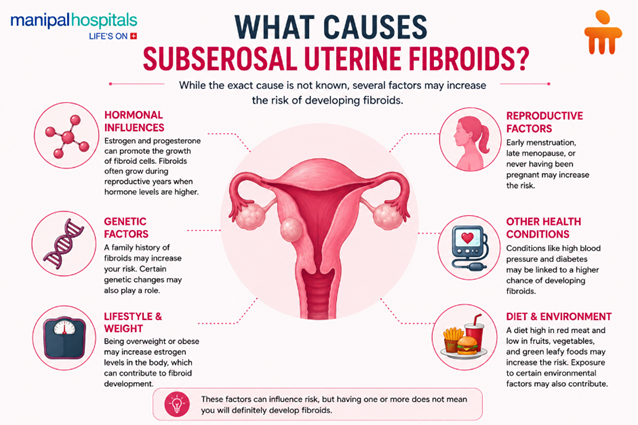
Although the exact cause of uterine fibroids remains unclear, several factors may contribute to their development:
Hormonal Influences
Estrogen and progesterone, the hormones responsible for regulating the menstrual cycle, are believed to promote fibroid growth. Fibroids often enlarge during reproductive years and may shrink after menopause when hormone levels decline.
Genetic Factors
Women with a family history of fibroids may have a higher risk of developing them. Certain genetic mutations have also been linked to fibroid formation.
Lifestyle and Health Factors
Obesity, high blood pressure, and certain dietary patterns may increase the likelihood of developing fibroids. However, research is ongoing to better understand these associations.
Common Symptoms of Subserosal Fibroids
Not all subserosal fibroids cause symptoms. In fact, many women may be unaware they have fibroids until they undergo a pelvic examination or imaging study.
When symptoms occur, they may include:
-
Pelvic pain or pressure
-
Lower back pain
-
Frequent urination
-
Constipation
-
Bloating or abdominal fullness
-
Pain during intercourse
-
Difficulty emptying the bladder completely
Large fibroids can sometimes press against nearby organs such as the bladder or bowel, leading to persistent discomfort and affecting daily activities.
When Is Treatment Necessary?
Treatment is not always required. Small fibroids that are not causing symptoms may simply be monitored through periodic examinations and imaging studies.
However, treatment may be recommended if fibroids:
-
Cause persistent pelvic pain
-
Grow rapidly
-
Lead to pressure symptoms affecting the bladder or bowel
-
Interfere with fertility or pregnancy
-
Affect quality of life
The most appropriate treatment depends on factors such as the size and location of the fibroid, symptom severity, age, and future pregnancy plans.
Small Uterine Fibroid Treatment Options
For women with mild symptoms or smaller fibroids, conservative management may be sufficient.
Doctors may recommend:
Watchful Waiting
Many small fibroids grow slowly or remain stable over time. Regular monitoring through ultrasound examinations can help track changes without immediate intervention.
Medications
Certain medications may help manage symptoms by regulating hormones, reducing menstrual bleeding, or controlling pelvic discomfort. While medications may alleviate symptoms, they do not permanently eliminate fibroids.
Lifestyle Modifications
Maintaining a healthy weight, exercising regularly, and following a balanced diet may contribute to overall reproductive health and help manage symptoms.
For many women, small uterine fibroid treatment involves a combination of monitoring and symptom management rather than surgery.
Laser Treatment for Uterine Fibroids and Other Minimally Invasive Options
Advances in gynecological care have made it possible to treat many fibroids using minimally invasive techniques that offer shorter recovery times and less postoperative discomfort.
Laser Treatment for Uterine Fibroids
Laser-assisted procedures may be used in selected cases to precisely target fibroid tissue while minimizing damage to surrounding healthy tissue. These approaches are designed to reduce symptoms while preserving the uterus whenever possible.
The suitability of laser treatment for uterine fibroids depends on factors such as the size, number, and location of the fibroids. A gynecologist can determine whether this option is appropriate after a detailed evaluation.
Laparoscopic Myomectomy
This minimally invasive procedure involves removing fibroids through small incisions using specialized instruments and a camera. It is often recommended for women who wish to preserve fertility.
Robotic-Assisted Surgery
Robotic-assisted techniques provide enhanced precision and visualization, allowing surgeons to remove fibroids while minimizing trauma to surrounding tissues.
Uterine Artery Embolization (UAE)
This procedure works by blocking the blood supply to fibroids, causing them to shrink over time. It may be considered for women who want to avoid major surgery.
Hysterectomy
In cases involving multiple large fibroids or severe symptoms, removal of the uterus may be recommended. This option is generally considered when childbearing is complete and other treatments have not been successful.
Uterine Fibroids Natural Treatment: Can Lifestyle Changes Help?
Many women explore uterine fibroids' natural treatment approaches as part of their overall management plan. While natural remedies cannot eliminate fibroids, certain lifestyle measures may help support overall health and reduce symptom burden.
Eat a Balanced Diet
A diet rich in fruits, vegetables, whole grains, and lean proteins may support hormonal balance and overall well-being.
Maintain a Healthy Weight
Excess body fat can influence estrogen levels, which may contribute to fibroid growth. Weight management may help reduce risk factors associated with fibroids.
Regular Physical Activity
Exercise promotes overall health, supports weight management, and may help reduce inflammation in the body.
Stress Management
Chronic stress can affect hormonal balance. Practices such as yoga, meditation, and mindfulness may contribute to better physical and emotional well-being.
It is important to remember that natural approaches should complement—not replace—medical evaluation and treatment when symptoms are significant.
How Are Subserosal Fibroids Diagnosed?
Diagnosis typically begins with a detailed medical history and pelvic examination. Imaging tests may include:
-
Pelvic ultrasound
-
Transvaginal ultrasound
-
MRI scans
-
Hysteroscopy in selected cases
These tests help determine the size, location, and number of fibroids, allowing doctors to recommend the most appropriate treatment strategy.
When Should You Consult a Specialist?
Women should seek medical evaluation if they experience:
-
Persistent pelvic pain
-
Increasing abdominal swelling
-
Severe menstrual symptoms
-
Fertility concerns
-
Symptoms that interfere with daily activities
Early diagnosis allows for timely intervention and may prevent complications associated with larger fibroids.
Conclusion
Subserosal fibroids are a common gynecological condition that can range from completely symptom-free to significantly affecting daily life. Fortunately, modern subserosal uterine fibroid treatment options include everything from watchful waiting and medications to advanced minimally invasive procedures such as laser-assisted treatments and laparoscopic surgery.
While uterine fibroids' natural treatment approaches in Old Airport Road and healthy lifestyle habits may help support overall well-being, women experiencing persistent symptoms should seek professional medical advice. A personalized treatment plan based on the size, location, and impact of the fibroid can help achieve the best possible outcomes.
For women seeking expert uterine fibroid treatment in Manipal Hospitals, Old Airport Road, consulting an experienced gynecologist can help identify the most suitable management approach and ensure comprehensive care tailored to individual needs.
FAQ's
A subserosal uterine fibroid is a non-cancerous growth that develops on the outer wall of the uterus and grows outward into the pelvic cavity. Depending on its size, it may cause symptoms such as pelvic pressure, lower back pain, frequent urination, or abdominal bloating.
No. Many subserosal fibroids are small and do not cause symptoms. In such cases, doctors may recommend regular monitoring through pelvic examinations and imaging studies. Treatment is usually considered when fibroids become large, painful, or interfere with daily activities.
The most suitable subserosal uterine fibroid treatment depends on several factors, including the size and location of the fibroid, severity of symptoms, age, and future pregnancy plans. Treatment options may range from medications and monitoring to minimally invasive procedures and surgery.
Yes. Small uterine fibroid treatment often involves watchful waiting, medications to manage symptoms, and lifestyle modifications. Surgery may not be necessary if the fibroid remains stable and does not cause significant discomfort.
Laser treatment for uterine fibroids may be an option in selected cases. It is designed to target fibroid tissue with precision while minimizing damage to surrounding structures. However, eligibility depends on the size, number, and location of the fibroids and should be determined by a gynecologist.
Share this article on: