8 Min Read
Ovarian cancer is one of the most common gynaecological cancers affecting women worldwide. It develops when abnormal cells in the ovaries begin to grow uncontrollably, forming a tumour that can spread to nearby tissues and other parts of the body if left untreated. Although ovarian cancer can occur at any age, it is more frequently diagnosed in women after menopause.
Synopsis
What is Ovarian Cancer?
The ovaries are two small reproductive organs located on either side of the uterus. They produce eggs and the hormones oestrogen and progesterone. Ovarian cancer develops when cells within the ovary undergo genetic changes that cause them to multiply uncontrollably.
There are different types of ovarian cancer depending on the cells from which they originate. Epithelial ovarian cancer, which begins in the outer lining of the ovary, accounts for nearly 90% of all ovarian cancers. Less common types include germ cell tumours, which arise from egg-producing cells, and stromal tumours, which develop from hormone-producing tissues.
While ovarian cancer is relatively less common than breast or cervical cancer, it remains one of the leading causes of cancer-related deaths among women because it is often diagnosed at an advanced stage.
Ovarian Cancer Symptoms
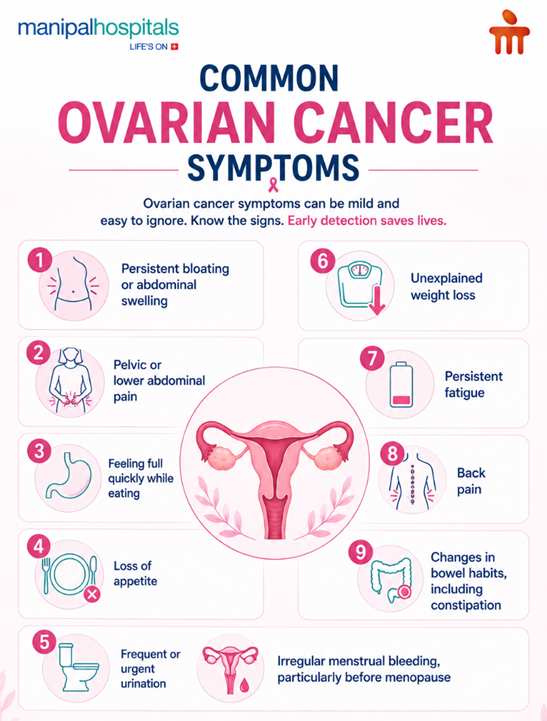
Common ovarian cancer symptoms include:
-
Persistent bloating or abdominal swelling
-
Pelvic or lower abdominal pain
-
Feeling full quickly while eating
-
Loss of appetite
-
Frequent or urgent urination
-
Unexplained weight loss
-
Persistent fatigue
-
Back pain
-
Changes in bowel habits, including constipation
-
Irregular menstrual bleeding, particularly before menopause
These symptoms may also occur due to non-cancerous conditions such as ovarian cysts or digestive disorders. However, if they are persistent, worsen over time, or occur almost daily, it is important to seek medical advice.
Signs of Ovarian Cancer You Shouldn't Ignore
Many women dismiss early symptoms as indigestion, gas, or normal ageing. However, certain warning signs warrant prompt medical evaluation.
Persistent abdominal bloating that does not improve, ongoing pelvic pain, increasing abdominal size, difficulty eating normal portions of food, or unexplained weight changes should never be ignored. Similarly, if urinary urgency develops without an underlying urinary tract infection or bowel habits change for several weeks, it is advisable to consult a gynaecologist.
Women with a strong family history of ovarian or breast cancer should be particularly vigilant, even if symptoms appear mild.
Causes of Ovarian Cancer
The exact causes of ovarian cancer remain unclear. However, researchers believe that genetic mutations allow ovarian cells to grow uncontrollably, eventually forming malignant tumours.
These mutations may occur spontaneously or be inherited from parents. Inherited mutations in the BRCA1 and BRCA2 genes significantly increase the lifetime risk of developing ovarian cancer. Other inherited genetic syndromes, such as Lynch syndrome, may also increase the risk.
While scientists continue to study the precise causes of ovarian cancer, several lifestyle and biological factors have been associated with an increased likelihood of developing the disease.
Risk Factors for Ovarian Cancer
Several factors may increase a woman's risk of ovarian cancer, including:
Increasing Age
The risk increases with age and is highest among women over the age of 50, particularly after menopause.
Family History
A family history of ovarian, breast, colorectal, or endometrial cancer may indicate an inherited genetic predisposition.
Inherited Gene Mutations
Women carrying BRCA1 or BRCA2 gene mutations have a significantly higher lifetime risk of ovarian cancer compared to the general population.
Reproductive History
Women who have never been pregnant or had their first pregnancy later in life may have a slightly increased risk.
Endometriosis
Studies suggest that endometriosis may increase the risk of certain types of ovarian cancer.
Obesity
Excess body weight has been associated with an increased risk of developing ovarian cancer as well as poorer treatment outcomes.
Hormone Replacement Therapy
Long-term use of postmenopausal hormone replacement therapy, particularly oestrogen alone, may slightly increase ovarian cancer risk in some women.
It is important to remember that having one or more risk factors does not necessarily mean a woman will develop ovarian cancer. Likewise, many women diagnosed with ovarian cancer have no obvious risk factors.
How is Ovarian Cancer Diagnosed?
Diagnosing ovarian cancer involves a combination of clinical evaluation, imaging studies, and laboratory tests. Your doctor will begin by reviewing your symptoms, medical history, and family history, followed by a physical and pelvic examination.
If ovarian cancer is suspected, imaging tests such as transvaginal ultrasound, pelvic ultrasound, CT scan, or MRI may be recommended to evaluate the ovaries and identify suspicious masses. Blood tests, including the CA-125 tumour marker, may also be performed. While elevated CA-125 levels do not confirm ovarian cancer, they can support the diagnosis when interpreted alongside imaging findings and clinical assessment.
If imaging suggests a suspicious ovarian mass, surgery is often required to remove the tumour and obtain tissue samples. A biopsy and histopathological examination provide the definitive diagnosis and help determine the type and stage of ovarian cancer, allowing specialists to develop an individualised treatment plan.
If you are experiencing persistent symptoms or have concerns about your family history, consulting a specialist in Old Airport Road, can help ensure timely evaluation and access to advanced diagnostic facilities.
Can Ovarian Cancer Be Prevented?
There is no guaranteed way to prevent ovarian cancer. However, certain factors may help lower the risk.
Using oral contraceptive pills for several years under medical supervision has been associated with a reduced risk of ovarian cancer. Pregnancy and breastfeeding may also offer some protection. Maintaining a healthy weight, eating a balanced diet, exercising regularly, and avoiding smoking contribute to overall health and may reduce the risk of several cancers.
Women with a significant family history of ovarian or breast cancer should discuss genetic testing with their doctor. In women who carry high-risk genetic mutations, preventive surgery may be considered after completing their family.
Treatment for Ovarian Cancer
Treatment depends on the type, stage, and grade of the cancer, as well as the patient's overall health and future fertility plans.
Surgery is the primary treatment for most ovarian cancers and aims to remove as much of the tumour as possible. Depending on the extent of the disease, the procedure may involve removing one or both ovaries, the fallopian tubes, uterus, nearby lymph nodes, or affected tissues.
Chemotherapy is commonly recommended after surgery to destroy any remaining cancer cells and reduce the risk of recurrence. In selected patients, chemotherapy may also be administered before surgery to shrink the tumour.
Some women may also benefit from targeted therapy or immunotherapy, particularly when specific genetic mutations are identified. Advances in personalised cancer treatment have improved outcomes and provided additional options for patients with advanced or recurrent ovarian cancer.
Conclusion
Ovarian cancer is often referred to as a "silent" disease because its symptoms can be subtle and easily mistaken for less serious conditions. Paying attention to persistent changes in your body and seeking timely medical evaluation can make a significant difference in achieving an early diagnosis and improving treatment outcomes.
At Manipal Hospital Old Airport Road, our multidisciplinary team of gynaecologic oncologists, radiologists, pathologists, and cancer specialists provides comprehensive care for women with ovarian cancer. From advanced diagnostic services to personalised treatment plans and long-term follow-up, we are committed to delivering compassionate, evidence-based care at every stage of your journey.
FAQ's
Early ovarian cancer symptoms often include persistent bloating, pelvic pain, abdominal discomfort, feeling full quickly while eating, and frequent urination. These symptoms are usually subtle and may resemble common digestive conditions.
No. Some women experience little or no pain in the early stages. This is why persistent bloating, changes in appetite, urinary symptoms, or abdominal swelling should not be ignored.
Women over the age of 50, those with BRCA1 or BRCA2 gene mutations, a strong family history of ovarian or breast cancer, endometriosis, or certain inherited genetic syndromes have a higher risk.
Routine screening is not recommended for women at average risk because there is no single test that reliably detects ovarian cancer early. Women with a high genetic risk may require regular surveillance under specialist guidance.
When diagnosed early, ovarian cancer can often be treated successfully with surgery and chemotherapy. Even in advanced stages, modern treatment approaches can improve survival and quality of life.
Share this article on: