8 Min Read
Changes in the mouth, throat, or voice are often easy to overlook, especially when they resemble common everyday health concerns. However, persistent symptoms affecting the head and neck region can sometimes point to cancer developing in areas such as the mouth, throat, voice box, nasal cavity, or salivary glands. In many people, the symptoms appear slowly and can feel similar to common problems like a sore throat, mouth ulcer, or voice strain. If symptoms like a sore throat, trouble swallowing, a lump in the neck, or changes in the voice continue for weeks, it is better not to ignore them.
Learning about the symptoms, possible causes, and treatment options can help people recognise when something does not feel normal and needs medical attention. This blog explains the common signs of head and neck cancer, the factors that may increase the risk, and the treatments doctors commonly use today.
Synopsis
- What Is Head and Neck Cancer?
- Common Symptoms of Head and Neck Cancer
- Head and Neck Cancer Causes
- Types of Head and Neck Cancer
- Diagnosis and Staging
- Treatment Options for Head and Neck Cancer
- Benefits of Early Detection and Treatment
- Living with Head and Neck Cancer
- Prevention and Risk Reduction
- Conclusion
What Is Head and Neck Cancer?
Head and neck cancers develop in different areas of the head and neck region. These can include the mouth, pharynx, larynx, nasal cavity, paranasal sinuses, and salivary glands. Most of the time, it begins in the cells that line the inside of these areas.
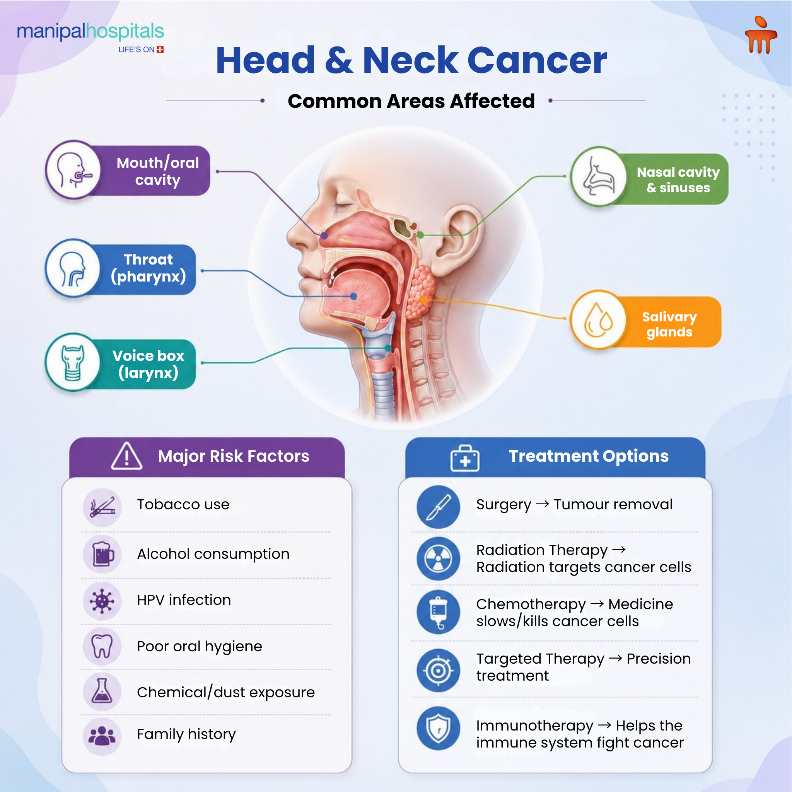
Head and neck cancers are usually classified based on the area where they start. These may include:
-
Mouth or oral cavity
-
Throat or pharynx
-
Larynx or voice box
-
Nasal cavity and sinuses
-
Salivary glands
Although these parts of the body work differently, they are closely connected. The treatment plan usually depends on the area affected, the stage of the cancer, and the person’s overall health condition.
Common Symptoms of Head and Neck Cancer
The challenge with this condition is that symptoms often develop slowly. They may not interfere with daily life right away.
Some commonly reported head and neck cancer symptoms include:
-
A lump or swelling in the neck that does not go away
-
Persistent sore throat or throat pain
-
Difficulty swallowing or chewing
-
Hoarseness or noticeable changes in the voice
-
Mouth sores or ulcers that do not heal
-
Ear pain or discomfort without an obvious reason
Not all symptoms appear together. Sometimes, there is just one sign that lingers. That is often the clue.
People usually wait, thinking it will pass. If symptoms continue beyond two weeks, it is better to have them checked. Early attention can make head and neck cancer treatment more effective.
Head and Neck Cancer Causes
There is no single reason why this cancer develops. Instead, it is usually the result of long-term exposure to certain risk factors.
Some of the most recognised head and neck cancer causes are:
-
Tobacco use, whether smoked or chewed
-
Alcohol consumption, particularly when frequent
-
Infection with HPV
-
Poor dental hygiene over time
-
Environmental exposure to dust or chemicals
-
Family history in some cases
Among these, tobacco use remains one of the biggest risk factors. The risk becomes even higher when tobacco and alcohol use occur together.
In recent years, HPV infection has also become an important cause, particularly in cancers affecting the throat. Understanding these risk factors can help with prevention and encourage earlier medical evaluation when symptoms appear.
Types of Head and Neck Cancer
Not all head and neck cancers behave the same way. They are usually grouped based on where they start.
The main types include:
-
Oral cancers involving the lips, tongue, and gums
-
Pharyngeal cancers affecting the throat
-
Laryngeal cancers that impact speech
-
Nasal and sinus cancers
-
Salivary gland cancers
The symptoms will be different for different patients because they will depend on which body part is affected. One patient may experience voice changes, while another patient may experience soreness and patches inside the mouth that do not heal.
Despite these differences, many principles of head and neck cancer treatment remain similar across types.
Diagnosis and Staging
Diagnosis often begins with a simple clinical examination. If something looks unusual, further tests are suggested. These may include imaging scans, endoscopic evaluation, and biopsy. A biopsy is essential because it confirms whether cancer cells are present. Once confirmed, staging becomes important. The below is a look at what each stage means:
|
Stage |
Description |
Treatment Approach |
|
Stage I |
Small and localised |
Surgery or radiation |
|
Stage II |
Larger but contained |
Combined treatment |
|
Stage III |
Spread to nearby nodes |
Surgery with radiation |
|
Stage IV |
Advanced stage |
Multiple therapies |
Staging helps guide the direction of head and neck cancer treatment. It ensures that treatment is appropriate rather than excessive or insufficient.
Treatment Options for Head and Neck Cancer
Treatment is planned carefully, depending on the stage and exact location.
Surgery
Surgery involves removing the tumour. In early cases, this alone may be enough.
Radiation Therapy
Radiation is used to target cancer cells directly. It is often part of a combined treatment.
Chemotherapy
Chemotherapy uses medicines to destroy or slow the growth of cancer cells. It is usually added in more advanced stages.
Targeted Therapy
This approach focuses on specific mechanisms within cancer cells, making treatment more precise.
Immunotherapy
Immunotherapy supports the body’s immune system in identifying and fighting cancer cells.
Patients seeking head and neck cancer treatment in Old Airport Road often have access to these modern approaches as part of a coordinated care plan.
Benefits of Early Detection and Treatment
Early diagnosis makes a noticeable difference. It often reduces the complexity of treatment and improves recovery.
Some key advantages include:
-
Better survival outcomes
-
Less aggressive treatment is required
-
Preservation of speech and swallowing
-
Faster recovery
Early identification of head and neck cancer symptoms is one of the best methods for improving prognosis.
Living with Head and Neck Cancer
The treatment process will likely affect your daily schedule. Simple tasks such as eating, speaking, and socialising may feel unfamiliar during treatment and recovery.
Rehabilitation is essential. It can encompass speech therapy, dietary counselling, and even psychological counselling.
A well-rounded approach to head and neck cancer treatment focuses not just on removing the disease but also on restoring quality of life.
Prevention and Risk Reduction
Although prevention may not be assured in some instances, there are certain lifestyle practices that can reduce one’s risks for developing head and neck cancer.
These include:
-
Not using tobacco products
-
Limiting alcohol consumption
-
Practice proper oral hygiene
-
Receiving the HPV vaccine
-
Scheduling regular check-ups
Awareness of head and neck cancer causes helps people make informed decisions about their health. If you experience any persistent symptoms or have concerns about your risk, consult an oncologist in Old Airport Road, Bangalore, for timely evaluation and expert guidance.
Conclusion
Head and neck cancer often begins quietly, without dramatic warning signs. That is why awareness plays such an important role. Early detection of head and neck cancer signs results in timely diagnosis and a favourable treatment outcome. Modern head and neck cancer treatments have become more personalised and efficient due to scientific advances. If properly managed and treated on time, chances of survival are high, and many people continue to lead active lives after treatment.
Should you experience any signs, seek help at Manipal Hospital, Old Airport Road, Bangalore. We offer the best head and neck cancer treatment at Old Airport Road with advanced technology and personalised planning.
FAQ's
Initial signs of head and neck cancer are sore throat, swollen lymph nodes, trouble swallowing, and voice alterations that fail to go away.a
Some of the reasons for head and neck cancer are smoking, drinking alcohol, HPV infection, and constant exposure to environmental irritants or poor dental care.
Yes, head and neck cancer at an early stage can be treated effectively. It depends on early diagnosis and response to treatment.
It involves physical exams, diagnostic tests, endoscopy, and biopsy techniques. This helps detect the disease and know its stage prior to treatment.
One can seek the best head and neck cancer treatment services at Old Airport Road, where there are specialised centres for treating the ailment.
Share this article on: