7 Min Read
Rising temperatures often brings outdoor activities and vacations for many, but it also brings the risk of significant health issues, including heart disease. While many times we associate heart problems with genetics or other factors, the extreme heat during summer can also be dangerous for our heart health. This blog is a comprehensive account of how summer heat, especially in extreme levels, can be dangerous for our cardiac health and the important preventive measures that can be taken against the same.
Synopsis
The Physiological Impact of Heat on Your Heart
Your body works hard to maintain a stable internal temperature. During a heatwave, the cardiovascular system works even harder to cool the body, which significantly increases the risk of heat related heart disease.
Increased Cardiac Workload
Your body makes you sweat in order to maintain its temperature. To dissipate heat, blood flow to the skin increases, forcing the heart to work harder to pump blood to both vital organs and the skin. This increases your heart rate and cardiac output significantly, placing immense strain on the heart. This is quite concerning, especially for those with pre-existing conditions.
Dehydration and Blood Viscosity
Excessive sweating without adequate fluid replacement can cause dehydration. It also reduces blood volume, making blood thicker and more viscous. The heart must then exert greater force to pump this thicker blood, which causes it to strain and increasing the risk of thrombosis and cardiovascular events.
Electrolyte Imbalance
Sweating can cause loss of essential minerals, like sodium, potassium and magnesium. Significant loss of these minerals can disrupt the electrical balance needed for proper heart function, leading to irregular heart rhythms (arrhythmias) and potentially contributing to sudden cardiac events. Maintaining proper electrolyte balance is crucial for preventing heat related heart problems.
Who is Most at Risk?
Extreme heat can make anyone fall sick, but certain factors can make one more susceptible towards heat related heart problems.
-
Individuals with Pre-existing Conditions: Those with pre-existing heart conditions, high blood pressure, diabetes, or obesity face a significantly elevated risk of heat related heart disease.
-
Elderly and Young Children: The body's ability to regulate temperature declines with age. Elderly individuals may have less efficient sweat glands and reduced thirst sensation. Young children have a larger body surface area relative to their mass, making them more susceptible to heat gain and fluid loss.
-
People on Certain Medications: Some medications, like diuretics (for high blood pressure) and beta-blockers, can increase fluid loss from the body or limit the heart's ability to increase its rate for cooling.
Symptoms of Heat Related Illnesses and Heat Related Heart Disease
Excessive heat exposure can cause a range of illnesses, from severe dehydration to cardiac issues. Recognising warning signs of heat related illnesses is crucial for timely medical intervention.
Symptoms of Heat-Related Illnesses
-
Heat Exhaustion: Heavy sweating, weakness, cold/clammy skin, fast weak pulse, nausea or vomiting, muscle cramps, faintness or dizziness.
-
Heat Stroke: High body temperature (above 103°F), hot skin which is either dry or moist to the touch, rapid or strong pulse rate, throbbing headache, confusion, dizziness, nausea, unconsciousness. Heat stroke is a medical emergency requiring immediate attention.
Symptoms of a Heart Attack in Hot Weather
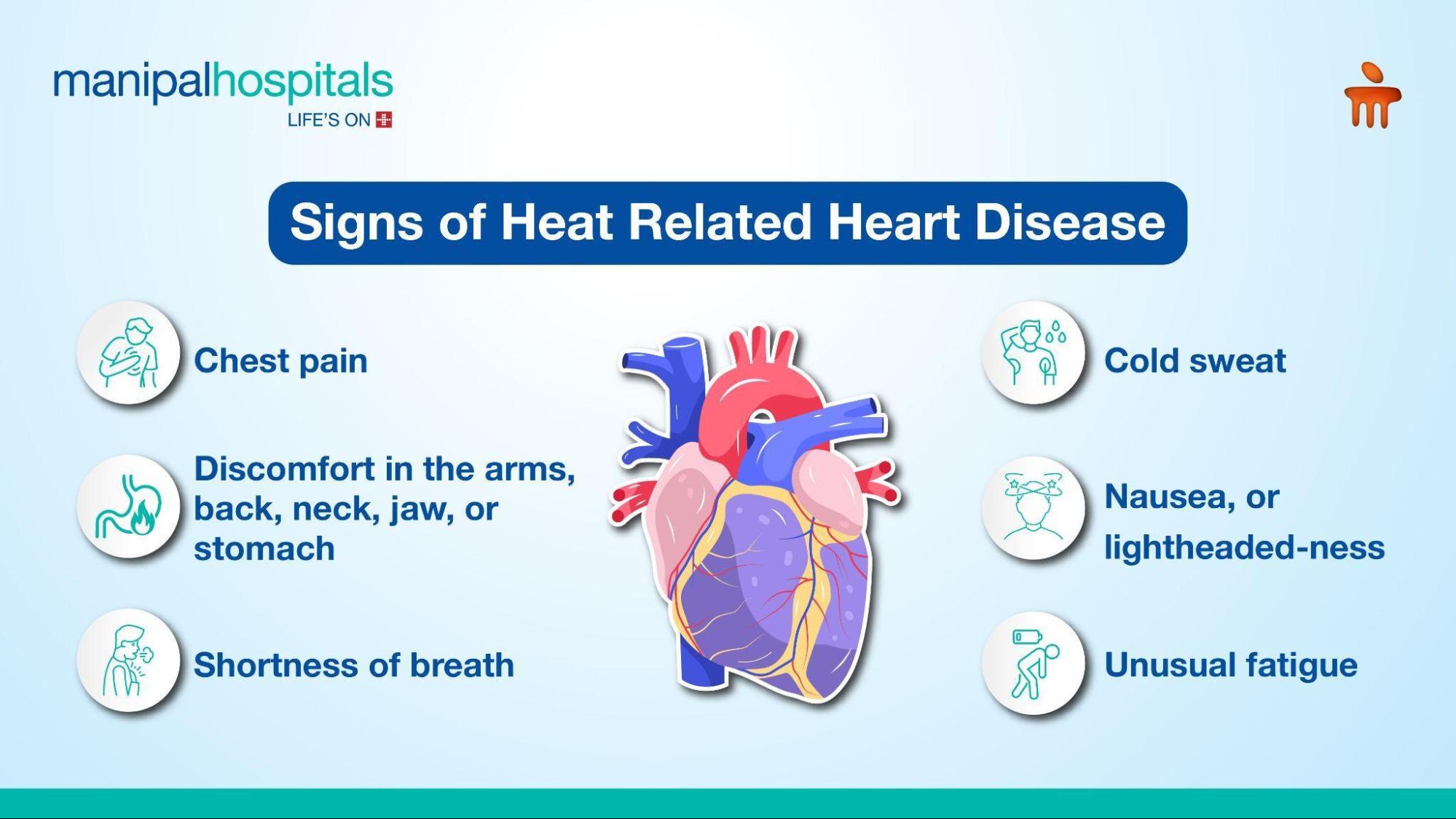
Symptoms can sometimes be atypical. While chest pain is common, others include discomfort in the arms, back, neck, jaw, or stomach; shortness of breath; cold sweat, nausea, or lightheadedness; and unusual fatigue. If you suspect a heart attack, especially with a history of heat related heart problems, seek emergency medical care immediately.
Care Essentials: Do's and Don'ts for Heart Health in summer
Do’s:
-
Do stay hydrated: Drink plenty of water throughout the day.
-
Do seek cool environments: Spend time in air-conditioned spaces.
-
Do dress light and loose: Wear lightweight, light-colored clothing.
-
Do time your activities: Schedule outdoor activities for cooler parts of the day.
-
Do eat light meals: Opt for smaller, more frequent meals.
-
Do check on vulnerable individuals: Regularly check on elderly relatives and young children.
Don’ts:
-
Don't ignore thirst: Stay adequately hydrated to avoid dehydration.
-
Don't exercise outdoors during peak heat: Avoid strenuous activity between 10 AM and 4 PM to limit exposure to the heat waves.
-
Don't drink alcohol or excessive caffeine: Both can contribute to dehydration, which is detrimental for summer.
-
Don't rely solely on fans in extreme heat: Fans may not be sufficient in very high temperatures. Stay in an air-conditioned room, or install an air cooler if possible.
-
Don't leave anyone in a parked car: Temperatures rise rapidly to dangerous levels, and can lead to dehydration, suffocation and even death.
Conclusion
Early recognition and prevention are key to avoiding cardiovascular complications. If you are concerned about your heart health during hot weather, our expert cardiologists at Manipal Hospitals Mukundapur are here to provide comprehensive cardiac care through advanced diagnostics, treatment, and preventive advice. Book an appointment with our expert cardiologists at Manipal Hospitals Mukundapur today.
FAQ's
Yes, extreme heat can directly contribute to a heart attack. The increased strain on the heart, dehydration, and electrolyte imbalances caused by heat can trigger a cardiac event, especially in individuals with underlying heart conditions.
Yes, certain medications like diuretics, beta-blockers, and some antidepressants can interfere with your body's ability to regulate temperature or maintain hydration.
Fluid requirements vary depending on age, activity, kidney function, and medical conditions.
If you suspect heat stroke, call for emergency medical help immediately. While waiting, move the person to a cooler place, loosen clothing, and apply cool, wet cloths to the skin. Do not give fluids if the person is unconscious.
While staying indoors helps, it is not a complete guarantee, especially if your home is not air-conditioned or well-ventilated. Indoor temperatures can still rise dangerously high. Seek air-conditioned environments when possible.
Share this article on: