7 Min Read
Women often face unique challenges when it comes to maintaining their health, and spine care is no exception. Factors like prolonged desk work combined with significant hormonal shifts throughout life can disproportionately impact spine health in women. These factors can lead to issues such as back pain in women and even more severe spine problems in women. Studies show that over 80% of adults will experience back pain at some point in their lives, with women frequently reporting higher incidences, particularly of lower back pain in women. The good news is that with strategically targeted spine care for women, much of this discomfort is preventable and manageable. This blog empowers you with the knowledge and tools to nurture your spinal health proactively.
Synopsis
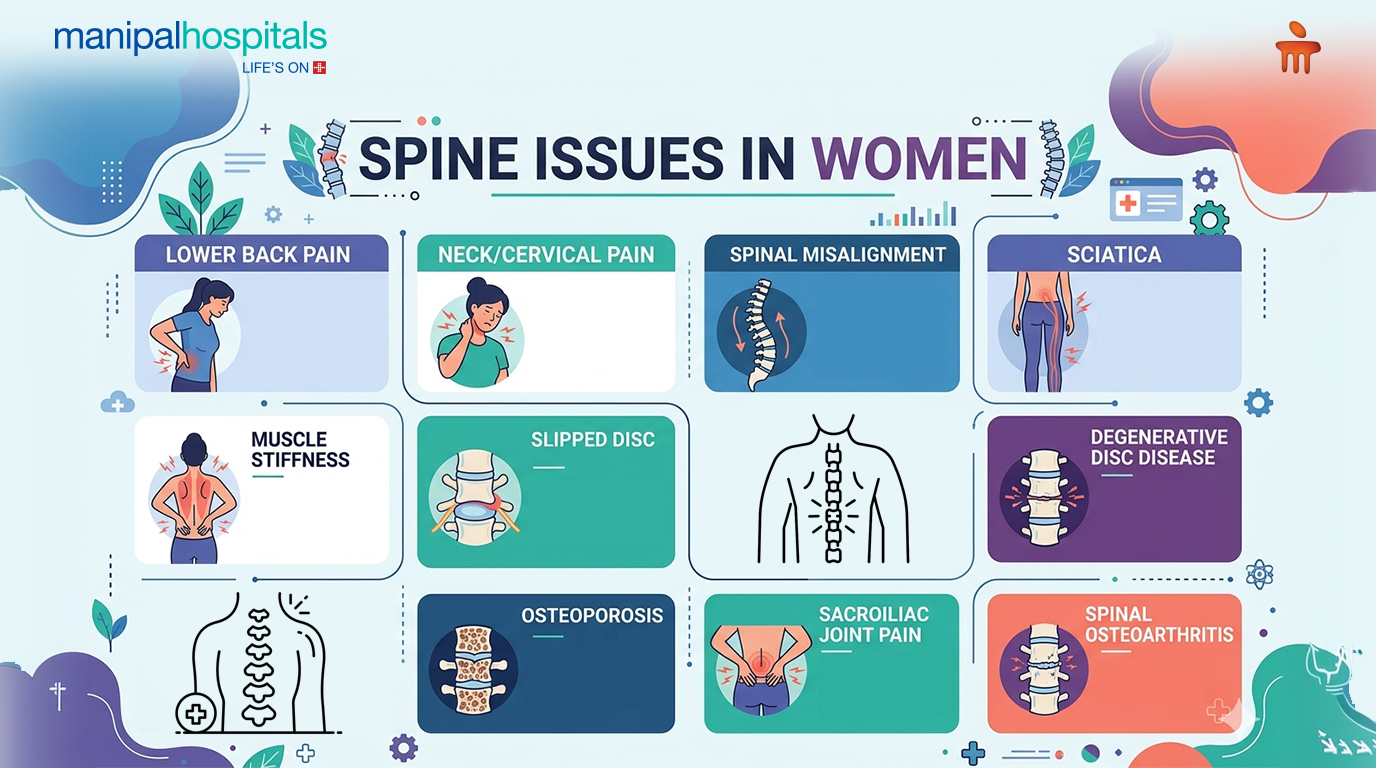
Common spine-related issues in women
-
Lower back pain
-
Neck pain and cervical strain
-
Poor posture and spinal misalignment
-
Sciatica (radiating leg pain)
-
Muscle stiffness and tension
-
Herniated (slipped) disc
-
Degenerative disc disease
-
Osteoporosis-related spinal problems
-
Pain in the sacroiliac joint (where spine joins the pelvis)
-
Spinal osteoarthritis and stiffness
Optimising spine health for desk-based jobs
For many women, a significant portion of the day is spent seated, which can put immense pressure on the spine. Adopting ergonomic practices is crucial in providing effective solutions for spine problems in women working in office environments.
-
Ergonomic workspace setup- Ensure your chair provides adequate lumbar support, your feet are flat on the floor or a footrest, and your monitor is at eye level. This posture reduces strain on your neck and lower back. Reports indicate that proper ergonomic adjustments can reduce the incidence of work-related back pain in women by up to 60%.
-
Regular movement breaks- Prolonged sitting is detrimental. Aim to stand, stretch, or walk for 5-10 minutes every hour. Even short breaks can significantly improve circulation and reduce stiffness.
-
Strengthen your core- A strong core acts as a natural corset for your spine. Incorporate exercises like gentle planks, pelvic tilts, and bird-dog exercises into your routine. Consistent core strengthening can improve spinal stability by up to 40%.
-
Mindful posture- Be aware of your sitting and standing posture. Avoid slouching and maintain the natural curves of your spine. Imagine a string pulling you upwards from the crown of your head.
Care essentials for desk workers
-
Invest in an ergonomic chair and adjust it correctly.
-
Do not slouch or lean forward excessively towards your screen.
-
Use a headset for phone calls to avoid cradling the phone between your ear and shoulder.
-
Avoid crossing your legs for extended periods, as this can misalign your pelvis and spine.
-
Keep your keyboard and mouse close to your body to prevent reaching.
-
Never ignore early signs of discomfort; address them promptly.
Addressing hormonal influences on spine health
Hormonal fluctuations throughout a woman's life- menstruation, pregnancy, and menopause- can directly impact bone density, ligament laxity, and muscle strength, contributing to spine problems in women.
-
Menstrual cycle- Some women experience increased back pain during menstruation due to hormonal changes that can cause muscle contractions and inflammation leading to lower back pain in women. Gentle stretching and heat therapy can offer relief.
-
Pregnancy- The added weight, shifting center of gravity, and the hormone relaxin (which loosens ligaments) often lead to significant lower back pain in women during pregnancy. Pelvic tilts, prenatal yoga, and supportive belly bands can help. Up to 70% of pregnant women experience back pain, but targeted exercises can alleviate symptoms for over 50% of them.
-
Menopause- Declining estrogen levels can contribute to decreased bone density, increasing the risk of osteoporosis and spinal fractures. Weight-bearing exercises, calcium-rich diets, and Vitamin D supplementation are vital. Early intervention and lifestyle changes can help maintain bone density by 20-30% during this phase.
Remember, prioritising your spine care is an investment in your overall well-being. Regular physical activity, a balanced diet, and staying hydrated are foundational for a healthy spine.
Care essentials during hormonal imbalances
-
Stay active with regular exercise and stretching.
-
Maintain good posture while sitting and standing.
-
Do not sit for prolonged periods without movement.
-
Avoid wearing high heels frequently for extended durations.
-
Eat a calcium- and vitamin D-rich diet.
-
Never ignore persistent back or neck pain.
Conclusion
Women often face unique spine health challenges due to hormonal changes during menstruation, pregnancy, and menopause, combined with prolonged desk jobs, poor posture, and sedentary lifestyles. Ignoring persistent back or neck pain can affect mobility, productivity, and overall well-being. At Manipal Hospitals Mukundapur, our expert spine care specialists provide comprehensive evaluation and personalised treatment to help women maintain a healthy, pain-free spine. Book your appointment with Manipal Hospitals today and take the first step towards better spine health and improved quality of life.
FAQ's
Sleeping on your back or on your side with a pillow placed between your knees helps maintain proper spinal alignment, reduces pressure on the lower back, supports muscles and joints, and can significantly alleviate back pain while improving sleep quality.
Yes, chronic stress can cause persistent muscle tension, particularly in the neck, shoulders, and back. Over time, this increased tension may contribute to discomfort, worsen existing back pain, reduce mobility, and negatively affect overall spinal health.
Wearing high heels regularly can alter your natural posture by shifting body weight forward, increasing lower back pain in women as well as stressing their hips, and knees. Choosing supportive, lower-heeled footwear can help maintain proper alignment and reduce discomfort.
Simple exercises such as pelvic tilts, cat-cow stretches, and abdominal bracing can be performed daily in just 5–10 minutes. These movements help strengthen core muscles, improve flexibility, enhance posture, and provide better support for the spine, ensuring the right spine care for women.
You should consult a doctor if your back pain is severe, persistent (lasting more than a few weeks), interferes with daily activities, or is accompanied by numbness, weakness, or tingling in your limbs.
Share this article on: