7 Min Read
Trigeminal Neuralgia (TN), a type of facial nerve disorder, causing one of the most excruciating facial pains known. This is a challenging and debilitating condition that profoundly impacts quality of life. Treatment should essentially be a comprehensive one, from diagnosis to advanced solutions, delivered by experienced neurologists and neurosurgeons using state-of-the-art technology and personalised care. This blog aims to create awareness towards the condition and the advanced Trigeminal neuralgia treatment options available.
Synopsis
Trigeminal Neuralgia Causes
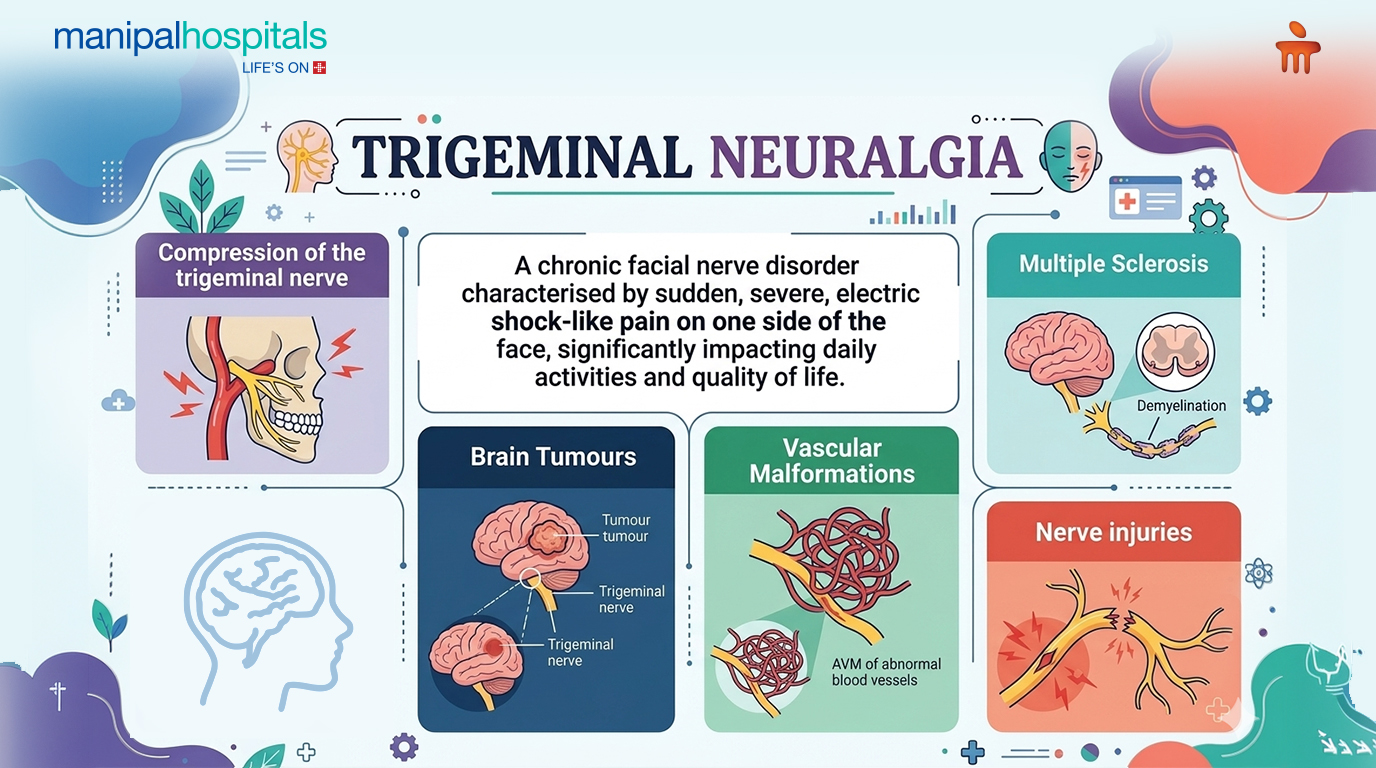
Trigeminal neuralgia is a chronic pain condition affecting the trigeminal nerve, causing sudden, severe, electric shock-like pain, typically on one side of the face. The episodes can last from seconds to minutes and may recur frequently. Causes are:
-
Primary trigeminal neuralgia causes include compression of the trigeminal nerve, usually by a blood vessel, which damages its myelin sheath, leading to intense facial nerve pain.
-
Other trigeminal neuralgia causes include Multiple Sclerosis (MS), brain tumours, vascular malformations, nerve injuries, or other neurological conditions that affect the trigeminal nerve and its normal function.
Symptoms and Diagnosis
The hallmark symptom of this condition is sudden, severe, shooting facial nerve pain, often triggered by touching the face, brushing teeth, talking, or cold air. Pain episodes are typically brief but extremely intense, occurring in repeated bursts that can interfere with eating, speaking, personal hygiene, social interactions, and overall quality of life.
Diagnosis depends on patient history and neurological examination; an MRI is crucial to confirm nerve compression and guide effective trigeminal neuralgia treatment. Imaging studies also help rule out other underlying causes such as tumours, vascular abnormalities, or neurological disorders, ensuring an accurate diagnosis and personalised treatment plan.
Advanced Trigeminal Neuralgia Treatment Options
While medication offers initial relief, effectiveness can wane or side effects become intolerable. For such cases, or when vascular compression is identified, surgical interventions offer highly effective, long-lasting solutions. These include:
Micro-Vascular Decompression (MVD)
MVD is often considered the most effective surgical treatment for trigeminal neuralgia caused by vascular compression. During this procedure, a neurosurgeon carefully identifies and moves the blood vessel pressing against the trigeminal nerve, placing a soft protective pad between the vessel and the nerve to prevent further irritation. Unlike treatments that simply block pain signals, MVD addresses the underlying cause of the condition, preserving normal nerve function while relieving pain. This definitive trigeminal neuralgia surgery offers high success rates of approximately 80-90%, with many patients experiencing immediate and long-lasting relief for 10-15 years or more, significantly improving their quality of life by addressing the root cause of the facial nerve disorder.
Stereotactic Radiosurgery (Gamma Knife/Cyber Knife)
This non-invasive trigeminal neuralgia treatment uses highly focused radiation beams to precisely target the trigeminal nerve and disrupt the transmission of pain signals. It is particularly suitable for patients who are not ideal candidates for Microvascular Decompression (MVD) surgery or those who prefer a less invasive treatment option. The procedure is performed without any surgical incision, typically as a day-care treatment, and involves minimal recovery time. Approximately 70–80% of patients undergoing this procedure experience significant pain relief, with many reporting improved comfort and quality of life.
Percutaneous Rhizotomy Procedures
These minimally invasive procedures involve inserting a needle to selectively damage pain-transmitting fibers (e.g., balloon compression, glycerol, radiofrequency). While offering rapid relief, it may be less long-lasting than MVD, with higher recurrence and potential facial numbness. These procedures include:
-
Radiofrequency Rhizotomy (Radiofrequency Ablation)- Uses controlled heat generated by radiofrequency energy to selectively damage pain-transmitting nerve fibres, providing targeted pain relief.
-
Glycerol Rhizotomy- Involves injecting a small amount of sterile glycerol around the trigeminal nerve to disrupt pain signals while minimising damage to surrounding structures.
-
Balloon Compression Rhizotomy- A tiny balloon is temporarily inflated near the trigeminal nerve to compress pain fibres and reduce facial pain episodes.
Conclusion
Trigeminal neuralgia can significantly impact daily life, but timely diagnosis and expert care can provide lasting relief. At Manipal Hospitals, our experienced neurosurgeons offer comprehensive evaluation and advanced treatment options, including minimally invasive procedures and trigeminal neuralgia surgery, tailored to each patient's needs. If you are experiencing persistent facial nerve pain or symptoms of trigeminal neuralgia, book an appointment with our experts at Manipal Hospitals Mukundapur today and take the first step towards effective pain management and improved quality of life.
FAQ's
Trigeminal neuralgia is a chronic neurological condition that causes sudden, severe, electric shock-like facial nerve pain due to irritation or compression of the trigeminal nerve. This debilitating facial nerve disorder can significantly affect daily activities and quality of life.
The most common trigeminal neuralgia cause is compression of the trigeminal nerve by a nearby blood vessel, leading to nerve irritation. Less common causes include Multiple Sclerosis, brain tumours, vascular malformations, or other neurological conditions affecting the nerve.
Trigeminal neuralgia surgery may be considered when medications fail to control pain, cause significant side effects, or when imaging reveals clear vascular compression of the nerve. Surgical treatment options can provide long-lasting pain relief and are often an important part of effective trigeminal neuralgia management.
While trigeminal neuralgia symptoms may temporarily improve or enter periods of remission, the condition typically does not resolve permanently on its own. Most patients require medical treatment or specialised interventions to effectively control pain, reduce attack frequency, and prevent symptom recurrence.
Many patients achieve long-lasting and significant pain relief with appropriate trigeminal neuralgia treatment, particularly following procedures such as microvascular decompression. However, treatment outcomes can vary based on the underlying cause, severity of nerve compression, duration of symptoms, and individual patient factors.
Share this article on:


.webp "Deep Brain Stimulation: Are You the Right Candidate")