7 Min Read
As we approach World Thyroid Day, it’s the perfect moment to pause and reflect on a small yet incredibly powerful gland in our body, the thyroid. In my experience working closely with healthcare content and patient stories, I’ve realised that many people don’t think about their thyroid until something starts to feel “off.”
At Manipal Hospital Kharadi, we often meet patients who come in with vague symptoms, fatigue, weight changes, and mood swings, only to discover that their thyroid is at the root of it all. The reassuring part? With timely care, more than 90% of thyroid conditions can be effectively managed, allowing individuals to lead completely normal, active lives.
Synopsis
Understanding the Thyroid Gland
The thyroid is a butterfly-shaped gland located at the base of your neck. It produces two essential hormones, T3 (triiodothyronine) and T4 (thyroxine), which regulate your metabolism, energy levels, heart rate, and even body temperature.
Think of it as your body’s “control center" for energy. When it works smoothly, you feel balanced. But when it produces too much or too little hormone, your entire system can feel disrupted.
Why World Thyroid Day Matters
Observed every year on May 25, World Thyroid Day helps spread awareness about thyroid disorders, which affect nearly 1 in 10 adults globally.
Despite how common these conditions are, many people remain undiagnosed. Awareness initiatives encourage early testing, better understanding, and timely intervention something we strongly advocate at Manipal Hospital Kharadi.
Types of Thyroid Disorders
1. Hypothyroidism (Underactive Thyroid)
This is one of the most common thyroid issues, where the gland doesn’t produce enough hormones.
What patients often notice:
-
Constant fatigue
-
Weight gain without lifestyle changes
-
Dry skin and hair fall
-
Feeling unusually cold
-
Low mood or depression
In many cases, especially with Hashimoto's thyroiditis, lifelong management is needed. The good news? With medication, over 95% of patients manage it very well.
2. Hyperthyroidism (Overactive Thyroid)
Here, the thyroid becomes overactive and produces excess hormones.
Common symptoms:
-
Sudden weight loss
-
Rapid heartbeat
-
Anxiety or irritability
-
Excess sweating
-
Sleep disturbances
Conditions like Graves' disease are a leading cause. With proper treatment, symptom control is highly effective in most patients.
3. Goiter
A goiter refers to the enlargement of the thyroid gland.
You might notice:
-
Swelling in the neck
-
Difficulty swallowing
-
Tightness in the throat
It can occur due to iodine deficiency or autoimmune conditions.
4. Thyroid Nodules
These are small lumps in the thyroid. Most are harmless, but some require further evaluation.
At Manipal Hospital Kharadi, many nodules are detected during routine check-ups or ultrasounds, often before symptoms appear.
5. Thyroid Cancer
Though less common, thyroid cancer is highly treatable especially when detected early.
Warning signs include:
-
Lump in the neck
-
Voice changes
The survival rate is excellent, often exceeding 98%, which is reassuring for patients.
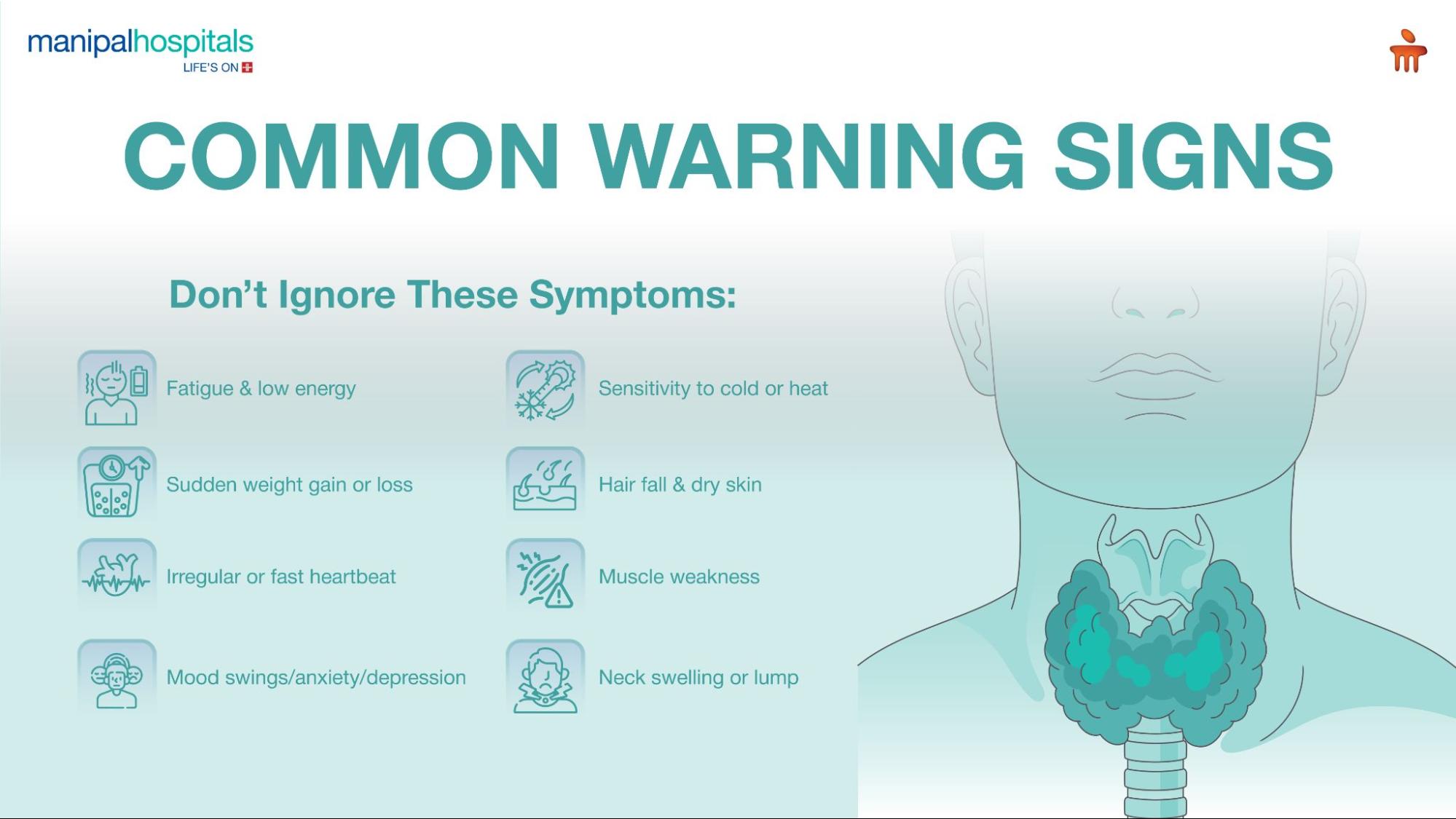
Thyroid Disorder Symptoms You Shouldn’t Ignore
One of the tricky things about thyroid disorders is how subtle the symptoms can be. Many patients initially ignore them.
Watch out for:
-
Unexplained weight gain or loss
-
Constant tiredness or restlessness
-
Mood swings or anxiety
-
Sensitivity to cold or heat
-
Hair thinning or skin dryness
-
Changes in heart rate
-
Neck swelling
If you notice a combination of these symptoms, it’s worth getting your thyroid checked, something we routinely advise at Manipal Hospital Kharadi.
Diagnosis and Treatment at Manipal Hospital Kharadi
From what I’ve seen, early diagnosis makes a massive difference.
Diagnosis usually includes:
-
Blood tests (TSH, T3, T4)
-
Ultrasound imaging
-
Physical examination
-
Biopsy (if needed for nodules)
Treatment options:
-
Medication: Hormone replacement or anti-thyroid drugs
-
Radioactive iodine therapy: For an overactive thyroid
-
Surgery: In complex cases like large goiters or cancer
With a personalised approach, most patients regain a normal lifestyle quickly.
Everyday Care: Simple Do’s and Don’ts
Do:
-
Take your medication consistently
-
Go for regular follow-ups
-
Eat a balanced, nutrient-rich diet
-
Stay active with moderate exercise
-
Manage stress through yoga or meditation
Don’t:
-
Skip or change medication doses
-
Ignore new symptoms
-
Self-medicate with supplements
-
Delay doctor consultations
Small habits can make a big difference in thyroid management.
Conclusion
On World Thyroid Day, the message is simple: listen to your body. Thyroid disorders may be common, but they are highly manageable with the right care.
At Manipal Hospital Kharadi, we’ve seen countless patients regain their energy, confidence, and quality of life through timely diagnosis and expert treatment.
If something doesn’t feel right, don’t ignore it. A simple test today could prevent complications tomorrow.
If you’re experiencing symptoms or have concerns about your thyroid health, consider booking a consultation with the expert team at Manipal Hospital Kharadi. Early action truly makes all the difference.
Disclaimer: This article is for informational purposes only and should not replace professional medical advice. Always consult a qualified healthcare provider for diagnosis and treatment.
FAQ's
Most conditions are manageable rather than curable. However, with treatment, people live completely normal lives.
Yes, especially conditions like Hashimoto's thyroiditis and Graves' disease often run in families.
Diet supports thyroid function but isn’t a cure. Balanced nutrition is key.
If you have symptoms or a family history, yearly testing is advisable.
In many hypothyroid cases, yes. But it becomes a simple daily routine over time.
Share this article on: