6 Min Read
There’s something powerful about pausing for a moment and asking yourself, “How am I really doing?”
On International Women’s Health Day, that simple question matters more than ever.
At Manipal Hospital Kharadi, we see countless women who prioritise everyone else's family, work, and responsibilities, often putting their own health at the bottom of the list. This day is not just about awareness; it’s about action. It’s about encouraging every woman to listen to, understand, and care for her body consistently.
Because the truth is, good health doesn’t happen overnight. It’s built through small, mindful choices made every single day.
Synopsis
- Why Women’s Health Needs Special Attention
- Understanding Hormonal Health: Your Body’s Silent Communicator
- Simple Do’s and Don’ts for Hormonal Balance
- Reproductive Health: Don’t Skip Preventive Care
- Mental Health Matters More Than You Think
- Nutrition and Movement: Your Everyday Medicine
- Preventive Health: The Smartest Investment
- A Gentle Reminder for Every Woman
- Final Thought
Why Women’s Health Needs Special Attention
Women’s bodies go through constant changes from puberty to pregnancy and eventually menopause. Each phase brings its own set of physical and emotional shifts. Hormones, lifestyle, stress, and even societal expectations all play a role.
Despite medical advancements, many women still ignore early symptoms or delay check-ups. Studies suggest that nearly 90% of women can significantly improve their health with simple lifestyle changes and regular screenings.
That’s encouraging, isn’t it?
Understanding Hormonal Health: Your Body’s Silent Communicator
Hormones are like invisible messengers, quietly managing everything—from your mood to metabolism.
When balanced, you feel energetic, emotionally stable, and in control. But when disrupted, even small imbalances can affect your daily life.
Common Signs of Hormonal Imbalance
You might have experienced some of these and brushed them off as “normal”:
-
Constant tiredness despite rest
-
Mood swings or anxiety
-
Sudden weight gain or difficulty losing weight
-
Trouble sleeping
-
Acne or hair thinning
-
Reduced libido
-
Digestive discomfort
If these symptoms persist, your body may be trying to tell you something important.
At Manipal Hospital Kharadi, many women report improvement in symptoms through early diagnosis, guided treatment, and lifestyle adjustments.
Simple Do’s and Don’ts for Hormonal Balance
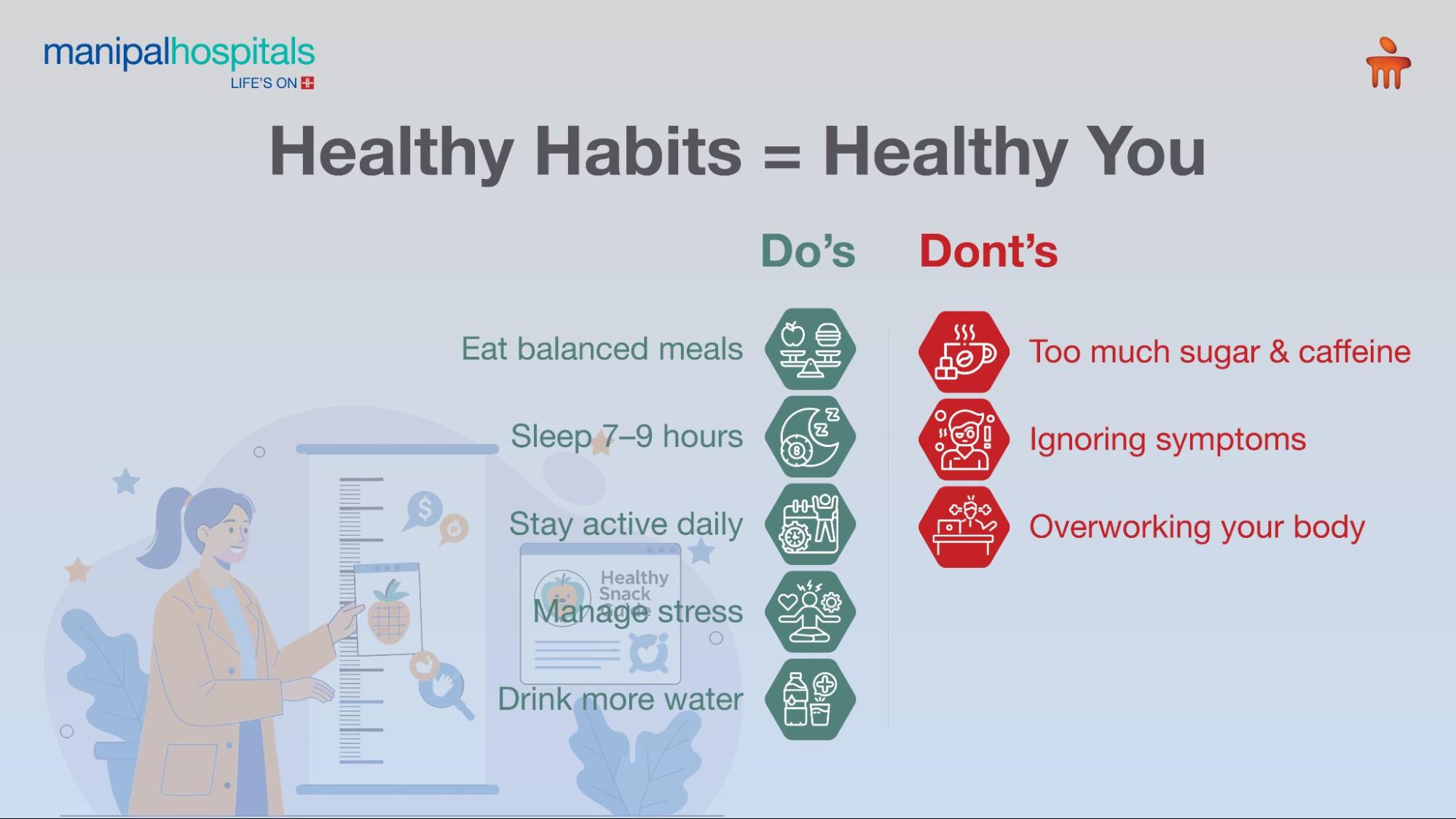
What Helps
-
Eat clean and balanced meals: Include whole grains, proteins, fruits, and vegetables
-
Sleep well: Aim for 7–9 hours of quality sleep
-
Manage stress: Yoga, meditation, or even a quiet walk helps
-
Exercise regularly: Even 30 minutes a day makes a difference
-
Stay hydrated: Water supports every cell in your body
What to Avoid
-
Too much caffeine and sugar
-
Ignoring symptoms
-
Over-exercising without recovery
-
Exposure to harmful chemicals (plastics, harsh cosmetics)
Small corrections here can create big improvements over time.
Reproductive Health: Don’t Skip Preventive Care
One of the most overlooked aspects of women’s health is routine screening. Many conditions show no early symptoms, which makes regular check-ups essential.
Key Screenings Every Woman Should Prioritise
-
Pap Smear Tests – Detect early signs of cervical cancer
-
Mammograms – Crucial for early breast cancer detection
-
Gynaecological Exams – Overall reproductive health assessment
-
STI Screening – For sexual health safety
Early detection can improve outcomes by more than 70% in many cases.
It’s not about fear; it’s about staying informed and prepared.
Mental Health Matters More Than You Think
Women often carry emotional responsibilities silently. Balancing personal and professional life can take a toll.
Stress, anxiety, and burnout are more common than we realise.
Ways to Support Your Mental Well-being
-
Talk openly with someone you trust
-
Take breaks without guilt
-
Practice mindfulness or journaling
-
Seek professional help when needed
Remember, asking for help is not a weakness, it’s awareness.
At Manipal Hospital Kharadi, mental wellness is treated as an essential part of overall health, not an afterthought.
Nutrition and Movement: Your Everyday Medicine
What you eat and how you move your body directly affect your health.
Smart Nutrition Choices
-
Add iron-rich foods (spinach, legumes)
-
Include calcium (dairy, seeds)
-
Don’t skip healthy fats (nuts, olive oil)
-
Reduce processed foods
Stay Active, Stay Strong
You don’t need an intense gym routine.
-
Brisk walking
-
Yoga
-
Strength training
-
Stretching
Even moderate activity can reduce the risk of chronic diseases by up to 40%.
Preventive Health: The Smartest Investment
Many women visit a doctor only when something feels wrong. But preventive care changes that approach.
What You Should Do
-
Schedule annual health check-ups
-
Track changes in your body
-
Stay updated with vaccinations
-
Follow age-appropriate screenings
Early diagnosis improves treatment outcomes in more than 85% of conditions.
Think of it this way: prevention is always easier than a cure.
A Gentle Reminder for Every Woman
This International Women’s Health Day, take a moment to prioritise yourself.
Not someday. Not later. Today.
Whether it’s booking a health check-up, improving your diet, or simply taking time to rest, every small step counts.
At Manipal Hospital Kharadi, we are committed to supporting women at every stage of life with expert care, guidance, and compassion.
Final Thought
Your health is not a luxury it’s your foundation.
Take care of it, nurture it, and never ignore what your body is trying to tell you.
Disclaimer: This article is for informational purposes only and does not replace professional medical advice. Please consult a qualified healthcare provider for diagnosis and treatment.
FAQ's
Irregular periods, fatigue, mood swings, weight changes, and sleep issues are common signs. If persistent, consult a doctor.
Ideally, once a year, even if you feel healthy.
Iron, calcium, folate, and protein are essential across different life stages.
Try yoga, meditation, journaling, physical activity, and maintaining social connections.
Typically, from age 40, but it depends on individual risk factors. Consult your doctor for guidance.
Share this article on:


--Mood,-Pain-and-Bloating-Relief.webp "Premenstrual Syndrome (PMS)")