8 Min Read
When the kidneys stop doing their job properly, it can turn everyday life upside down. These two small, bean-shaped organs work silently around the clock, filtering waste, balancing fluids, and supporting vital body functions. But when kidney health declines, often due to chronic kidney disease (CKD), the body begins to feel the impact in ways that are hard to ignore.
Globally, nearly 10% of people live with some stage of CKD, and for those whose condition progresses to end-stage renal disease (ESRD), dialysis becomes a life-saving necessity. At Manipal Hospitals, experienced nephrologists and dialysis teams help patients and families understand this journey and adapt with confidence.
This guide explains dialysis in simple terms, what it is, why it’s needed, the types available, and how people can continue to live fulfilling lives while on treatment.
Synopsis
What Is Dialysis, and Why Is It Needed?
Healthy kidneys filter waste products, excess salts, and fluids from the blood, removing them through urine. They also help control blood pressure, maintain bone strength, and stimulate red blood cell production.
When kidney function drops below 10–15%, harmful toxins such as urea and creatinine begin to accumulate in the body. This can lead to symptoms like extreme fatigue, swelling, breathlessness, nausea, and serious heart complications.
Dialysis is a medical treatment that takes over these essential filtering functions when the kidneys can no longer cope. While it does not cure kidney disease, it plays a critical role in stabilising health and preventing life-threatening complications.
With the right treatment plan and medical support, many people on dialysis continue to work, travel, and enjoy time with family.
Types of Dialysis
There is no one-size-fits-all approach to dialysis. The choice depends on medical needs, lifestyle, and personal comfort. Specialists at Manipal Hospitals Jaipur guide patients through the decision-making process to ensure the most suitable option.
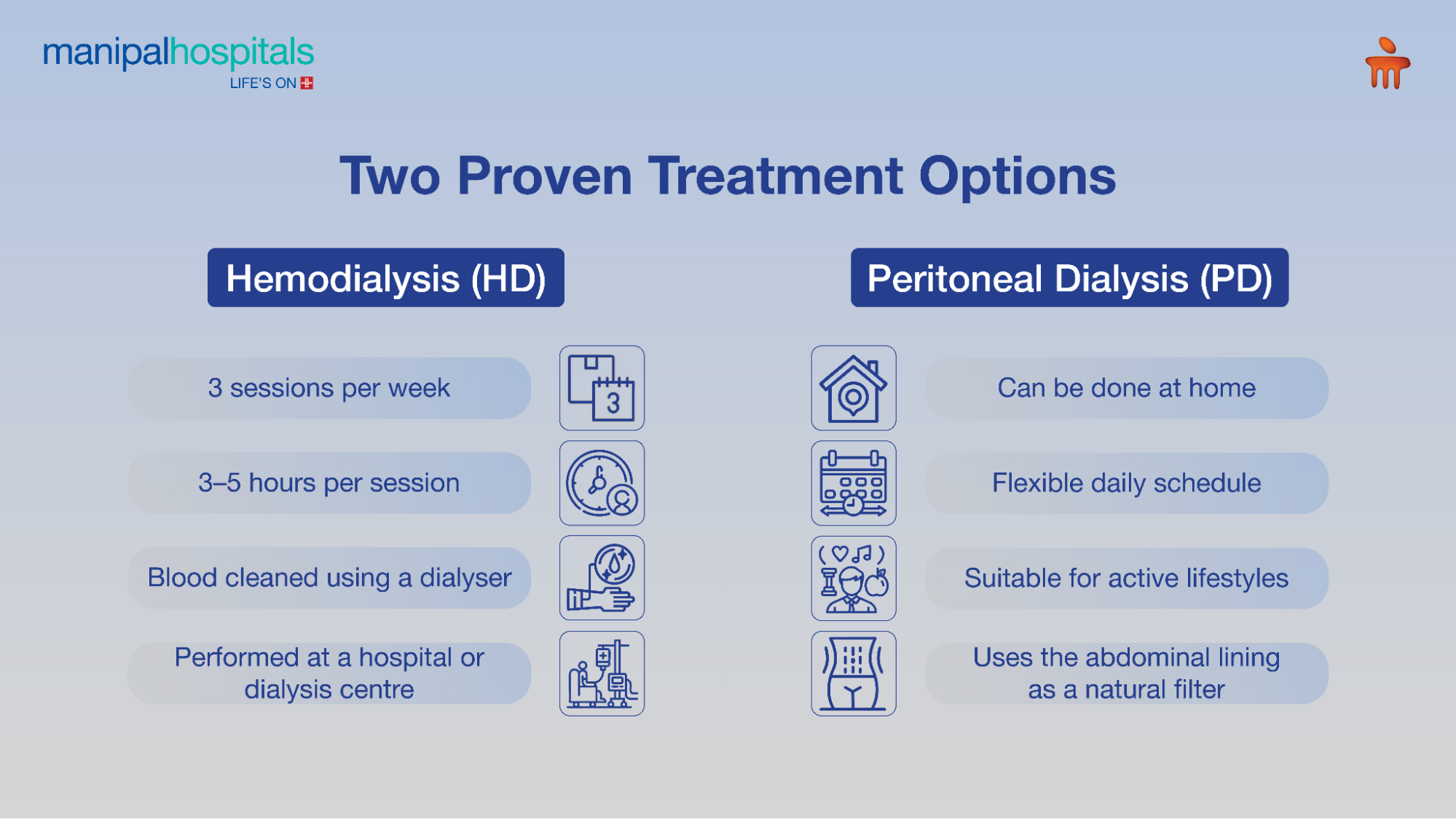
1. Hemodialysis (HD)
Hemodialysis is the most commonly used form of kidney dialysis treatment.
How it works:
Blood is drawn from the body and passed through a specialised filter called a dialyser, often referred to as an artificial kidney. The dialyser removes waste products and excess fluid before returning clean blood to the body.
Where and how often:
-
Usually performed in a hospital or dialysis centre
-
Typically, three sessions per week
-
Each session lasts around 3 to 5 hours
Access for treatment:
A small surgical procedure is required to create a vascular access point, most often in the arm. This may be:
-
An AV fistula
-
An AV graft
-
A temporary or permanent catheter
2. Peritoneal Dialysis (PD)
Peritoneal dialysis uses the body’s own abdominal lining, the peritoneal membrane, as a natural filter.
How it works:
A soft catheter is placed into the abdomen. A cleansing solution called dialysate flows into the abdominal cavity, where it absorbs waste and excess fluid from nearby blood vessels. After a few hours, the used fluid is drained out.
Flexibility and location:
-
One of the biggest advantages of PD is its flexibility. It can be done:
-
At home
-
At work
-
While travelling
Types of peritoneal dialysis:
-
CAPD (Continuous Ambulatory Peritoneal Dialysis): Manual exchanges are done several times a day
-
APD (Automated Peritoneal Dialysis): Performed overnight using a machine while sleeping
Benefits of Dialysis: Improving More Than Survival
Dialysis is not just about staying alive; it plays a major role in improving day-to-day well-being.
With regular and consistent treatment, patients often experience:
-
Effective removal of toxins from the blood
-
Reduced swelling, fatigue, nausea, and breathlessness
-
Better blood pressure control
-
Improved appetite and energy levels
Studies indicate that over 80% of patients notice symptom relief once dialysis is stabilised. Adhering to the prescribed dialysis schedule significantly improves long-term outcomes and quality of life.
A Patient’s Story: Finding Stability Again with Dialysis
When 52-year-old Ramesh (name changed for privacy), a schoolteacher from Rajasthan, was diagnosed with advanced chronic kidney disease, life suddenly felt uncertain. Persistent fatigue, swelling in his legs, and breathlessness had slowly crept into his routine, but he never imagined his kidneys were failing.
By the time he reached Manipal Hospitals Jaipur, his kidney function had dropped dangerously low. The word 'dialysis' frightened him at first. “I thought dialysis meant the end of a normal life,” he recalls. “I worried about work, my family, and whether I would ever feel like myself again.”
Under the care of the nephrology team at Manipal Hospitals Jaipur, Ramesh was counselled in detail about his condition and the treatment options available. After careful evaluation, he began haemodialysis. The initial weeks required adjustment, both physically and emotionally, but the support he received made a significant difference.
“Within a month, the swelling reduced, my breathing improved, and I finally had the energy to stand in front of my class again,” he says. Today, Ramesh continues dialysis regularly, manages his diet carefully, and remains active at work. More importantly, he has regained confidence and control over his life.
His journey reflects a powerful truth: with timely care, the right guidance, and commitment to treatment, dialysis can restore stability and hope.
Living Well on Dialysis: Do’s and Don’ts
Managing kidney failure requires teamwork between patients and healthcare providers. Small daily habits can make a big difference.
Do’s
-
Follow dietary and fluid guidelines recommended by your nephrologist and dietician
-
Take prescribed medications regularly to manage blood pressure, anaemia, and bone health
-
Keep your dialysis access site clean and monitor for signs of infection
-
Attend every scheduled dialysis session without fail
-
Stay physically active within advised limits
Don’ts
-
Do not skip or shorten dialysis sessions
-
Avoid foods high in sodium, potassium, and phosphorus unless approved
-
Do not ignore symptoms like cramps, fever, swelling, or unusual fatigue
-
Avoid smoking and tobacco use, which can worsen blood vessel damage
Conclusion: Living Fully with the Right Kidney Care
A diagnosis of kidney failure can feel overwhelming, but it does not have to define the limits of your life. Dialysis, when started at the right time and followed consistently, can help manage symptoms, protect overall health, and allow individuals to continue their daily routines with confidence.
With experienced nephrologists, advanced dialysis facilities, and a patient-first approach, Manipal Hospitals Jaipur remain committed to supporting patients through every stage of kidney disease medically, emotionally, and practically.
If you or a loved one is living with chronic kidney disease, seeking expert care early can make all the difference. Speak to the kidney care specialists at Manipal Hospitals to understand the best path forward.
Disclaimer: This article is for informational purposes only and does not replace professional medical advice. Please consult a qualified healthcare provider for diagnosis and treatment.
FAQ's
Dialysis itself is not painful. Some patients feel a brief needle prick during haemodialysis access, but sessions are generally comfortable. Discomfort such as cramps or nausea can usually be managed easily by the care team.
Many people live long, productive lives on dialysis. Survival depends on age, overall health, and how closely treatment plans are followed. With modern care, outcomes have improved significantly.
Yes. Many patients continue working full-time or part-time. Travel is also possible with proper planning, and dialysis centres are available in many locations. Home-based options offer even greater flexibility.
A dialysis diet helps control waste buildup between sessions. It usually involves limiting salt, potassium, and phosphorus while ensuring adequate protein intake. Diet plans are personalised for each patient.
A kidney transplant restores near-normal kidney function and is considered the best option for eligible patients. However, not everyone is suitable, and dialysis remains a safe and effective long-term treatment.
Share this article on: