6 Min Read
Hearing the word 'chemotherapy' can stir up a mix of emotions, fear, uncertainty, and a long list of questions. For many patients and families, the biggest concern is not just the cancer itself, but how the treatment will affect daily life. Will I feel sick all the time? Will I be able to work? How will my body cope?
At Manipal Hospitals Jaipur, we understand that chemotherapy is not just a medical treatment; it’s a deeply personal journey. While chemotherapy plays a vital role in destroying cancer cells, it can also bring side effects that may feel challenging at times. The good news is that most side effects today are manageable, temporary, and closely monitored by experienced oncology teams.
This guide is designed to help you understand why chemotherapy side effects occur, what to expect, and how you can manage them confidently so you feel supported, informed, and empowered throughout your treatment.
Synopsis
Why Do Chemotherapy Drugs Cause Side Effects?
Chemotherapy works by attacking rapidly dividing cancer cells. However, some healthy cells in the body, such as those in the hair follicles, digestive system, mouth lining, and bone marrow, also divide quickly. When chemotherapy drugs affect these healthy cells, side effects of chemotherapy drugs may occur.
It’s important to remember that:
-
Not everyone experiences the same side effects
-
The intensity varies from person to person
-
Many side effects reduce as the body adjusts to treatment
At Manipal Hospitals Jaipur, oncologists monitor patients closely and modify treatment plans whenever needed to minimise discomfort.
Common Chemotherapy Side Effects & How to Manage Them
Advances in oncology have significantly improved comfort during chemotherapy. Let’s look at some common side effects and practical ways to manage them.
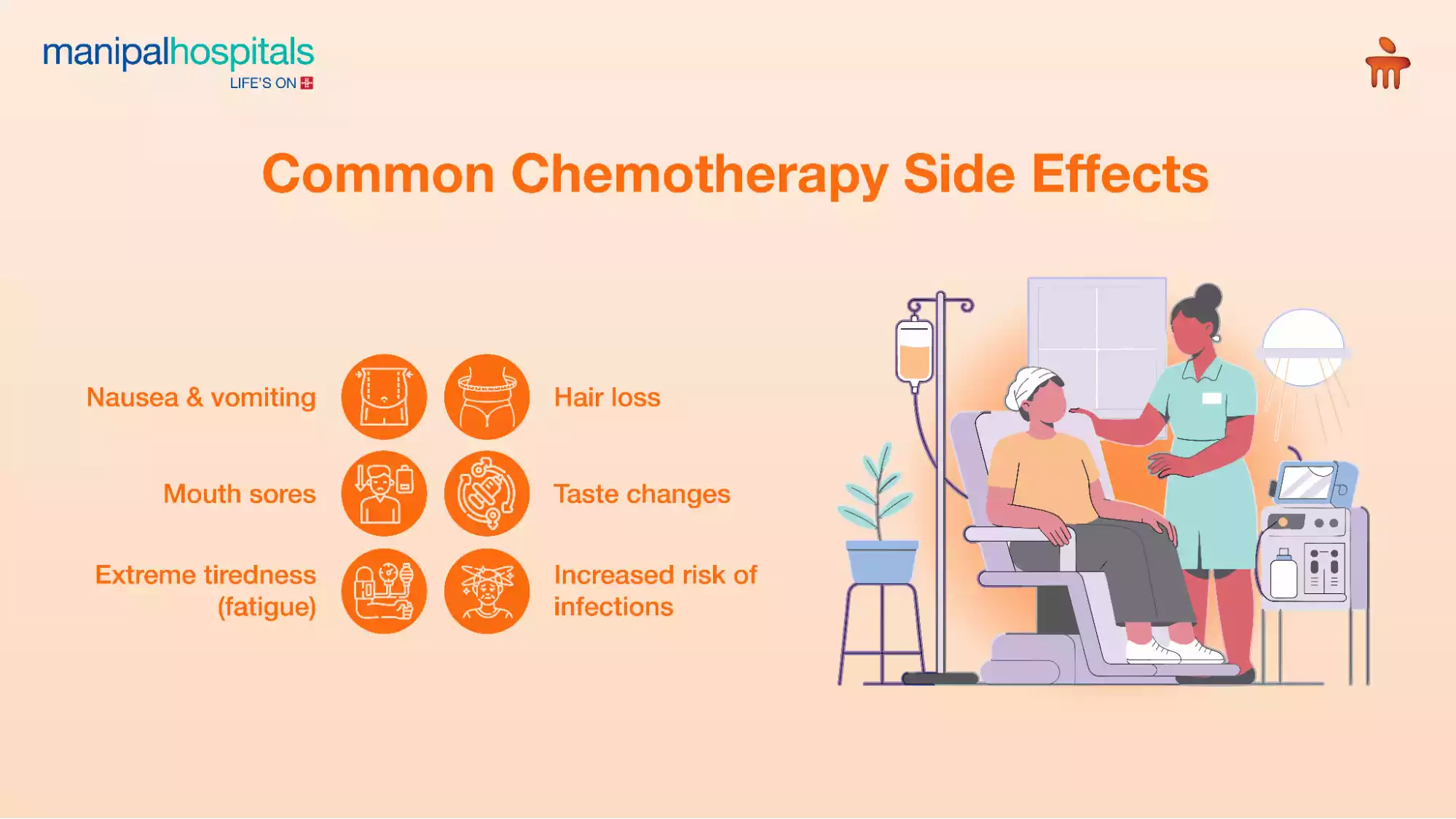
Managing Nausea and Vomiting
Nausea is one of the most talked-about chemo side effects, but it is also one of the most manageable today. Modern anti-nausea medicines are highly effective when taken correctly.
Helpful tips include:
-
Eat small, frequent meals
-
Avoid oily, spicy, and strong-smelling foods
-
Choose bland foods like rice, toast, bananas, or curd
-
Sip water, coconut water, clear soups, or ginger tea
-
Take prescribed medicines even if the nausea feels mild
Always inform your doctor if nausea persists, medication adjustments can help.
Fatigue: A Common but Manageable Symptom
Fatigue related to chemotherapy feels different from normal tiredness. It can affect both the body and mind and is one of the most common symptoms of chemotherapy.
Ways to cope:
-
Rest when needed without guilt
-
Break tasks into smaller steps
-
Light activity, such as short walk,s can improve energy
-
Eat nutritious, home-cooked meals
-
Accept help from family and friends
Energy levels usually improve gradually between treatment cycles.
Hair Loss and Body Image Changes
Hair loss caused by certain chemotherapy drugs can be emotionally challenging. It usually begins 2–4 weeks after treatment starts and is one of the visible side effects of chemotherapy drugs.
Important to know:
-
Hair loss is usually temporary
-
Hair regrowth often starts within a few months after treatment ends
-
Texture or colour may change initially
Using mild shampoos, avoiding heat styling, and choosing scarves or caps can help you feel more comfortable during this phase.
Mouth Sores and Taste Changes
Mouth sores, dryness, and altered taste are common symptoms of chemotherapy that can affect eating and speaking.
Simple preventive steps:
-
Brush gently with a soft toothbrush
-
Rinse mouth with salt and baking soda solution
-
Avoid spicy, acidic, or crunchy foods
-
Choose soft foods like khichdi, curd rice, soups, and smoothies
Early reporting helps prevent severe discomfort.
1st Chemo Treatment Side Effects: What Patients Often Notice
The 1st chemo treatment side effects are often the most anxiety-inducing because everything feels new and unfamiliar. Many patients are surprised to learn that the first cycle is not always the hardest.
Common early effects after the first chemotherapy session may include:
-
Mild nausea or uneasiness within 24–48 hours
-
Fatigue or weakness
-
Metallic or bitter taste in the mouth
-
Headache or body ache
-
Emotional changes, anxiety, or low mood
With preventive medications and guidance from the oncology team at Manipal Hospital Jaipur, most first-cycle side effects are well controlled.
A Patient Story: Meena’s Journey
Meena, a 52-year-old school teacher from Jaipur, was diagnosed with breast cancer last year. Like many patients, she feared chemotherapy more than the diagnosis itself.
“I thought I wouldn’t be able to stand in front of my class again,” she recalls.
During her treatment at Manipal Hospital Jaipur, Meena experienced fatigue and temporary hair loss, but with the guidance of her oncology team, dietitian support, and regular counselling, she learned how to manage each side effect step by step.
“Every small doubt was answered. I never felt alone,” she says. Today, Meena has completed her treatment and is back to teaching stronger and more confident than ever.
Dos and Don’ts During Chemotherapy
Do:
-
Communicate openly about every symptom
-
Drink plenty of fluids
-
Focus on nutritious, home-cooked meals
-
Rest without feeling guilty
-
Follow medication schedules strictly
Don’t:
-
Ignore fever or signs of infection
-
Take supplements or herbal remedies without approval
-
Push yourself beyond your limits
-
Suffer silently—help is always available
A fever of 38°C (100.4°F) or above should be reported immediately.
Holistic Cancer Care at Manipal Hospital Jaipur
At Manipal Hospitals Jaipur, chemotherapy care is delivered by a multidisciplinary team of oncologists, nurses, dietitians, and counsellors. Our focus is not just on treating cancer, but on managing chemo side effects proactively so patients feel supported throughout their journey.
From the first consultation to post-treatment recovery, our team ensures personalised care, continuous monitoring, and emotional support for both patients and families.
Conclusion
Moving Forward with Strength and Support
Chemotherapy may be a challenging chapter, but it is also a powerful step toward healing. With the right knowledge, timely support, and compassionate medical care, side effects can be managed effectively.
If you or a loved one is preparing for chemotherapy, the oncology specialist at Manipal Hospitals Jaipur is here to guide you with expertise, empathy, and reassurance every step of the way.
Book an appointment now or visit our cancer care department today and take the next step in your treatment journey with confidence.
FAQ's
No. Most patients experience only a few side effects, and many are mild and temporary.
Most side effects gradually improve after treatment ends, though fatigue may take longer to resolve.
Many patients do, depending on how they feel. Flexible schedules often help.
Yes. Gentle activity is usually encouraged, but always consult your doctor first.
If you develop fever, uncontrolled vomiting, severe weakness, or signs of infection.
Share this article on: