7 Min Read
Your kidneys are remarkable, hardworking organs. Every day, they filter nearly 150 to 180 litres of blood, removing toxins and excess fluids to keep your body balanced. This vital function plays a major role in kidney disease prevention, and at the centre of it all lies one simple habit: staying well hydrated.
At Manipal Hospital Jaipur, our experts often emphasise that understanding how much water to drink daily can make a significant difference in maintaining long-term kidney health.
Synopsis
- The Critical Link Between Hydration and Kidney Function
- How Much Water to Drink Daily?
- Signs of Dehydration You Should Not Ignore
- Hydration and Kidney Stones Prevention
- Hydration and Urinary Tract Health
- A Special Note on Chronic Kidney Disease (CKD)
- Kidney-Friendly Hydration: Do’s and Don’ts
- Supporting Your Kidneys Starts with a Glass of Water
The Critical Link Between Hydration and Kidney Function
When it comes to drinking water benefits, your kidneys are among the biggest beneficiaries. Water acts as a natural cleansing agent for your body.
1. Supports Waste Removal
Water helps dissolve waste products like urea and excess salts, allowing your kidneys to flush them out efficiently. Poor hydration leads to concentrated urine, increasing the risk of toxin build-up and kidney stress.
2. Improves Blood Circulation
Adequate hydration ensures smooth blood flow to the kidneys, delivering oxygen and nutrients needed for optimal functioning.
3. Helps Control Blood Pressure
Water balance plays a key role in regulating blood pressure. Dehydration can lead to sodium retention, contributing to hypertension — a major risk factor for kidney disease.
How Much Water to Drink Daily?
One of the most common questions we hear is: " How much water should I drink every day?
The answer depends on your body and lifestyle. While the standard guideline suggests 8 glasses a day, your actual daily water requirement may vary.
General Guidelines:
-
Adults: 2.5–3.5 litres per day
-
Higher intake needed for:
-
Exercise or physical work
-
Hot climates like Jaipur
-
Illness (fever, vomiting, diarrhoea)
-
Pregnancy and breastfeeding
Simple Hydration Check:
-
Pale yellow urine → Well hydrated
-
Dark yellow urine → Increase water intake
-
Clear urine → Possibly overhydrated
Signs of Dehydration You Should Not Ignore
Understanding the signs of dehydration is essential to protect your kidneys.
Common Symptoms:
Ignoring these warning signs can gradually impact kidney efficiency and overall health
Hydration and Kidney Stones Prevention
One of the biggest drinking water benefits is its role in preventing kidney stones.
Kidney stones form when minerals in urine become highly concentrated and crystallise. Drinking enough water dilutes these minerals, reducing the chances of stone formation.
Key Insight:
-
Proper hydration can lower the risk of kidney stones by up to 50%
-
Aim to produce at least 2 litres of urine daily
At Manipal Hospital Jaipur, doctors often recommend increasing fluid intake as a first step in managing and preventing recurrent kidney stones.
Hydration and Urinary Tract Health
Drinking adequate water also supports urinary health. It helps flush bacteria from the urinary tract, reducing the risk of infections. Untreated infections can spread to the kidneys and lead to serious complications.
Consult with our expert nephrologist at Manipal Hospitals Jaipur, for personalised guidance on kidney care, hydration balance, and disease prevention.
A Special Note on Chronic Kidney Disease (CKD)
While hydration supports kidney disease prevention, it’s important to understand that fluid needs change once kidney disease develops.
For patients with Chronic Kidney Disease (CKD):
-
Excess water may not be eliminated efficiently
-
Can lead to swelling, high blood pressure, and heart strain
-
Fluid intake may need to be restricted
At Manipal Hospital Jaipur, nephrologists create personalised hydration plans based on each patient’s condition. Always consult your doctor before making changes to fluid intake.
Kidney-Friendly Hydration: Do’s and Don’ts
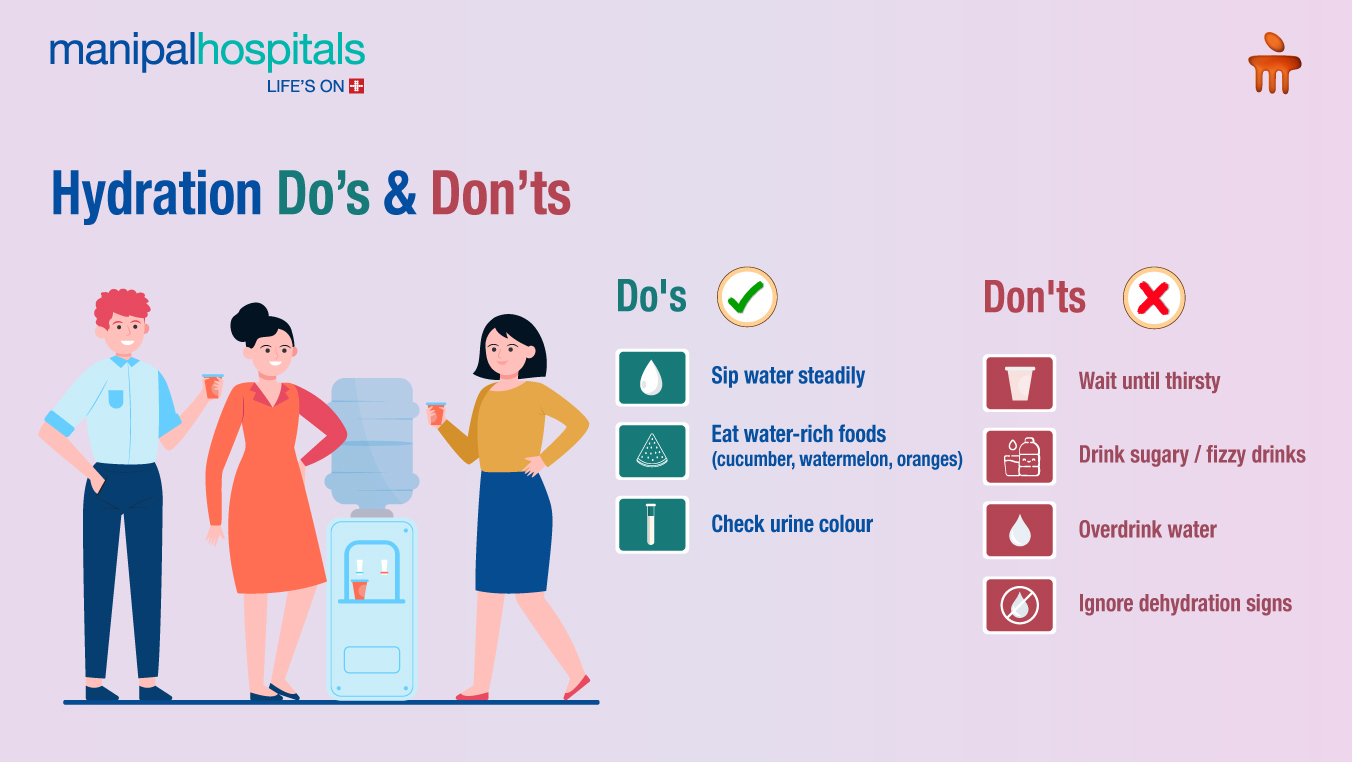
Do:
-
Drink water consistently throughout the day
-
Follow your daily water requirement
-
Include water-rich foods like fruits and vegetables
-
Monitor urine colour regularly
Don’t:
-
Wait until you feel thirsty
-
Ignore early signs of dehydration
-
Replace water with sugary or fizzy drinks
-
Overconsume water unnecessarily
Supporting Your Kidneys Starts with a Glass of Water
Your kidneys work quietly and tirelessly every day. Supporting them through proper hydration is one of the simplest yet most powerful steps you can take for long-term health.
If you have concerns about kidney function or need personalised hydration guidance, consult the experienced nephrology team at Manipal Hospital Jaipur for expert evaluation and care.
Disclaimer: This article is for informational purposes only and does not replace professional medical advice. Always consult a qualified healthcare provider for personalised recommendations.
FAQ's
In healthy individuals, excess water is usually excreted safely. However, people with kidney disease may develop fluid overload. Always follow your doctor’s guidance.
Yes, they do. However, plain water remains the best choice. Excess caffeine should be avoided.
Pale yellow or straw-coloured urine indicates good hydration.
Yes. Chronic dehydration can cause sodium retention, increasing blood pressure and kidney strain.
Yes, as long as it’s free from added sugar, salt, or artificial sweeteners.
If you notice changes in urination, swelling, fatigue, or have conditions like diabetes or hypertension, consult a nephrologist promptly.
Share this article on:


.webp "Arrhythmia Treatment: Medications, Catheter Ablation & Modern Heart Rhythm Therapies")