6 Min Read
Chronic kidney disease (CKD) affects millions worldwide, making a kidney-friendly diet essential for managing symptoms and slowing disease progression. A healthy kidney diet balances nutrients carefully, reducing the workload on impaired kidneys and improving overall well-being. Consulting our expert nephrologist in Jaipur can provide personalised guidance tailored to your specific condition and stage of CKD. This blog explores key components of a kidney diet, food choices to embrace or avoid, and tips for maintaining a healthy kidney diet day-to-day.
Synopsis
Understanding the Kidney Diet
A kidney diet focuses on regulating nutrient intake, especially protein, sodium, potassium, and phosphorus, to reduce kidney strain and maintain bodily balance. In early-stage CKD, restrictions may be mild, but as your condition advances, more precise control is necessary. The best diet for kidney disease is one formulated with expert help, such as our nephrologists in Jaipur, who consider your lab results, symptoms, and lifestyle for a realistic diet plan.
Key Components of a Kidney-Friendly Diet
-
Protein: While protein is essential for healing and energy, too much can overload the kidneys. Moderation is vital, focusing on high-quality sources like lean meats, eggs, and plant-based proteins. Our nephrologists in Jaipur emphasise balancing protein intake to reduce kidney impairment.
-
Sodium: Excess salt raises blood pressure and causes fluid retention, worsening kidney health. A healthy kidney diet limits sodium by avoiding processed and restaurant foods, seasoning meals with herbs and spices instead.
-
Potassium: This mineral can build up dangerously when kidneys falter, affecting heart rhythm. Foods to avoid with kidney disease that are high in potassium include bananas, oranges, and potatoes. Instead, opt for lower potassium vegetables like cauliflower and onions.
-
Phosphorus: High phosphorus levels weaken bones and strain the kidneys. Avoid foods rich in phosphorus, such as dairy, nuts, beans, and dark sodas.
Diet for Kidney Disease: Foods to Embrace and Avoid
Foods to Include:
-
Fresh fruits like apples and berries.
-
Vegetables low in potassium (lettuce, cucumbers, radishes).
-
Whole grains in moderation, depending on your dietitian’s guidance.
-
Healthy fats from fish and olive oil.
-
Adequate hydration, as advised by our nephrologist.
Foods to Avoid with Kidney Disease
-
Processed meats and high-fat dairy.
-
Salted snacks and canned soups.
-
Foods high in phosphorus and potassium (nuts, cola, tomatoes, bananas).
-
Over-the-counter supplements, unless approved by your healthcare provider.
Emphasising a Holistic Approach
A kidney diet is part of a broader management plan, including medication adherence, regular kidney function monitoring, and controlling blood pressure and diabetes if present. Our nephrologists in Jaipur integrate all these aspects, creating a personalised strategy that supports your health beyond just food restrictions.
More Insights on Kidney Diet and Nutritional Balance
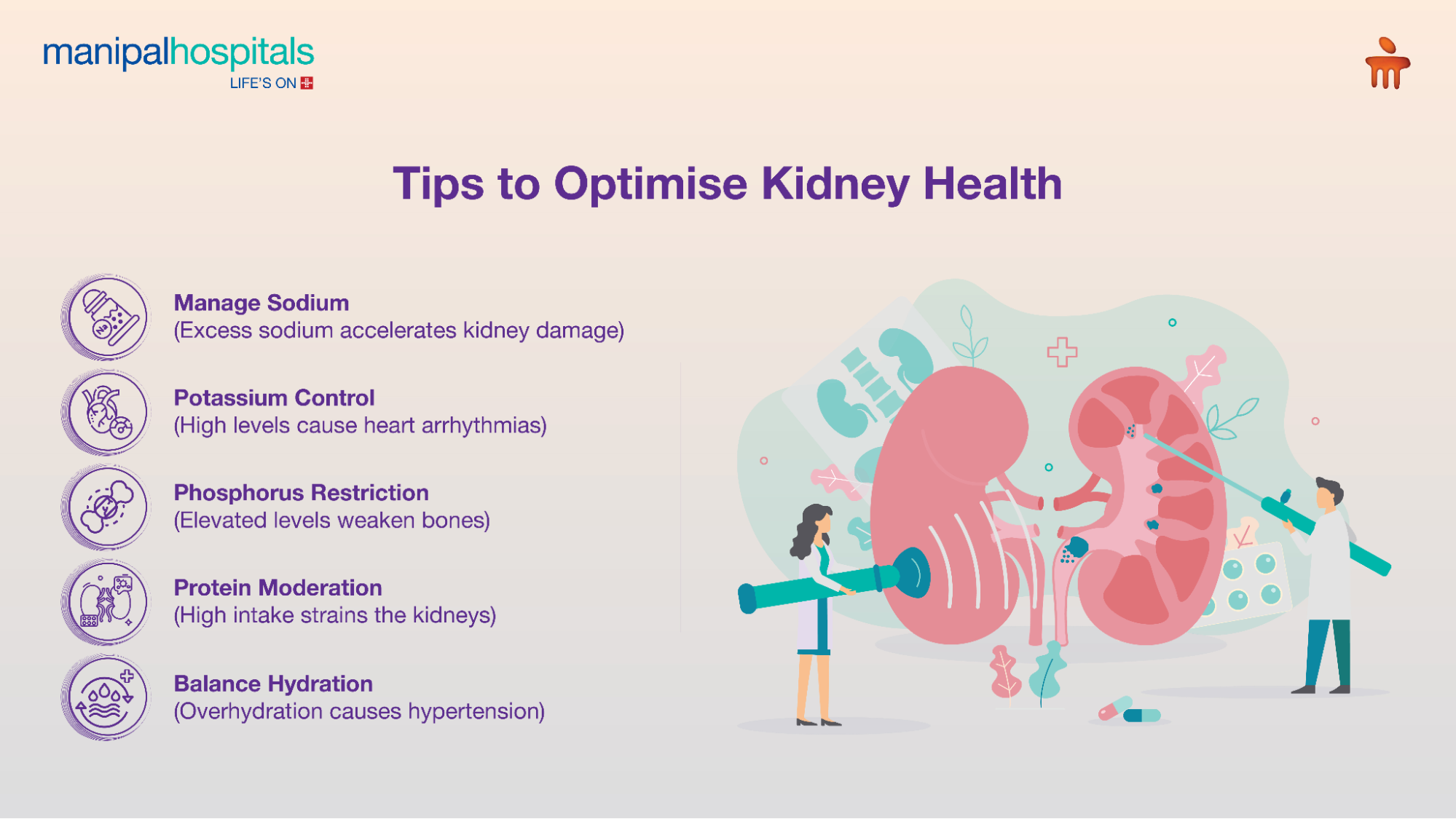
Sodium Management:
-
Excess sodium leads to fluid retention and hypertension, accelerating kidney damage.
-
Our nephrologists in Jaipur advise limiting sodium intake to less than 2,300 mg/day.
-
Avoid processed foods, canned products, and restaurant meals high in salt.
-
Use herbs, garlic, lemon juice, and spices for flavour enhancements.
Potassium Control:
-
High potassium can cause dangerous heart arrhythmias.
-
Choose low-potassium fruits like apples, grapes, and berries; avoid bananas, oranges, and tomatoes.
-
Leaching potassium from vegetables (soaking and boiling) reduces the content.
-
Our nephrologists in Jaipur provide tailored potassium limits based on lab results.
Phosphorus Restriction:
-
Elevated phosphorus weakens bones and causes vascular calcification.
-
Limit dairy, nuts, seeds, whole grains, and dark cola beverages.
-
Phosphate binders prescribed by nephrologists help manage serum phosphorus.
Protein Moderation:
-
Adequate protein supports muscle repair, but high protein intake strains the kidneys.
-
Our nephrologists in Jaipur recommend high-quality protein sources in controlled amounts.
-
Plant-based proteins and lean meats are preferable.
Hydration Balance:
-
Adequate fluids help the kidneys flush toxins, but overhydration causes swelling and hypertension.
-
Our nephrologists guide individualised fluid intake based on CKD stage.
Avoid Unapproved Supplements:
-
Over-the-counter vitamins/herbs may contain harmful ingredients.
-
Always consult our nephrologists in Jaipur before taking supplements.
Regular Monitoring:
-
Kidney function tests and blood work track nutrient levels.
-
Our nephrologists adjust the kidney diet plan to optimise health and slow progression.
Practical Tips for a Kidney-Healthy Diet
-
Prepare meals at home to control ingredient quality and sodium levels.
-
Use herbs and spices for flavour instead of salt substitutes, which may contain harmful potassium.
-
Monitor fluid intake based on the nephrologist's recommendations to avoid fluid overload.
-
Maintain an active lifestyle alongside diet changes for the best outcomes.
-
Regularly consult our nephrologists in Jaipur to adjust your diet as your condition changes.
Why Consult Nephrologists in Jaipur?
Our nephrologists in Jaipur play a pivotal role in managing CKD through dietary and medical guidance. Their expertise ensures patients follow a diet for kidney disease that aligns with their health needs, preventing complications like fluid retention, electrolyte imbalances, or worsening kidney function. Our nephrologists in Jaipur are equipped with the latest research and tools to tailor kidney impairment diets that improve quality of life over the long term.
Learn More: Common Types Of Kidney Stones And Their Treatment
Conclusion
Following a healthy kidney diet tailored to your needs is crucial in managing chronic kidney disease effectively. The guidance of our experienced nephrologists in Jaipur ensures you receive balanced nutrition while protecting your kidneys. With conscious food choices and expert support, a kidney-friendly diet can enhance your quality of life and slow disease progression.
FAQ's
A kidney diet regulates nutrients like protein, sodium, potassium, and phosphorus to reduce kidney workload and preserve kidney function.
Yes, but choose low-potassium fruits such as apples, berries, and grapes, and avoid high-potassium options like bananas and oranges.
Limiting sodium helps control blood pressure and reduces fluid build-up, which protects the kidneys and heart.
Regular follow-ups are vital, especially as CKD progresses, to adjust your diet and treatment accordingly.
Share this article on: