4 Min Read
Managing diabetes is not just about medicines; it’s equally about what’s on your plate every day. A well-planned diet for diabetes helps control blood sugar levels, prevents complications, and improves overall energy and quality of life. The good news? You don’t need to give up all your favourite foods. With the right choices, balance, and portion control, a diabetes diet can be both healthy and satisfying.
At Manipal Hospitals Jaipur, our specialists strongly believe that personalised nutrition plays a key role in long-term diabetes management. Let’s break down what to eat, what to avoid, and how much to eat simply and practically.
Synopsis
Why Diet Matters in Diabetes
When you have diabetes, your body either doesn’t produce enough insulin or can’t use it effectively. This causes blood sugar levels to rise. A carefully planned diabetic diet plan helps:
-
Maintain stable blood glucose levels
-
Improve insulin sensitivity
-
Control weight
-
Reduce the risk of heart disease, kidney damage, and nerve problems
That’s why diet is considered the foundation of diabetes care.
Best Foods for Diabetes: What to Eat Regularly
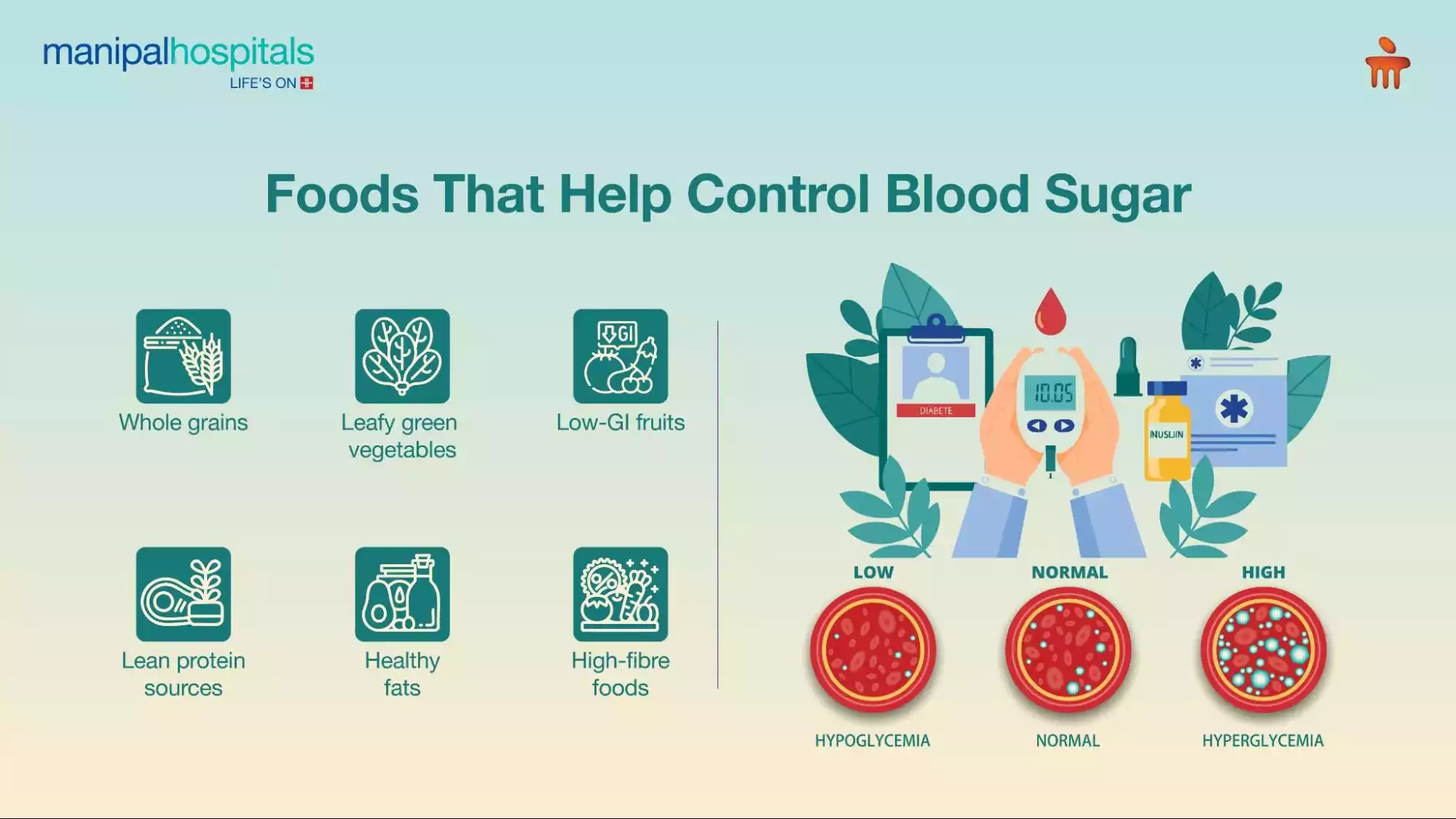
Choosing the right foods can make a huge difference in blood sugar control. Here are some foods good for diabetes that should be part of your daily meals.
1. Whole Grains
Whole grains digest slowly and prevent sudden sugar spikes.
-
Brown rice
-
Whole wheat roti
-
Oats
-
Millets (ragi, jowar, bajra)
These are some of the best foods for diabetes when eaten in controlled portions.
2. Fruits for Diabetes Patients (Choose Wisely)
Yes, fruits are allowed, but portion size and selection matter.
Best fruits for diabetes patients:
-
Apples
-
Pears
-
Guava
-
Papaya
-
Berries
-
Oranges
These fruits are high in fibre and have a low to moderate glycaemic index.
Tip: Eat whole fruits instead of fruit juices to avoid rapid sugar spikes.
3. Non-Starchy Vegetables
Vegetables are rich in fibre, vitamins, and minerals and are excellent foods for diabetes.
-
Spinach
-
Broccoli
-
Cauliflower
-
Cabbage
-
Beans
-
Bottle gourd and ridge gourd
They keep you full without raising blood sugar.
4. Lean Protein Sources
Protein helps control hunger and stabilise glucose levels.
-
Dal and legumes
-
Paneer (low-fat)
-
Eggs
-
Fish
-
Skinless chicken
Including protein in every meal is an important part of a balanced diabetic diet plan.
5. Healthy Fats
Healthy fats support heart health, which is crucial for people with diabetes.
-
Nuts and seeds
-
Olive oil
-
Mustard oil
-
Avocados
Use fats sparingly but smartly.
Foods to Avoid in Diabetes
Certain foods can cause sudden spikes in blood sugar and should be limited or avoided. Here’s a clear list of foods to avoid in diabetes:
-
Sugar, jaggery, honey
-
Sweets, cakes, pastries
-
White bread and refined flour (maida)
-
Deep-fried snacks
-
Packaged and processed foods
-
Sugary drinks and soft drinks
-
Flavoured yoghurts and sweetened cereals
Avoiding these foods helps keep blood sugar levels steady and reduces the need for medication adjustments.
Portion Control Tips for Diabetes
Even healthy foods can raise blood sugar if eaten in excess. Portion control is a key pillar of an effective diet for diabetes.
Simple Portion Control Tips:
-
Use a smaller plate to avoid overeating
-
Fill half your plate with vegetables
-
Limit carbohydrates to one-fourth of the plate
-
Eat slowly and mindfully
-
Avoid second servings
-
Stick to fixed meal timings
Portion control doesn’t mean eating less; it means eating right.
Sample Diabetic Diet Plan (Indian Style)
Early Morning:
-
Warm water with soaked almonds or walnuts
Breakfast:
-
Vegetable oats/vegetable upma
-
One boiled egg or paneer
-
Mid-Morning Snack:
-
One fruit (apple or guava)
Lunch:
-
One or two whole wheat rotis
-
Dal or grilled chicken/fish
-
Plenty of vegetables
-
Salad
Evening Snack:
-
Roasted chana or sprouts
-
Green tea (no sugar)
Dinner:
-
Light meal with vegetables and protein
-
Avoid rice at night if sugar levels are high
This balanced diabetes diet can be customised based on age, activity level, and medical advice.
Role of Medical Guidance in Diabetes Nutrition
Every person with diabetes is different. Factors like age, type of diabetes, lifestyle, and existing health conditions affect dietary needs. At Manipal Hospitals Jaipur, experienced doctors and dietitians create personalised diabetic diet plans to help patients achieve better blood sugar control safely.
Following the right diet for diabetes is not about strict restrictions; it’s about smart choices, balanced meals, and consistency. Including foods good for diabetes, avoiding harmful items, and practising portion control can significantly improve your health and reduce complications.
Conclusion
If you or your loved one is struggling to manage diabetes through diet, expert guidance can make all the difference. The team at Manipal Hospitals Jaipur is committed to supporting patients with evidence-based care, nutrition counselling, and long-term diabetes management. Consult an expert today or visit Manipal Hospitals Jaipur Diabetes and Endocrinology Department!
FAQ's
Yes, fruits for diabetes patients are safe when chosen wisely and eaten in controlled portions.
A balanced diabetes diet with whole grains, vegetables, lean protein, and healthy fats works best.
Sugary foods, refined carbs, and processed snacks should be avoided.
Brown rice or small portions of white rice can be included occasionally, based on sugar levels.
An extremely important portion control helps prevent sudden blood sugar spikes.
Share this article on: