5 Min Read
Breast cancer remains one of the most common cancers worldwide, affecting millions of women and, in rare cases, men. While the diagnosis can feel overwhelming, it is important to remember that breast cancer is highly treatable, especially when detected early. With growing awareness, advanced diagnostic tools, and personalised treatment options, survival rates and quality of life have improved significantly.
At Manipal Hospital Jaipur, we believe that awareness is the first step towards prevention and timely care. Understanding breast cancer symptoms, recognising the value of early detection, and knowing the available treatment options can empower individuals to make informed decisions about their health.
Synopsis
Understanding Breast Cancer
Breast cancer develops when abnormal cells in the breast grow uncontrollably and form a tumour. Although it most commonly begins in the milk ducts or lobules, it can spread to nearby lymph nodes and other parts of the body if not treated in time.
Breast cancer does not affect only older women. While the risk increases with age, younger women and even men can be affected. This makes awareness and regular screening essential for everyone.
Recognising the Symptoms of Breast Cancer
Being aware of changes in your breast health is crucial. Many breast changes are harmless, but some may signal an underlying problem that needs medical evaluation.
Common Breast Cancer Symptoms Include:
-
A new lump or thickening in the breast or underarm, which feels different from the surrounding tissue
-
Changes in breast size or shape, not related to weight changes or hormonal cycles
-
Skin changes, such as dimpling, puckering, redness, scaling, or a texture resembling orange peel
-
Nipple changes, including inversion, discharge (especially bloody or clear), pain, or crusting
-
Persistent breast or nipple pain that does not resolve
-
Swelling of part or all of the breast, even without a noticeable lump
-
Swollen lymph nodes in the armpit or near the collarbone
These symptoms do not always mean cancer, but they should never be ignored. Early consultation with a specialist can provide clarity and peace of mind.
Early Detection: The Key to Better Outcomes
Early detection of breast cancer significantly improves treatment success and survival rates. When detected at an early stage, the five-year survival rate can exceed 90%.
Breast Self-Examination (BSE)
Breast self-examination helps you become familiar with the normal look and feel of your breasts. This makes it easier to notice any unusual changes.
-
Perform BSE once a month
-
The best time is a few days after your menstrual cycle ends
-
Postmenopausal women can choose a fixed day every month
While BSE is not a replacement for medical screening, it plays an important role in early awareness.
Clinical Breast Examination (CBE)
A clinical breast examination is performed by a trained healthcare professional who checks the breasts and surrounding areas for abnormalities.
-
Women aged 20–39: every 1–3 years
-
Women aged 40 and above: annually
Mammography and Advanced Screening
A mammogram is the most reliable screening tool for early detection of breast cancer. It can identify tumours before they become noticeable.
At Manipal Hospital Jaipur, advanced screening facilities include:
-
Digital Mammography for high-resolution imaging
-
Breast Ultrasound is especially useful for dense breast tissue
-
Breast MRI, recommended for high-risk individuals or complex cases
Women over 40 are generally advised to undergo annual mammograms, though screening frequency may vary based on personal and family history.
Comprehensive Breast Cancer Treatment Options
Breast cancer treatment is not one-size-fits-all. At Manipal Hospital Jaipur, treatment plans are personalised based on cancer type, stage, patient health, and preferences. A multidisciplinary team of oncologists, surgeons, radiologists, and support specialists work together to ensure the best outcomes.
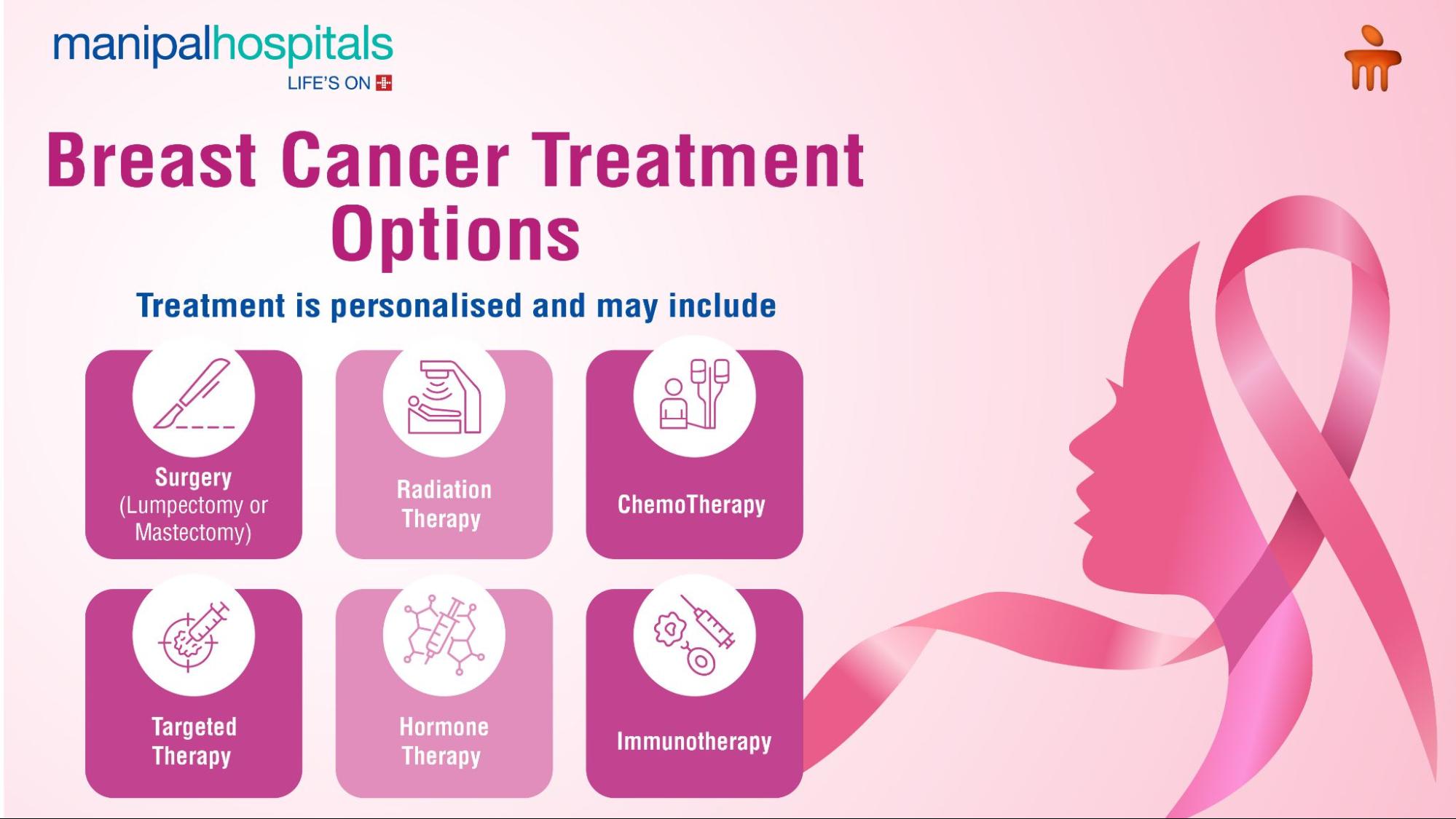
Surgical Treatment
Surgery is often the primary treatment for breast cancer.
-
Lumpectomy (Breast-Conserving Surgery): Removes the tumour while preserving the breast
-
Mastectomy: Removal of the entire breast when required
-
Lymph Node Surgery: Sentinel node biopsy or axillary dissection to assess cancer spread
Radiation Therapy
Radiation therapy uses high-energy rays to destroy remaining cancer cells and reduce recurrence risk. It is commonly recommended after lumpectomy and in selected cases after mastectomy.
Systemic Therapies
These treatments target cancer cells throughout the body:
-
Chemotherapy: Uses drugs to kill cancer cells or shrink tumours
-
Hormone Therapy: Effective for hormone receptor-positive cancers
-
Targeted Therapy: Attacks specific cancer cell markers with fewer side effects
-
Immunotherapy: Enhances the body’s immune response against cancer
Modern treatment combinations have dramatically improved survival rates and recovery outcomes.
Do’s and Don’ts for Better Breast Health
Do’s
-
Perform regular breast self-examinations
-
Attend scheduled screenings and check-ups
-
Maintain a healthy weight and balanced diet
-
Exercise regularly
-
Limit alcohol intake
-
Discuss family history with your doctor
Don’ts
-
Do not ignore breast changes or symptoms
-
Do not skip mammograms due to fear or discomfort
-
Do not delay treatment if diagnosed
-
Avoid self-diagnosis or online misinformation
If you notice any unusual breast changes, persistent pain, or lumps, seek medical advice immediately. Early evaluation can make a life-saving difference.
At Manipal Hospital Jaipur, our breast cancer specialists provide compassionate care, advanced diagnostics, and personalised treatment plans to support patients at every stage of their journey.
Take Charge of Your Health
Breast cancer awareness saves lives. By recognising symptoms early, undergoing regular screenings, and seeking expert care, you can protect your health and future. Book an appointment with the breast care experts at Manipal Hospital Jaipur and take the first step towards reassurance and recovery.
Disclaimer: This content is for informational purposes only and should not replace professional medical advice. Please consult a qualified healthcare provider for personalised guidance.
FAQ's
Yes, although rare, men can develop breast cancer and should seek evaluation for any breast changes.
No. Most lumps are benign, but medical evaluation is essential to rule out cancer.
Yes. Many breast cancers are curable, especially when detected early.
Age, family history, genetic mutations, obesity, alcohol consumption, and hormonal factors.
Generally, annually after age 40, but this may vary based on individual risk.
Share this article on: