6 Min Read
Back pain is one of the most common health complaints across all age groups. From long hours at a desk to sudden injuries or age-related spine changes, almost everyone experiences back discomfort at some point. Studies suggest that nearly 8 out of 10 adults will suffer from back pain during their lifetime. While most episodes are mild and improve with rest or basic care, some types of back pain signal a serious underlying medical condition that should never be ignored.
At Manipal Hospital Jaipur, our orthopaedic and spine specialists frequently see patients who delayed treatment, assuming their pain would resolve on its own. Early recognition of warning signs can prevent long-term complications, nerve damage, and loss of mobility. This guide will help you understand when back pain is harmless and when it requires immediate medical attention.
Synopsis
Understanding Back Pain
Back pain can vary greatly in intensity and character. It may feel like a dull ache, a sharp stabbing sensation, stiffness, or even burning pain that travels down the legs. Pain can originate from muscles, ligaments, discs, nerves, bones, or joints of the spine.
Common Causes of Back Pain
Some of the most frequent causes include:
-
Muscle or ligament strain caused by heavy lifting, sudden movements, or poor posture
-
Herniated or bulging discs, where disc material presses on nearby nerves
-
Degenerative conditions such as arthritis or spinal stenosis
-
Postural issues and prolonged sitting
-
Osteoporosis, leading to compression fractures
-
Spinal deformities, such as scoliosis
In most cases, back pain improves within a few weeks with conservative treatment. However, certain symptoms indicate something more serious.
Warning Signs You Should Never Ignore
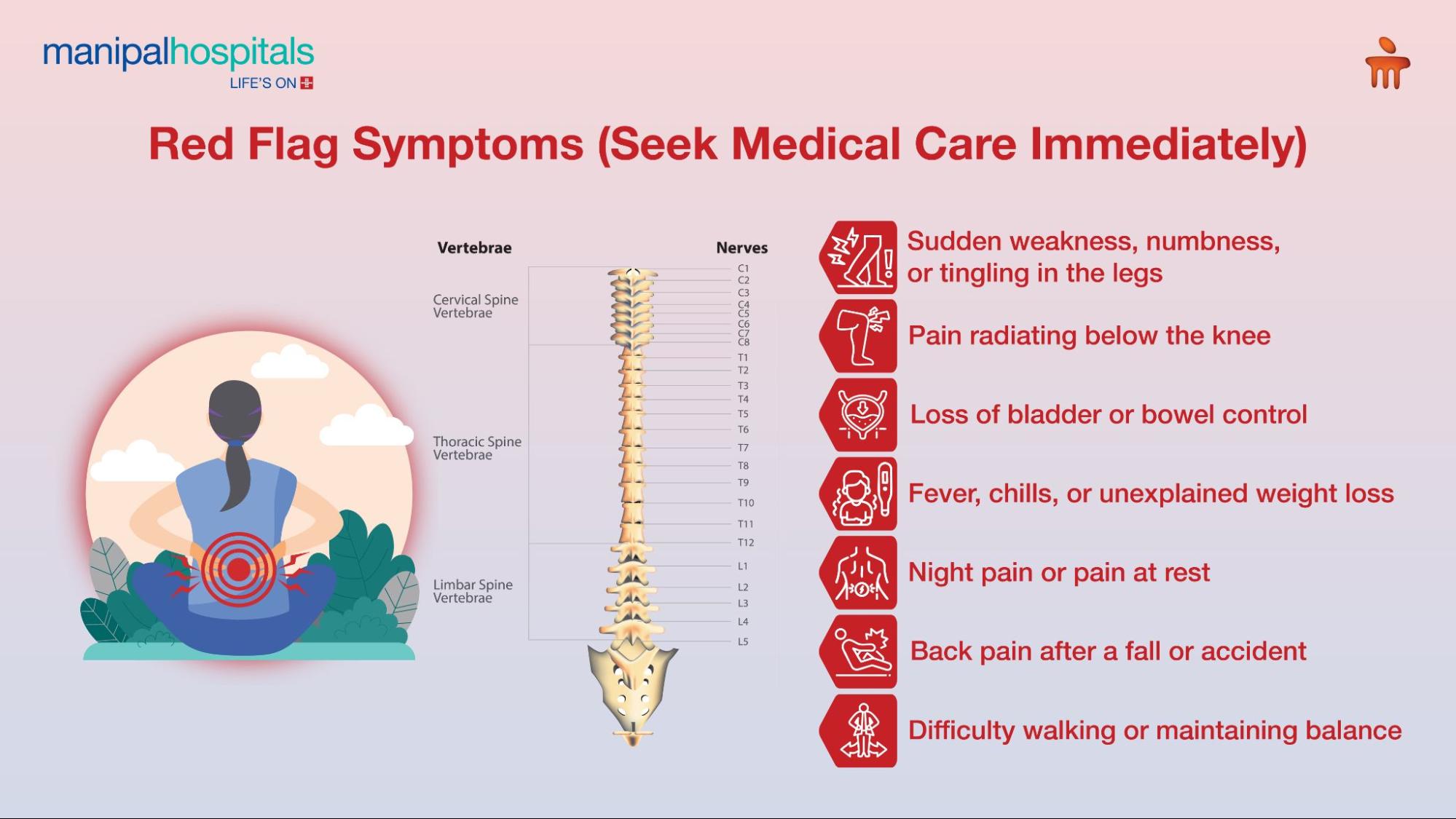
Sudden Weakness, Numbness, or Tingling in the Legs
If back pain is accompanied by numbness, tingling, or weakness in one or both legs, it may indicate nerve compression. Pain radiating below the knee, especially with muscle weakness, could suggest a herniated disc or spinal nerve injury. Early treatment significantly improves recovery and reduces the risk of permanent nerve damage.
Loss of Bladder or Bowel Control
This is a medical emergency. Difficulty controlling urine or bowel movements along with back pain may indicate cauda equina syndrome, a condition caused by severe compression of spinal nerves. Without urgent treatment, it can result in permanent paralysis or incontinence. Immediate hospital evaluation is essential.
Fever, Chills, or Unexplained Weight Loss
Back pain combined with fever, chills, night sweats, or unexplained weight loss could point to an infection, inflammatory disease, or spinal tumour. Unlike mechanical back pain, these conditions often worsen over time and require specific medical treatment. Such symptoms should never be ignored.
Back Pain After a Fall or Accident
Pain following a fall, road traffic accident, or sports injury should always be evaluated. Even minor trauma can cause fractures or spinal instability, particularly in elderly individuals or those with osteoporosis. Prompt imaging helps rule out serious injuries.
Chronic Back Pain That Keeps Getting Worse
Back pain lasting longer than 12 weeks, worsening over time, or not responding to rest and medication requires further investigation. Chronic pain may indicate disc degeneration, spinal instability, or ongoing nerve compression. Early diagnosis improves long-term outcomes.
Night Pain or Pain at Rest
Pain that wakes you from sleep or persists even when lying down is a red flag. Mechanical back pain usually improves with rest, but pain caused by infection, inflammation, or tumours may worsen at night.
Difficulty Walking or Balance Problems
Trouble walking, frequent falls, or loss of balance associated with back pain may suggest spinal cord involvement. These symptoms require urgent medical assessment to prevent permanent neurological damage.
When to Seek Medical Attention
You should consult a specialist immediately if your back pain is associated with any of the warning signs mentioned above. At Manipal Hospital Jaipur, our team follows a comprehensive diagnostic approach to identify the exact cause of back pain.
Diagnostic Evaluation May Include:
-
Physical examination to assess posture, movement, strength, and reflexes
-
X-ray for back pain to detect fractures or alignment issues
-
MRI for back pain to visualise discs, nerves, spinal cord, and soft tissues
-
Blood tests to identify infection or inflammation
Nearly 90% of back pain cases can be successfully managed without surgery when diagnosed early.
Treatment Options at Manipal Hospital Jaipur
Once the cause is identified, a personalised treatment plan is created to relieve pain and restore mobility.
Conservative Treatment
-
Rest and activity modification
-
Pain relief medications
-
Hot or cold therapy
Physiotherapy for Back Pain
Physiotherapy plays a vital role in recovery. Our experienced physiotherapists design customised exercises for back pain that help:
-
Strengthen core muscles
-
Improve flexibility and posture
-
Reduce pain recurrence
-
Restore daily function
Interventional Treatments
For persistent pain, treatments such as epidural steroid injections may be used to reduce nerve inflammation.
Surgical Care
Surgery is recommended only in select cases, such as severe nerve compression, spinal instability, or trauma. Our spine surgeons use advanced, minimally invasive techniques whenever possible.
Care Essentials: Do’s and Don’ts
Do’s
-
Maintain good posture while sitting and standing
-
Take regular breaks from prolonged sitting
-
Follow physiotherapist-recommended exercises
-
Lift objects correctly using your legs
-
Maintain a healthy weight
-
Seek medical advice if pain persists
Don’ts
-
Ignore severe or persistent pain
-
Self-diagnose or delay consultation
-
Sit continuously without movement
-
Lift heavy objects incorrectly
-
Depend solely on painkillers
-
Smoke, as it worsens spine health
Take the First Step Towards a Pain-Free Life
Ignoring warning signs can turn a manageable problem into a serious condition. If you or a loved one is experiencing persistent or alarming back pain symptoms, consult the specialists at Manipal Hospital Jaipur for timely diagnosis and expert care.
Disclaimer: This article is for informational purposes only and does not replace professional medical advice. Always consult a qualified healthcare provider for diagnosis and treatment.
FAQ's
If the pain is severe, persistent, radiates to the legs, or is associated with numbness, weakness, fever, or bladder problems, seek medical care immediately.
Yes, stress can lead to muscle tension, but persistent pain should always be evaluated to rule out other causes.
An X-ray helps assess bones, while an MRI provides detailed images of discs, nerves, and soft tissues. Both are used based on clinical need.
Physiotherapy is highly effective in relieving pain, improving mobility, and preventing recurrence when followed consistently.
While not all cases are preventable, regular exercise, good posture, weight control, and timely medical care significantly reduce risk.
Share this article on: