8 Min Read
At Manipal Hospitals, we believe in empowering our patients with clear, accurate information to alleviate concerns and foster trust. Understanding medical procedures is the first step towards better health outcomes. This comprehensive guide delves into the specifics of a lumbar puncture, commonly known as a spinal tap, a vital diagnostic tool in neurology.
At Manipal Hospitals Gurugram, a centre renowned for its multidisciplinary approach and home to expert neurologists, neurosurgeons, and indeed, our dedicated gastroenterologists, we understand the apprehension surrounding medical procedures. One such diagnostic tool, often crucial for understanding neurological conditions, is the lumbar puncture, also commonly known as a spinal tap.
Synopsis
Understanding Lumbar Puncture: What is it?
A lumbar puncture, or spinal tap procedure, is a medical diagnostic test where a small amount of cerebrospinal fluid (CSF) is collected from the lower back. This fluid surrounds the brain and spinal cord, acting as a cushion and delivering nutrients. Analysing CSF can provide critical insights into a variety of neurological conditions. The procedure is typically performed by a trained neurologist or neurosurgeon, who carefully inserts a thin needle between two vertebrae in the lumbar region of the spine, accessing the subarachnoid space to collect CSF or sometimes to administer medication.
The primary purpose of a lumbar puncture procedure is diagnostic, helping physicians identify infections, inflammatory conditions, or other diseases affecting the central nervous system. In some cases, it can also be therapeutic, used to administer medications directly into the CSF or to relieve pressure in conditions like hydrocephalus. Millions of lumbar punctures are performed globally each year, with high diagnostic accuracy rates, making it an invaluable tool in modern medicine.
When is a Lumbar Puncture Recommended?
Your doctor may recommend a lumbar puncture for several reasons, primarily to diagnose conditions affecting the brain and spinal cord. It is a precise and often definitive way to confirm or rule out serious illnesses.
-
Infections: To diagnose serious infections such as meningitis (inflammation of the membranes surrounding the brain and spinal cord) or encephalitis (brain inflammation). Early diagnosis significantly improves treatment outcomes, with studies showing that prompt identification of bacterial meningitis can reduce mortality rates by up to 30%.
-
Inflammatory and Autoimmune Diseases: To detect autoimmune disorders like multiple sclerosis (MS) or Guillain-Barré syndrome by identifying specific proteins or immune cells in the CSF. For MS, CSF analysis can confirm the presence of oligoclonal bands in over 90% of cases.
-
Cancers: To check for cancers that have spread to the central nervous system, such as leukaemia or lymphoma, by looking for cancer cells in the CSF.
-
Haemorrhage: To diagnose a subarachnoid haemorrhage, a type of bleeding on the brain, particularly when initial imaging scans are inconclusive.
-
Other Neurological Conditions: To diagnose conditions like normal pressure hydrocephalus or certain types of dementia.
-
Therapeutic Purposes: To administer chemotherapy drugs, antibiotics, or anaesthetics directly into the CSF, or to reduce elevated CSF pressure.
The diagnostic yield of a well-performed lumbar puncture is remarkably high, often providing crucial information that cannot be obtained through other imaging techniques alone. This direct access to CSF makes it indispensable for many neurological evaluations.
The Lumbar Puncture Procedure: A Step-by-Step Guide
Understanding what to expect during a spinal tap procedure can help ease anxiety. The entire lumbar puncture operation typically takes about 30 to 45 minutes, though the needle insertion itself is usually only a few minutes.
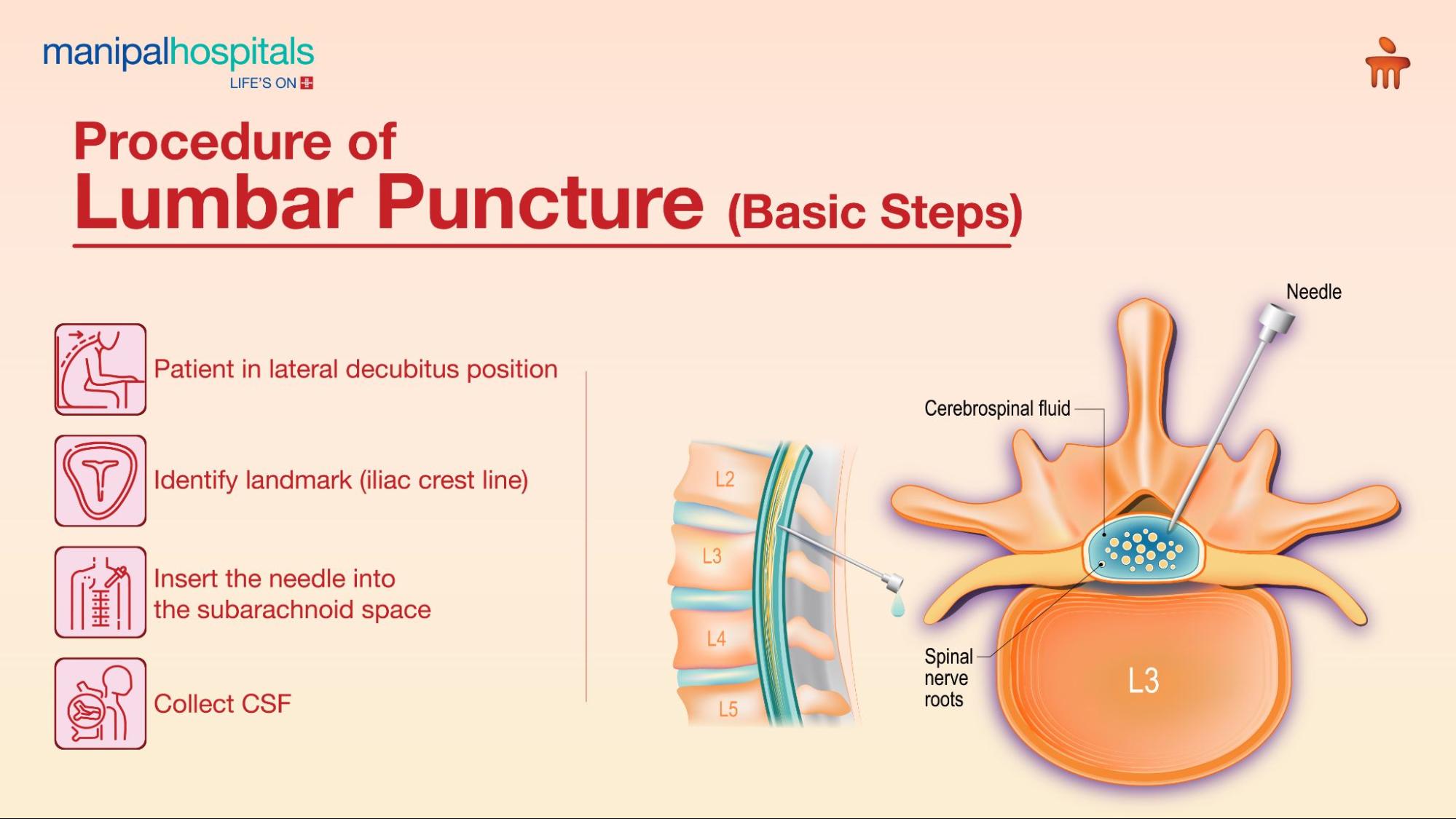
Pre-Procedure Preparation:
-
Consultation: Your doctor will explain the procedure, its risks, and benefits and obtain your informed consent. This is your opportunity to ask any questions.
-
Medical History: You'll discuss your medical history, including any bleeding disorders, allergies, or medications you are taking, especially blood thinners, which may need to be temporarily stopped.
-
Fasting: You typically do not need to fast before a lumbar puncture, but follow specific instructions from your healthcare provider.
During the Lumbar Puncture Procedure:
-
Positioning: You will usually lie on your side with your knees drawn up to your chest, or sit upright and lean forward. This position helps to widen the spaces between your vertebrae, making it easier for the doctor to insert the needle.
-
Sterilisation: The doctor will clean the skin on your lower back with an antiseptic solution and drape the area to maintain sterility.
-
Anaesthesia: A local anaesthetic will be injected into the skin and underlying tissues to numb the area, similar to what you might receive at the dentist. You may feel a brief sting or burning sensation.
-
Needle Insertion: Once the area is numb, a thin, hollow needle is carefully inserted between two lumbar vertebrae (typically L3/L4 or L4/L5) into the subarachnoid space. You might feel some pressure as the needle advances, but it should not be intensely painful.
-
CSF Collection: Once the needle is in the correct position, CSF will drip out and be collected in several sterile vials for laboratory analysis. The pressure of the CSF may also be measured. This collection process is usually painless.
-
Removal: After sufficient CSF has been collected, the needle is gently removed, and a sterile dressing is applied to the puncture site.
Post-Procedure Care:
-
Rest: You will typically be asked to lie flat for an hour or two after the procedure to help reduce the risk of a post-lumbar puncture headache.
-
Hydration: Drinking plenty of fluids is encouraged to help replenish the CSF fluid and further minimise headache risk.
-
Monitoring: Nursing staff will monitor you for any immediate side effects or discomfort.
Many patients report feeling only minor discomfort during the procedure, largely due to effective local anaesthesia. At Manipal Hospitals, our experienced team ensures the procedure is performed with the utmost precision and patient comfort in mind, contributing to a success rate of over 98% for CSF collection.
Potential Lumbar Puncture Side Effects
While generally safe, it's important to be aware of potential lumbar puncture side effects. Most are minor and temporary, and serious complications are rare, occurring in less than 1% of cases.
-
Post-lumbar puncture headache: This is the most common side effect, affecting approximately 10-25% of patients. It's a dull, throbbing headache that worsens when upright and improves when lying down. It usually begins within hours to a couple of days after the procedure and can last for several days. It's thought to be caused by continued leakage of CSF from the puncture site.
-
Pain or Discomfort: You may experience some localised pain, tenderness, or bruising at the needle insertion site. This usually resolves within a few days.
-
Numbness or Tingling: Transient numbness or tingling in the legs can occur if the needle briefly irritates a nerve root, but this is typically short-lived.
-
Bleeding: Minor bleeding at the puncture site is common. Significant bleeding (haematoma) is very rare, particularly in individuals with normal blood clotting.
-
Infection: Although rare due to sterile techniques, there is a small risk of infection (e.g., meningitis or skin infection) at the puncture site.
-
Herniation: In extremely rare cases, if there is pre-existing significant swelling or a mass in the brain, a lumbar puncture could potentially cause brain herniation. This is why a CT or MRI scan is often performed before a lumbar puncture to rule out such risks.
If you experience severe or persistent side effects, especially a severe headache that doesn't improve with rest and fluids, fever, increasing pain, or neurological changes, it's crucial to contact your doctor immediately. Our commitment to patient safety means we are always available to address your concerns.
Recovery and Outlook
Recovery from a lumbar puncture is generally straightforward. Most patients can resume light activities within 24 hours and return to their normal routine within a few days. The fluid collected during the procedure is sent to a laboratory for analysis, and your doctor will discuss the results with you once they are available, typically within a few days to a week, depending on the tests performed.
The information gathered from your CSF analysis is invaluable for diagnosing or ruling out serious conditions. With an accurate diagnosis, our expert neurologists at Manipal Hospitals can formulate a precise and effective treatment plan tailored to your specific needs. The vast majority of patients undergoing a lumbar puncture experience no long-term complications and benefit greatly from the diagnostic clarity it provides, paving the way for targeted and successful interventions.
FAQ's
Most patients report feeling a sting from the local anaesthetic injection, followed by pressure during the needle insertion, but typically not sharp pain. The procedure is performed with great care to minimise discomfort.
The entire process, including preparation, anaesthesia, and CSF collection, usually takes about 30 to 45 minutes. The actual needle insertion and fluid collection only take a few minutes.
You'll typically lie flat for 1-2 hours immediately after. Most people can resume light activities within 24 hours, but it's advisable to avoid strenuous exercise or heavy lifting for 24-48 hours to prevent a headache.
The most common side effect is a post-lumbar puncture headache. Other rare risks include bleeding, infection, or temporary nerve irritation. Serious complications are extremely uncommon.
In most cases, you can eat and drink normally before a lumbar puncture unless specifically instructed otherwise by your doctor. It's often encouraged to stay well-hydrated.
Share this article on:


.webp "Liver Cancer Treatment")


--What-Every-Prostate-Cancer-Patient-Should-Know.webp "Prostate Cancer Surgery: LRP Procedure & Recovery Guide")