7 Min Read
A ventral hernia occurs when abdominal tissue, such as fat or a loop of intestine, protrudes through a weakened area in the abdominal wall. Our general surgeons in Gurugram specialise in diagnosing and treating ventral hernias using advanced surgical techniques tailored to each patient’s condition. These hernias can develop in various locations, including the navel (umbilical hernia) or at the site of a previous surgical incision (incisional hernia). While often not immediately life-threatening, ventral hernias will not heal on their own and can lead to serious complications if left untreated, such as incarceration (when tissue becomes trapped) or strangulation (when the blood supply is cut off). Fortunately, modern surgical techniques offer effective solutions, primarily through open hernia surgery or advanced laparoscopic hernia surgery.
Synopsis
Understanding Ventral Hernia and Its Impact
Ventral hernias are surprisingly common, affecting millions globally. They can manifest as a bulge or swelling in the abdomen, often becoming more prominent when coughing, straining, or standing. Beyond the cosmetic concern, patients might experience discomfort, pain, or a dragging sensation. Ignoring these symptoms can lead to worsening conditions, making timely intervention crucial. Our expert team at Manipal Hospitals emphasises early diagnosis and treatment to prevent complications and ensure a smoother recovery.
Types of Hernia Surgery: An Overview
When considering treatment for a ventral hernia, patients typically face two primary surgical approaches: open repair and laparoscopic repair. Both methods aim to return the protruding tissue to its correct position and reinforce the weakened abdominal wall, often using a surgical mesh. The choice between these two types of hernia surgery depends on several factors, including the hernia's size, location, the patient's overall health, and the surgeon's expertise.
Open Ventral Hernia Repair
Open hernia surgery involves making a single, larger incision directly over the hernia site. Through this incision, the surgeon pushes the bulging tissue back into the abdomen. A synthetic mesh is often sewn into place to strengthen the weakened abdominal wall, reducing the risk of recurrence. The incision is then closed with sutures or staples.
-
Advantages:
-
Suitable for very large or complex hernias.
-
May be preferred for patients with previous abdominal surgeries or significant scar tissue.
-
Can be performed under local or general anaesthesia.
-
-
Considerations:
-
Longer recovery time compared to laparoscopic methods.
-
Typically results in a larger scar.
-
Higher incidence of post-operative pain.
-
While recovery from open hernia surgery can take several weeks, studies show success rates exceeding 90% for primary ventral hernias when performed by experienced surgeons.
Which Is Right for You? Factors to Consider
Choosing between open and laparoscopic ventral hernia repair is a decision made in consultation with your surgeon. Here are key factors considered by our general surgeons in Gurugram:
-
Hernia Size and Location: Smaller, uncomplicated hernias are often ideal for laparoscopic repair. Very large or incarcerated hernias might necessitate an open approach.
-
Previous Surgeries: Extensive prior abdominal surgeries can create scar tissue, making laparoscopic access challenging and sometimes favouring an open repair.
-
Patient Health: Underlying health conditions can influence the choice of anaesthesia and surgical approach.
-
Surgeon's Expertise: The experience of your surgeon with both techniques is paramount. Our team at Manipal Hospitals is highly proficient in both methods, ensuring the best possible outcome for each patient.
-
Patient Preference: Your concerns regarding recovery time, pain management, and scarring are important considerations.
Recovery and Rehabilitation
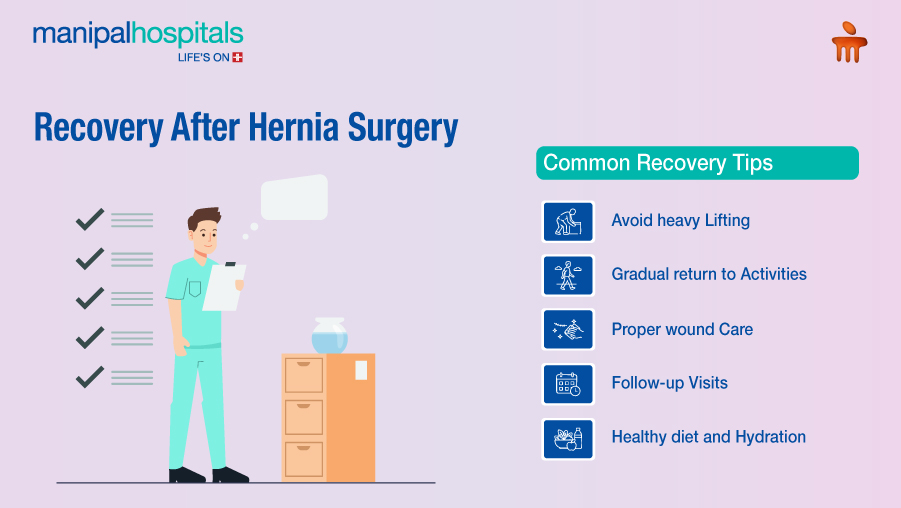
Regardless of the surgical technique, successful recovery is a partnership between the patient and the medical team. Post-operative care focuses on pain management, wound care, and gradual return to activity.
-
Pain Management: Mild to moderate pain is normal and can be managed with prescribed medications.
-
Activity: Light activity is encouraged soon after surgery to promote circulation and prevent complications. Heavy lifting and strenuous exercise are typically restricted for several weeks (2-4 weeks for laparoscopic, 4-8 weeks for open) to allow the surgical site to heal fully.
-
Wound Care: Keeping the incision sites clean and dry is crucial to prevent infection.
Studies show that over 95% of patients achieve a full functional recovery from ventral hernia repair within a few months, significantly improving their quality of life.
If you suspect you have a ventral hernia or are experiencing related symptoms, it's crucial to seek timely medical advice. Book an appointment with our expert general surgeons at Manipal Hospitals today.
FAQ's
With modern surgical techniques and mesh repair, the recurrence rate for ventral hernias is generally low, ranging from 1-10%, with laparoscopic methods often reporting lower rates in skilled hands.
Many patients undergoing laparoscopic ventral hernia repair can go home the same day or within 24 hours. Open repair may require a 1-3 day hospital stay, depending on the hernia's complexity and the patient's recovery.
For office-based work, patients often return within 1-2 weeks after laparoscopic surgery and 2-4 weeks after open surgery. For physically demanding jobs, it might be 4-8 weeks or longer.
Laparoscopic surgery results in several small, less noticeable scars (typically less than an inch each). Open surgery involves a single larger incision, leading to a more prominent scar.
In most adult ventral hernia repairs, a surgical mesh is used to reinforce the weakened area and significantly reduce the risk of recurrence. Your surgeon will discuss the best options for your specific case.
Share this article on:


.webp "Dr. Salil Yadav | Robotic & Laparoscopic Surgery Specialist in Gurugram | Manipal Hospitals")


.webp "Liver Cancer Treatment")


--What-Every-Prostate-Cancer-Patient-Should-Know.webp "Prostate Cancer Surgery: LRP Procedure & Recovery Guide")