6 Min Read
Gallstones are one of the most common digestive disorders affecting adults today. While some people may have gallstones without experiencing any discomfort, others can develop severe complications if the condition is left untreated. Recognising the symptoms of gallstones early can help prevent painful emergencies and protect your long-term health.
If you have been experiencing unexplained abdominal discomfort, digestive issues, or recurring pain after meals, it is important to understand the warning signs. Our general surgeons in Gurugram frequently treat patients who initially dismissed the early symptoms of gallstones, only to later require urgent medical intervention.
In this guide, we'll explore the most important warning signs, when to seek medical attention, how gallstone diagnosis is performed, and what treatment options are available.
Synopsis
- What Are Gallstones?
- 1. Sudden Pain in the Upper Right Abdomen
- 2. Severe Pain After Fatty Meals
- 3. Pain That Spreads to the Back or Right Shoulder
- 4. Nausea and Vomiting
- 5. Bloating, Gas and Indigestion
- 6. Fever and Chills
- 7. Yellowing of the Skin or Eyes (Jaundice)
- When Should You Seek Medical Attention?
- How Is Gallstone Diagnosis Performed?
- Treatment Options for Gallstones
- How to Reduce Your Risk of Gallstones
- Conclusion
What Are Gallstones?
Gallstones are hardened deposits of digestive fluid that form inside the gallbladder, a small organ located beneath the liver. These stones can vary in size from tiny grains to larger stones that block the bile ducts.
When gallstones obstruct the normal flow of bile, they can trigger a range of symptoms of gallstones, from mild digestive discomfort to severe abdominal pain and potentially life-threatening complications.
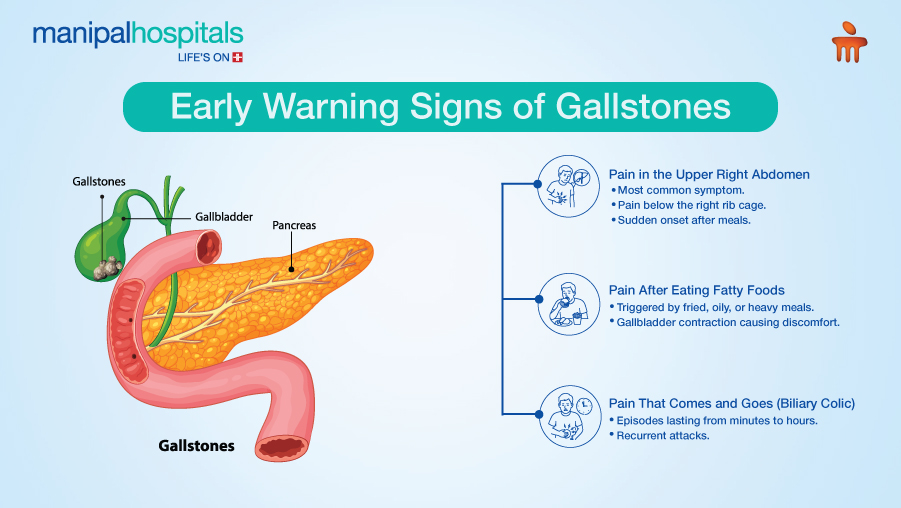
1. Sudden Pain in the Upper Right Abdomen
One of the most common symptoms of gallstones is sudden pain in the upper right side of the abdomen.
This pain may:
-
Appear suddenly after eating
-
Intensify within minutes
-
Last from several minutes to a few hours
-
Feel sharp, cramping, or squeezing
These are among the most recognised gallstone pain symptoms and often indicate that a stone is temporarily blocking a bile duct.
2. Severe Pain After Fatty Meals
Do you experience pain shortly after consuming fried foods, creamy dishes, or rich meals?
The gallbladder releases bile to help digest fats. When gallstones interfere with this process, eating fatty foods can trigger intense discomfort.
Common gallstone pain symptoms after meals include:
Many patients ignore these early symptoms of gallstones, assuming they simply have indigestion.
3. Pain That Spreads to the Back or Right Shoulder
Gallstone-related pain does not always remain in the abdomen.
One of the classic gallbladder attack signs is pain that radiates to:
-
The right shoulder
-
The upper back
-
The area between the shoulder blades
This referred pain occurs because the nerves serving the gallbladder also connect with other regions of the body.
If these symptoms of gallstones occur repeatedly, medical assessment is strongly recommended.
4. Nausea and Vomiting
Persistent nausea can be another indicator that the gallbladder is not functioning properly.
When gallstones block bile flow, digestion becomes impaired, resulting in:
-
Nausea after meals
-
Vomiting
-
Feeling unusually full
These digestive symptoms of gallstones are often overlooked but may signal worsening gallbladder disease.
5. Bloating, Gas and Indigestion
While bloating can occur for many reasons, frequent digestive discomfort may be among the early symptoms of gallstones.
Watch for:
-
Frequent burping
-
Abdominal fullness
-
Persistent indigestion
-
Discomfort after eating
If these symptoms are accompanied by abdominal pain, they should not be ignored.
Our general surgeons in Gurugram often evaluate patients whose long-standing digestive complaints were eventually linked to gallstones.
6. Fever and Chills
Fever is not considered a normal symptom of uncomplicated gallstones.
However, when fever and chills occur alongside abdominal pain, they may indicate:
-
Gallbladder infection
-
Bile duct infection
-
Acute inflammation
These serious gallbladder attack signs require immediate medical attention.
A combination of fever, severe pain, and nausea should never be ignored, as delayed treatment can increase the risk of complications.
7. Yellowing of the Skin or Eyes (Jaundice)
Among the most concerning symptoms of gallstones is jaundice.
This occurs when a gallstone blocks the main bile duct, preventing bile from draining properly.
Warning signs include:
-
Yellow eyes
-
Pale stools
-
Severe itching
Jaundice requires urgent evaluation and prompt treatment.
When Should You Seek Medical Attention?
You should consult a doctor if you experience:
-
Recurring abdominal pain
-
Persistent digestive discomfort
-
Severe gallstone pain symptoms
-
Fever with abdominal pain
-
Jaundice
-
Repeated episodes of nausea and vomiting
Early intervention can help prevent serious complications and reduce the likelihood of emergency surgery.
Our health specialist in Gurugram can guide you towards timely evaluation and appropriate treatment options.
How Is Gallstone Diagnosis Performed?
Accurate gallstone diagnosis is essential for determining the most effective treatment plan.
Doctors may recommend:
Physical Examination
Assessment of symptoms and abdominal tenderness.
Ultrasound Scan
The most common imaging test used for gallstone diagnosis.
Blood Tests
Used to identify infection, inflammation, or bile duct obstruction.
CT Scan or MRI
May be required when complications are suspected.
Prompt gallstone diagnosis allows treatment before severe symptoms develop.
Treatment Options for Gallstones
Treatment depends on the severity of the symptoms of gallstones and the patient's overall health.
Options may include:
Watchful Monitoring
For asymptomatic gallstones.
Medications
In select cases, medicines may help dissolve small stones.
Laparoscopic Gallbladder Removal
The most common and effective treatment for symptomatic gallstones.
Our general surgeons in Gurugram specialise in minimally invasive gallbladder surgery that can offer faster recovery and reduced post-operative discomfort.
If recurrent gallbladder attack signs are affecting your quality of life, surgical treatment may provide lasting relief.
How to Reduce Your Risk of Gallstones
While not all gallstones can be prevented, the following lifestyle measures may help:
-
Maintain a healthy weight
-
Avoid crash diets
-
Eat a balanced diet rich in fibre
-
Exercise regularly
-
Limit excessive fatty and processed foods
-
Stay hydrated
These healthy habits may lower the likelihood of developing future symptoms of gallstones.
Conclusion
The symptoms of gallstones can range from mild digestive disturbances to severe medical emergencies. Ignoring recurring abdominal pain, nausea, bloating, jaundice, or other gallbladder attack signs can allow complications to develop over time.
Early recognition, timely gallstone diagnosis, and expert treatment can prevent unnecessary suffering and improve long-term health outcomes. If you notice persistent gallstone pain symptoms, seek professional medical advice without delay.
Our general surgeons in Gurugram provide comprehensive evaluation and advanced treatment options to help patients regain comfort, confidence, and digestive health.
FAQ's
The earliest symptoms of gallstones often include abdominal discomfort after meals, bloating, indigestion, nausea, and mild pain in the upper right abdomen.
Typical gallstone pain symptoms include sharp or cramping pain in the upper right abdomen that may spread to the back or right shoulder.
Gallstone diagnosis is most commonly confirmed using an abdominal ultrasound, along with blood tests and other imaging studies if necessary.
Common gallbladder attack signs include severe abdominal pain, nausea, vomiting, fever, chills, and pain after eating fatty foods.
No. Some gallstones remain symptom-free and may not require treatment. However, symptomatic gallstones often require surgical removal of the gallbladder to prevent recurrent attacks and complications.
Share this article on:


.webp "Dr. Salil Yadav | Robotic & Laparoscopic Surgery Specialist in Gurugram | Manipal Hospitals")


.webp "Liver Cancer Treatment")


--What-Every-Prostate-Cancer-Patient-Should-Know.webp "Prostate Cancer Surgery: LRP Procedure & Recovery Guide")