5 Min Read
Cervical cancer remains a significant health concern for women globally, but advancements in medical science offer powerful and precise treatment options. One of the newer approaches to cervical cancer treatment is brachytherapy. This highly effective form of radiation therapy delivers targeted precision, offering renewed hope and improved patient outcomes.
Synopsis
Understanding Cervical Cancer
Cervical cancer develops slowly over time, often preceded by precancerous changes in the cells of the cervix. While early detection through regular screenings like Pap tests and HPV vaccination has significantly reduced incidence rates in many regions, it remains a critical area of focus in women's health. Globally, cervical cancer is the fourth most common cancer among women, but with timely diagnosis and effective treatment, the condition can be effectively managed.
What is Brachytherapy?
Brachytherapy, also known as internal radiation therapy, delivers a high dose of radiation directly to the tumour while sparing surrounding healthy tissues. The word "brachytherapy" comes from the Greek word "brachys," meaning short distance. Unlike external beam radiation, where radiation is delivered from outside the body, brachytherapy involves placing a radioactive source inside or very close to the tumour. This technique is particularly effective for cervical cancer due to the tumour's accessible location, allowing for the accurate delivery of the radiation.
How Brachytherapy Works
During brachytherapy for cervical cancer, the radiation oncologist places a small, radioactive source within the cervix or uterus using specialised applicators, guided by advanced imaging techniques such as MRI or CT scans. The radioactive sources used in brachytherapy are tiny—often smaller than a grain of rice. These can be seeds, wires, or small capsules containing isotopes like Iodine-125, Iridium-192, or Caesium-137. The choice depends on the type of cancer, its location, and the dose rate your oncologist determines optimal for your case.
This allows for customised treatment planning, ensuring the radiation dose precisely conforms to the tumour's shape and size, maximising tumour elimination while minimising exposure to organs like the bladder and rectum.
Types of Brachytherapy for Cervical Cancer
There are generally two main types of brachytherapy used for cervical cancer:
-
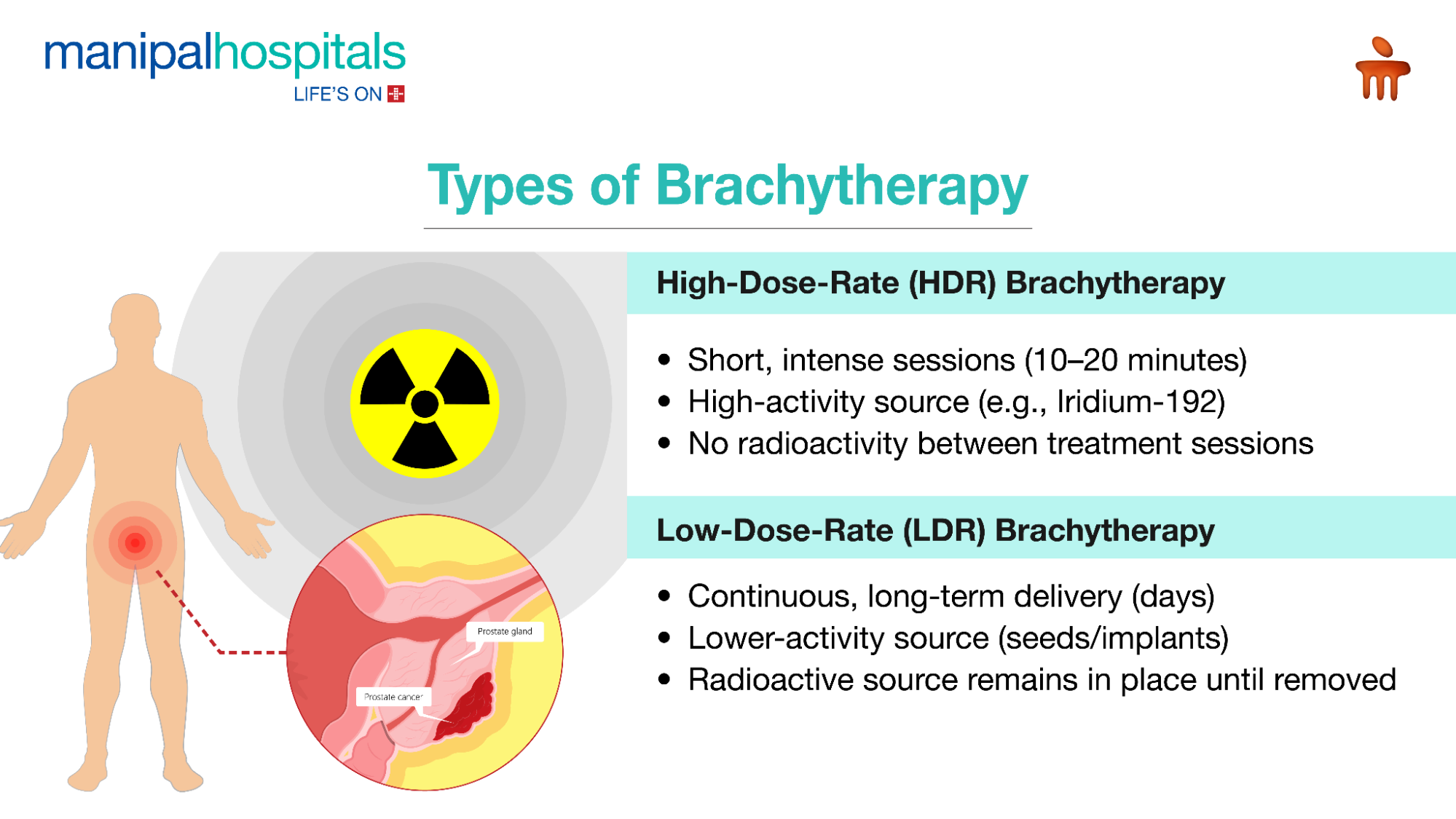
High-Dose-Rate (HDR) Brachytherapy: This is the most common approach for cervical cancer. HDR involves placing a highly radioactive source for short, intense treatment sessions (typically minutes) over several days or weeks. The source is removed after each treatment, and patients are not radioactive between sessions. This allows for precise control and minimal impact on the patient's daily life. HDR brachytherapy uses a more powerful radioactive source (typically Iridium-192) that delivers radiation in minutes rather than months. The source is placed temporarily through applicators and then removed. For cervical cancer, this is the standard approach. Patients typically receive three to five treatments, each lasting about 10-20 minutes of actual radiation delivery. The applicators are placed under anaesthesia, and the treatment is delivered in a shielded room.
-
Low-Dose-Rate (LDR) Brachytherapy: In LDR, a lower-activity source remains in place for a longer continuous period (e.g., several days). While less common now, it can be an option in specific cases. In LDR brachytherapy, radioactive sources deliver radiation slowly over an extended period—typically days to months. The procedure itself takes about an hour under anaesthesia, and most patients go home the same day or the next morning. The seeds emit a low level of radiation that is precisely calibrated to destroy cancer cells while sparing the urethra and rectum.
Benefits of Brachytherapy for Cervical Cancer
Brachytherapy offers advantages for cervical cancer patients:
-
Targeted Radiation: The proximity of the radioactive source to the tumour allows for a very high, concentrated dose of radiation directly to the cancer cells
-
Minimally Invasive: The placement of applicators is a well-established and generally well-tolerated procedure, often performed under anaesthesia, ensuring patient comfort.
-
Shorter Treatment Duration: HDR brachytherapy sessions are typically short, often completed within 15-20 minutes, reducing overall treatment time compared to external beam radiation alone. This can significantly improve a patient's convenience and quality of life during treatment.
-
Preservation of Healthy Tissue: Due to the rapid fall-off of radiation dose away from the source, surrounding healthy organs like the bladder and rectum receive significantly less radiation, thereby reducing potential side effects.
-
Improved Outcomes: When combined with external beam radiation therapy, brachytherapy significantly improves the chances of local tumour control and survival for many cervical cancer patients.
Conclusion
The decision to undergo brachytherapy is made after a thorough evaluation by a multidisciplinary team of specialists, including gynaecologists and radiation oncologists. At Manipal Hospitals, our experts at the Department of Oncology will consider the stage of the cancer, overall health, and individual patient needs to tailor the most effective treatment options. Our focus is always on delivering personalised care with the highest standards of safety and efficacy.
FAQ's
Common side effects can include temporary discomfort or cramping, vaginal discharge, and urinary or bowel changes. These are usually mild and managed with medication, and typically resolve within a few weeks post-treatment.
For HDR brachytherapy, the radioactive source is removed after each session, so you are not radioactive between treatments or after the final treatment. For LDR, where the source remains in place, specific precautions will be advised by your care team during your hospital stay.
Most patients can resume normal activities within a few days to a week after completing their brachytherapy course. Some fatigue or local discomfort may persist for a short period, but significant recovery is generally quick.
While radiation to the pelvic area can impact fertility, modern brachytherapy techniques aim to minimise radiation to the ovaries. For women who wish to preserve fertility, our team can discuss options and strategies, though it depends on the cancer stage and treatment plan.
The placement of the applicator is usually done under anaesthesia (local, regional, or general) to ensure patient comfort. You might experience some pressure or mild discomfort, but pain management is a priority for our team.
The number of sessions varies based on the individual treatment plan, cancer stage, and whether it's combined with external beam radiation. Typically, HDR brachytherapy involves 3-5 sessions over 1-2 weeks.
Share this article on: