6 Min Read
Fractures are a frequent cause of pain, disability, and loss of mobility in adults, often resulting from falls, accidents, sports injuries, or weakened bones. Among these, wrist fracture treatment is one of the most commonly required orthopaedic interventions. It is due to the instinct to break a fall with the hands. Early diagnosis, appropriate care, and realistic expectations about recovery play a vital role in restoring function. According to our orthopaedics in Delhi-NCR, timely fracture management significantly improves healing outcomes and reduces long-term complications.
This comprehensive guide explores common adult bone fractures, explains wrist fracture treatment, discusses ankle fracture recovery, outlines expected fracture healing time, and highlights the growing concern of osteoporotic fractures in the ageing population.
Synopsis
- Understanding Adult Bone Fractures
- Common Causes of Adult Bone Fractures
- Wrist Fractures: A Common Adult Injury
- Wrist Fracture Treatment Options
- Ankle Fractures and Recovery Expectations
- Fracture Healing Time: What to Expect
- Osteoporosis Fractures: A Growing Concern
- How Osteoporosis Impacts Fracture Healing
- Diagnosis of Adult Bone Fractures
- Rehabilitation and Physiotherapy
- Lifestyle Factors Affecting Healing
- Preventing Fractures in Adults
- When to Seek Medical Attention
- Conclusion
Understanding Adult Bone Fractures
Adult bone fractures occur when external force or internal bone weakness exceeds the bone’s strength. Unlike children, adults heal more slowly and are more prone to complications due to reduced bone density, circulation issues, or underlying medical conditions.
Common Causes of Adult Bone Fractures
-
Falls and slips
-
Road traffic accidents
-
Sports-related injuries
-
Bone-weakening conditions such as osteoporosis
Prompt medical evaluation ensures accurate diagnosis and appropriate wrist fracture treatment or fracture-specific care.
Wrist Fractures: A Common Adult Injury
Wrist fractures are among the most frequent adult bone fractures, especially in older adults and physically active individuals.
Why Wrist Fracture Treatment Is So Important
A wrist fracture affects hand function, grip strength, and daily activities. Proper wrist fracture treatment prevents stiffness, deformity, and chronic pain.
Common Types of Wrist Fractures
-
Distal radius fracture: This fracture occurs near the wrist end of the radius bone, commonly after falls, and significantly affects wrist stability and movement.
-
Colles’ fracture: A classic wrist injury where the broken bone tilts backwards, frequently seen in older adults with reduced bone strength.
-
Smith’s fracture: A reverse-pattern wrist fracture involving forward displacement, often caused by direct impact or falling onto a flexed wrist.
-
Each type requires a tailored wrist fracture treatment plan based on severity and displacement.
Accurate diagnosis ensures appropriate immobilisation, surgical intervention if needed, and rehabilitation for optimal functional recovery.
Wrist Fracture Treatment Options
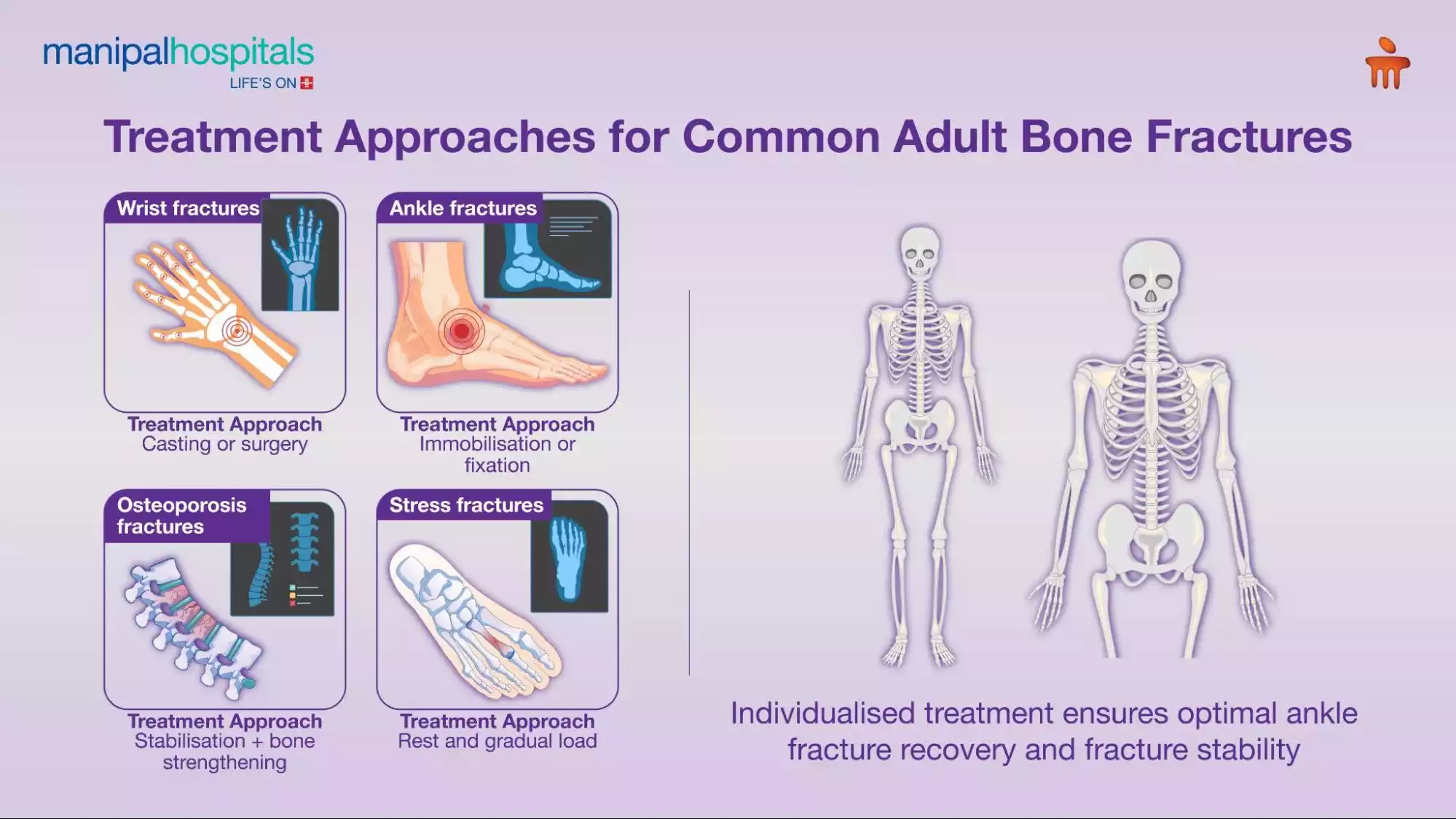
The goal of wrist fracture treatment is to restore alignment, stability, and mobility.
Non-Surgical Wrist Fracture Treatment
-
Immobilisation using casts or splints
-
Regular X-rays to monitor healing
-
Gradual physiotherapy after immobilisation
Surgical Wrist Fracture Treatment
-
Internal fixation with plates or screws
-
External fixation for complex fractures
According to our orthopaedics in Delhi-NCR, early and precise wrist fracture treatment reduces long-term functional limitations.
Ankle Fractures and Recovery Expectations
Ankle fractures are another common category of adult bone fractures, often caused by twisting injuries or falls.
Ankle Fracture Recovery Timeline
Ankle fracture recovery depends on fracture complexity, patient age, and rehabilitation compliance.
|
Phase |
Duration |
Recovery Focus |
|
Immobilisation |
4–6 weeks |
Bone stabilisation |
|
Early rehab |
6–8 weeks |
Range of motion |
|
Strengthening |
8–12 weeks |
Weight-bearing |
|
Full recovery |
3–6 months |
Normal activity |
Proper ankle fracture recovery requires patience and guided physiotherapy.
Fracture Healing Time: What to Expect
Fracture healing time varies depending on bone type, age, nutrition, and overall health.
Average Fracture Healing Time in Adults
|
Fracture Type |
Healing Time |
|
Wrist fractures |
6–8 weeks |
|
Ankle fractures |
8–12 weeks |
|
Hip fractures |
12–16 weeks |
|
Stress fractures |
6–10 weeks |
Understanding realistic fracture healing time helps patients set safe recovery expectations.
Osteoporosis Fractures: A Growing Concern
Osteoporosis fractures occur due to reduced bone density, making bones fragile even with minor trauma.
Common Osteoporosis Fractures
-
Wrist fractures
-
Hip fractures
-
Vertebral compression fractures
Patients with osteoporosis fractures often require prolonged fracture healing time and specialised care.
How Osteoporosis Impacts Fracture Healing
In osteoporosis fractures, bone repair is slower due to compromised bone structure.
Challenges in Osteoporosis Fractures
-
Delayed healing
-
Higher re-fracture risk
-
Reduced surgical fixation strength
According to our orthopaedics in Delhi-NCR, early bone health assessment reduces fracture recurrence.
Diagnosis of Adult Bone Fractures
Accurate diagnosis is essential for effective wrist fracture treatment and other fracture care.
Diagnostic Tools Used
-
X-rays
-
CT scans for complex fractures
-
Bone density tests for osteoporosis fractures
Early diagnosis shortens fracture healing time and improves outcomes.
Rehabilitation and Physiotherapy
Rehabilitation is crucial after wrist fracture treatment and other fracture care.
Benefits of Physiotherapy
-
Restores joint mobility
-
Prevents stiffness
-
Improves muscle strength
-
Reduces re-injury risk
Skipping rehab can prolong fracture healing time significantly.
Lifestyle Factors Affecting Healing
Several lifestyle habits influence adult bone fractures.
Factors That Delay Healing
-
Smoking
Smoking reduces blood flow and oxygen delivery to healing bones, interferes with calcium absorption, and significantly slows fracture repair and recovery.
-
Poor nutrition
Inadequate intake of protein, calcium, vitamin D, and essential minerals deprives bones of key building blocks needed for timely healing.
-
Sedentary lifestyle
Lack of controlled movement weakens surrounding muscles, reduces circulation, and delays bone remodelling during the fracture healing process.
-
Uncontrolled diabetes
Poorly managed blood sugar levels impair circulation, weaken immunity, increase infection risk, and markedly prolong fracture healing time.
Healthy habits support faster fracture healing time and reduce complications.
Preventing Fractures in Adults
Prevention is especially important for those at risk of osteoporosis fractures.
-
Prevention Tips
-
Maintain adequate calcium and vitamin D
-
Engage in weight-bearing exercise
-
Prevent falls at home
-
Regular bone density screening
Our experienced orthopaedicians in Delhi-NCR recommend proactive bone health monitoring after age 40 to prevent fractures and joint issues.
When to Seek Medical Attention
Seek immediate care if you experience:
-
Severe pain after injury
-
Visible deformity
-
Inability to move the limb
-
Persistent swelling
Early intervention improves wrist fracture treatment outcomes and reduces complications.
Conclusion
Wrist fracture treatment, ankle fracture recovery, and management of adult bone fractures require a structured approach combining timely diagnosis, proper immobilisation or surgery, and dedicated rehabilitation. Understanding realistic fracture healing time helps patients stay motivated during recovery. With the rising incidence of osteoporosis fractures, preventive strategies and early orthopaedic care are more important than ever.With expert care at a leading orthopaedic hospital in Delhi-NCR, adults can regain strength, mobility, and confidence after fractures.
FAQ's
Wrist fracture treatment typically involves 6–8 weeks of immobilisation followed by rehabilitation.
Ankle fracture recovery depends on fracture severity, age, weight-bearing compliance, and physiotherapy.
Yes, adult bone fractures usually have a longer fracture healing time due to reduced bone regeneration.
Osteoporosis fractures occur in weakened bones, increasing the risk of complications and delaying healing.
Many fractures heal with conservative treatment; however, complex cases often require surgical intervention to achieve stability.
Share this article on: