6 Min Read
Orthopaedic surgery has witnessed remarkable advancement over the past few decades, particularly in the way joint and bone-related conditions are treated. From chronic knee pain to complex joint replacements, our orthopaedics in Delhi emphasise that patients today have more surgical options than ever before. One of the most transformative developments in this space is robotic-assisted orthopaedic surgery. When advised surgery, patients are often faced with an important decision: robotic surgery vs traditional orthopaedic surgery.
Understanding the difference between these two approaches is essential for making informed choices about joint health, mobility, recovery, and long-term outcomes. While robotic-assisted techniques are redefining precision in orthopaedics, traditional surgery continues to remain reliable and indispensable in many clinical scenarios. The right approach depends on the patient’s condition, anatomy, functional goals, and the surgeon’s expertise.
Synopsis
- What Is Robotic Surgery in Orthopaedics?
- Understanding Traditional Orthopaedic Surgery
- Robotic Surgery vs Traditional Orthopaedic Surgery: Key Differences
- Benefits of Robotic Surgery in Orthopaedics
- Applications of Robotic Surgery in Orthopaedics
- Limitations of Robotic Orthopaedic Surgery
- When Is Traditional Orthopaedic Surgery the Better Choice?
- Recovery and Rehabilitation: A Comparative View
- Cost Considerations and Long-Term Value
- Expertise Matters More Than Technology
- Conclusion
What Is Robotic Surgery in Orthopaedics?
To clearly understand robotic surgery vs traditional surgery in orthopaedics, it is important first to define robotic-assisted orthopaedic surgery.
Robotic orthopaedic surgery is a technology-assisted, minimally invasive approach where surgeons use robotic systems to enhance accuracy during procedures such as knee replacement, hip replacement, and spine surgery. The robotic system does not perform surgery independently. Instead, it assists the surgeon by translating their movements into highly controlled and precise actions.
In orthopaedics, robotic systems use preoperative imaging and intraoperative data to create a personalised surgical plan based on the patient’s unique bone anatomy. This allows surgeons to position implants with exceptional accuracy, which is a critical factor in joint function, alignment, and longevity.
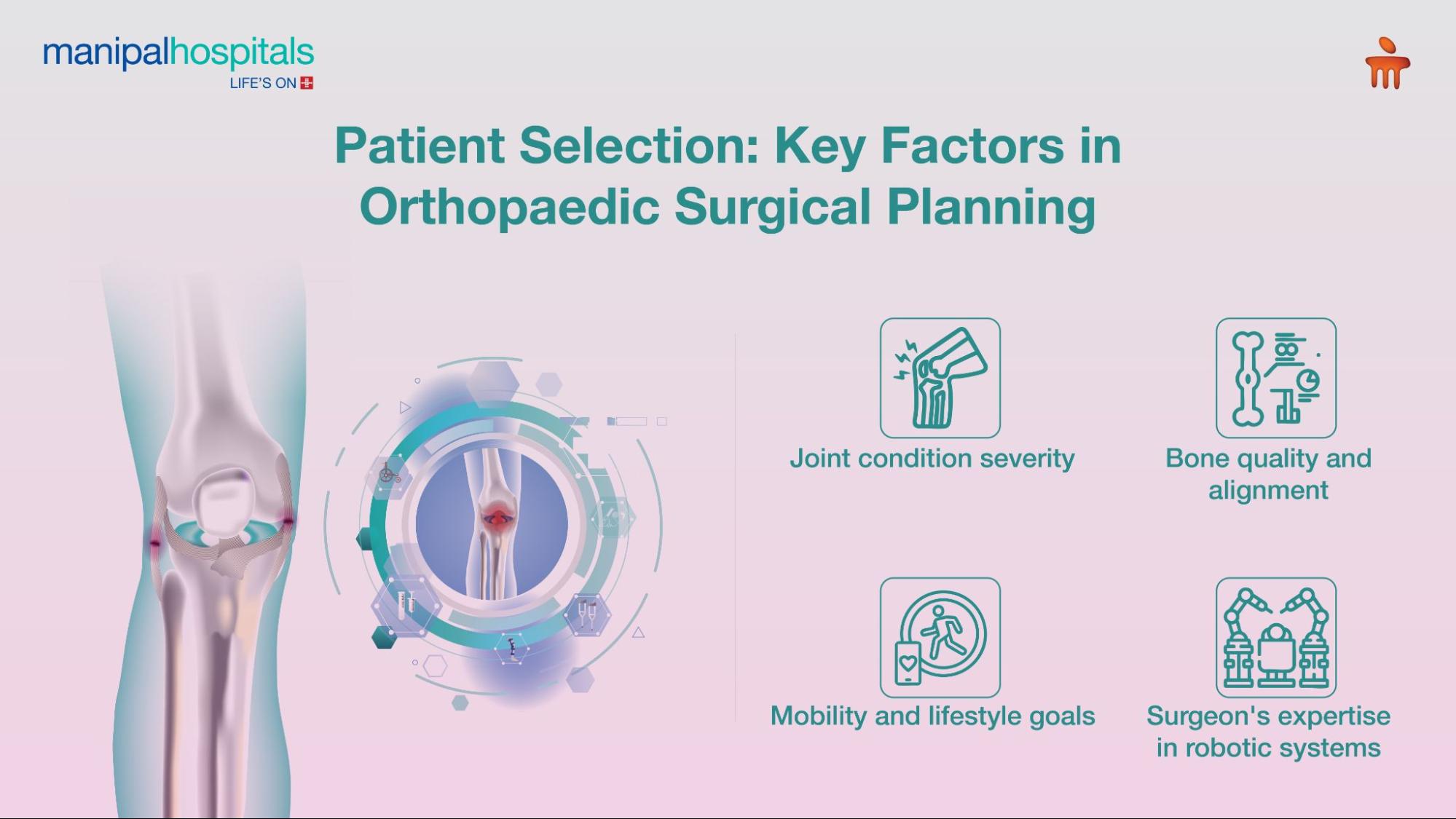
Understanding Traditional Orthopaedic Surgery
Traditional orthopaedic surgery refers to conventional surgical techniques where implant positioning and bone preparation are performed manually by the surgeon. This includes open surgery and standard minimally invasive methods used in joint replacement, fracture fixation, and spine procedures.
Traditional surgery relies heavily on the surgeon’s experience, anatomical judgement, and visual assessment during the procedure. While it may involve larger incisions in some cases, traditional orthopaedic surgery has a long history of successful outcomes and remains the gold standard for many complex and emergency cases.
Robotic Surgery vs Traditional Orthopaedic Surgery: Key Differences
When comparing robotic surgery vs traditional orthopaedic surgery, several important differences influence outcomes.
Precision and Implant Alignment
Robotic-assisted orthopaedic surgery allows for highly accurate implant positioning based on individual anatomy. This level of precision is particularly beneficial in knee and hip replacements. Traditional surgery depends on manual guides and the surgeon's expertise, which can vary slightly between cases.
Visualisation and Planning
Robotic systems provide detailed preoperative planning and real-time feedback during surgery. Traditional surgery relies more on intraoperative assessment and standard alignment tools.
Incision Size and Tissue Handling
Robotic orthopaedic procedures often require smaller incisions and involve less soft tissue disruption, whereas traditional surgery may involve wider exposure depending on the case.
Benefits of Robotic Surgery in Orthopaedics
The increasing adoption of robotic-assisted techniques in orthopaedics is driven by several patient-focused benefits.
-
Improved Joint Accuracy - Accurate alignment of implants improves joint stability, movement, and comfort, especially in knee and hip replacement surgeries.
-
Faster Functional Recovery - Many patients experience earlier mobilisation and smoother rehabilitation compared to traditional orthopaedic surgery.
-
Reduced Postoperative Pain - Minimally invasive approaches result in less muscle and tissue trauma, leading to improved pain control.
-
Better Long-Term Outcomes - Proper implant positioning can reduce wear, improve durability, and enhance long-term joint performance.
These advantages have encouraged the use of robotic platforms in advanced orthopaedic centres, including practices led by our orthopaedics in Delhi, where precision-driven joint care is prioritised.
Applications of Robotic Surgery in Orthopaedics
Robotic technology is most commonly used in:
-
Total knee replacement
-
Partial knee replacement
-
Total hip replacement
-
Select spine surgeries
-
Revision joint replacement procedures
When comparing robotic surgery vs traditional surgery in orthopaedics, robotic-assisted techniques often demonstrate better implant alignment and personalised surgical execution. However, outcomes still depend on the surgeon’s skill and clinical judgement.
Specialist teams such as our orthopaedics in Delhi combine robotic technology with extensive surgical experience to ensure patient-specific planning and reliable results.
Limitations of Robotic Orthopaedic Surgery
Despite its benefits, robotic surgery is not suitable for every orthopaedic patient.
-
Higher procedural costs compared to traditional surgery
-
Limited availability across all hospitals
-
Not ideal for trauma or emergency fracture cases
-
Longer preparation time in certain situations
These limitations highlight why robotic surgery vs traditional surgery should be evaluated on a case-by-case basis rather than as a universal solution.
When Is Traditional Orthopaedic Surgery the Better Choice?
Traditional orthopaedic surgery remains the preferred option in several scenarios, including:
-
Emergency trauma and fractures
-
Severe deformities requiring extensive correction
-
Complex revision surgeries with poor bone quality
-
Infections affecting bones or joints
In such cases, experienced orthopaedic surgeons rely on conventional techniques to ensure stability, safety, and effective outcomes.
Recovery and Rehabilitation: A Comparative View
Recovery plays a major role when choosing between robotic surgery and traditional orthopaedic surgery.
Patients undergoing robotic-assisted orthopaedic procedures often benefit from:
-
Earlier weight-bearing
-
Shorter hospital stays
-
Quicker return to daily activities
Traditional surgery may involve a slightly longer recovery period, particularly for major joint replacements. However, rehabilitation success ultimately depends on physiotherapy adherence, patient motivation, and follow-up care rather than the surgical approach alone.
Cost Considerations and Long-Term Value
Robotic orthopaedic surgery may involve higher upfront costs. However, improved accuracy, reduced complication rates, and faster functional recovery can translate into better long-term value. When comparing robotic surgery vs traditional surgery, patients should consider overall quality of life, joint longevity, and rehabilitation duration.
Expertise Matters More Than Technology
Technology enhances surgery, but it does not replace surgical expertise. A well-executed traditional orthopaedic surgery can deliver excellent outcomes, while poorly planned robotic surgery can lead to complications.
This is why patients should choose centres where technology supports experience, as seen in orthopaedic practices led by our orthopaedics in Delhi, where patient safety and long-term mobility remain central to care.
Conclusion
The choice between robotic surgery vs traditional orthopaedic surgery is not about superiority, but suitability. Robotic-assisted techniques offer precision, faster recovery, and improved joint alignment for many elective procedures, while traditional orthopaedic surgery remains essential for trauma, emergencies, and complex cases.
By understanding both approaches, patients can make informed decisions aligned with their condition, lifestyle, and recovery goals. With expert evaluation and personalised planning, both surgical methods can deliver safe, effective, and lasting orthopaedic outcomes.
FAQ's
Robotic orthopaedic surgery uses robotic assistance to improve accuracy during joint replacement and spine procedures.
Robotic surgery offers benefits in precision and recovery for select cases, but traditional surgery remains equally effective in many situations.
Knee replacement, hip replacement, and select spine surgeries benefit most from robotic assistance.
Many patients experience quicker mobilisation and reduced pain, though recovery depends on rehabilitation and individual health.
The decision should be made after consultation with our experienced orthopaedic surgeons who evaluate your condition and goals.
Share this article on: