




 9 Min Read
Experiencing heavy periods, medically known as menorrhagia, can be more than just an inconvenience; it can significantly impact your daily life, energy levels, and overall well-being. For many women, heavy bleeding during their menstrual cycle leads to anxiety, discomfort, and even anaemia. At Manipal Hospitals, our gynaecologists in Delhi understand these challenges and are dedicated to providing compassionate, effective care. This comprehensive guide delves into when conventional treatments might not suffice and how advanced options like IUDs and surgical interventions can provide profound, lasting relief from persistent heavy periods.
Synopsis
- Understanding Heavy Periods (Menorrhagia)
- When to Seek Medical Help for Heavy Periods
- Causes of Heavy Bleeding During Periods
- Diagnosing Heavy Periods at Manipal Hospitals
- Treatment Pathways for Heavy Periods: Beyond Initial Approaches
- IUDs: A Modern Solution for Heavy Periods
- Surgical Interventions: When More is Needed for Heavy Periods
- How to Stop Heavy Bleeding During Periods: Home Remedies: A Balanced Perspective
- Reclaiming Your Life from Heavy Periods
- Conclusion
Understanding Heavy Periods (Menorrhagia)
Heavy periods are characterised by excessive bleeding during menstruation, which can last longer than seven days or involve a blood loss that is so significant it interferes with daily activities. This often means needing to change sanitary products every hour or two, passing large blood clots, or experiencing anaemia-related symptoms such as fatigue and shortness of breath. It's a common condition, affecting approximately 1 in 5 women, yet many suffer in silence, believing it's just 'part of being a woman'. Understanding the impact of heavy periods is the first step towards seeking effective treatment.
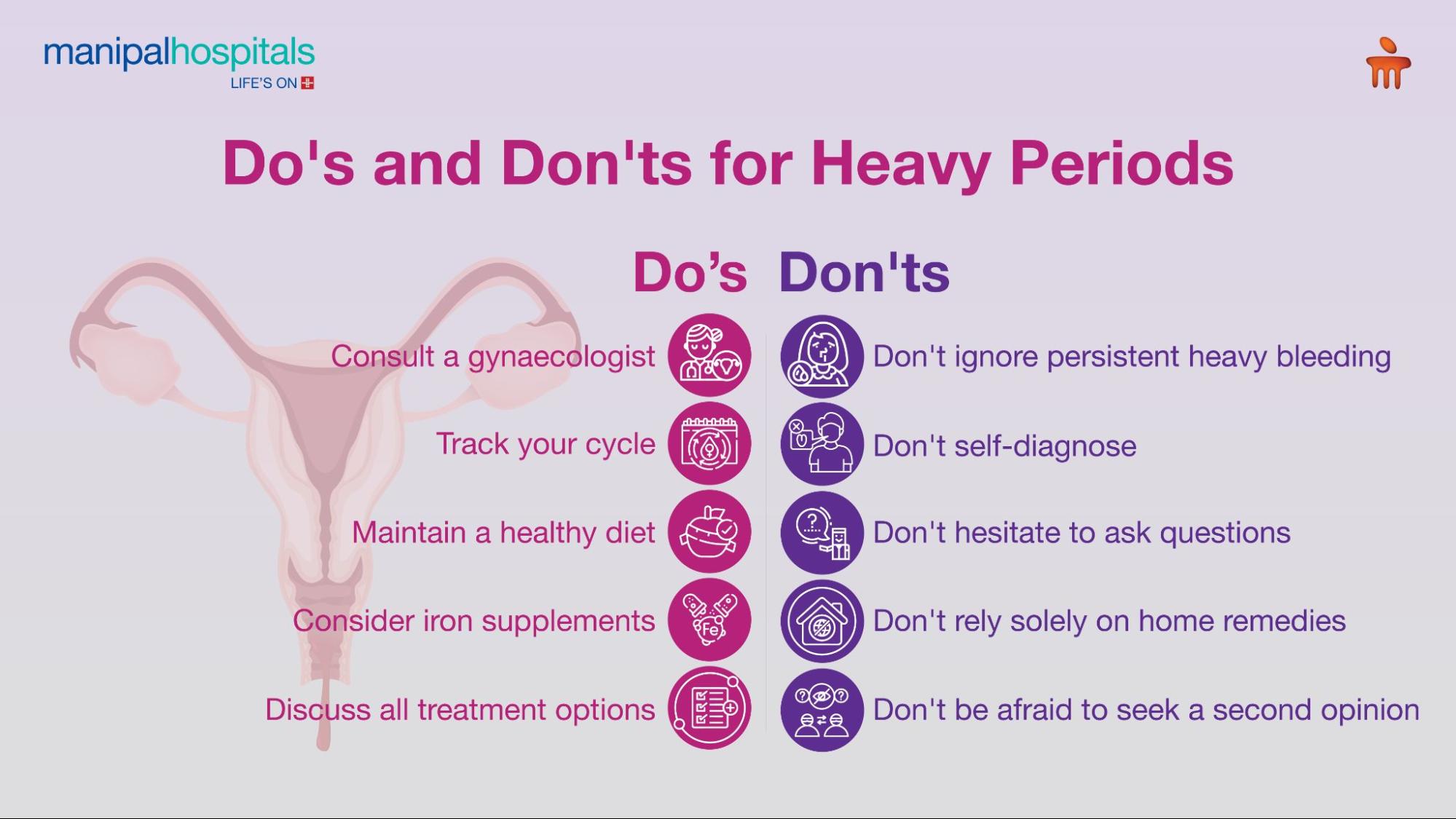
When to Seek Medical Help for Heavy Periods
It's crucial to consult a healthcare professional if you are experiencing heavy bleeding during your period cycles that:
-
Saturates one or more sanitary pads or tampons every hour for several consecutive hours.
-
Requires you to wake up to change sanitary protection during the night.
-
Lasts longer than seven days.
-
Includes large blood clots (the size of a 10p coin or larger).
-
Is accompanied by severe pelvic pain.
-
Causes symptoms of anaemia, such as extreme tiredness, weakness, dizziness, or shortness of breath.
Ignoring heavy periods can lead to anaemia and significantly reduce your quality of life. Seeking timely advice from expert gynaecologists is paramount.
Causes of Heavy Bleeding During Periods
Understanding the underlying causes of heavy bleeding during periods is key to effective management. Several factors can contribute to menorrhagia, ranging from hormonal imbalances to structural issues within the uterus. Common causes of heavy bleeding during periods include:
-
Uterine Fibroids: Non-cancerous growths in the uterus that can cause heavy or prolonged bleeding.
-
Uterine Polyps: Small, benign growths attached to the inner wall of the uterus that can extend into the uterine cavity.
-
Adenomyosis: A condition where endometrial tissue, which normally lines the uterus, grows into the muscular wall of the uterus.
-
Hormonal Imbalances: An imbalance of oestrogen and progesterone can lead to a thicker endometrial lining, resulting in heavier bleeding.
-
Ovulatory Dysfunction: When the ovaries do not release an egg (anovulation), it can disrupt the hormonal balance, leading to heavy periods.
-
Intrauterine Devices (IUDs): Non-hormonal copper IUDs can sometimes cause heavier periods, especially in the initial months.
-
Blood Clotting Disorders: Rare conditions that affect the blood's ability to clot properly.
-
Endometrial Hyperplasia: A thickening of the uterine lining, which can sometimes be a precursor to cancer.
-
Complications of Pregnancy: Miscarriage or ectopic pregnancy can sometimes manifest with heavy bleeding.
A thorough diagnosis by a specialist is essential to pinpoint the exact cause of your heavy periods and tailor the most appropriate treatment plan.
Diagnosing Heavy Periods at Manipal Hospitals
Our approach to diagnosing heavy periods is thorough and patient-centred. Your gynaecologist will start with a detailed medical history and physical examination. This may be followed by:
-
Blood tests to check for anaemia, thyroid function, and clotting disorders.
-
Pelvic ultrasound to visualise the uterus, ovaries, and fallopian tubes.
-
Hysteroscopy to examine the inside of the uterus using a thin, lighted scope.
-
An endometrial biopsy to take a tissue sample from the uterine lining for microscopic analysis.
These diagnostic tools help us accurately identify the causes of heavy bleeding during periods and guide us towards the most effective solutions.
Treatment Pathways for Heavy Periods: Beyond Initial Approaches
For many women experiencing heavy periods, initial treatments may involve oral medications, such as anti-inflammatory drugs or hormone therapy (like the combined oral contraceptive pill). While these can be effective for some, for others, particularly those with persistent or severe heavy bleeding during their period cycles, more targeted interventions are needed. This is when options like IUDs and surgical procedures become invaluable.
IUDs: A Modern Solution for Heavy Periods
Hormonal Intrauterine Devices (IUDs) have revolutionised the management of heavy periods. These small, T-shaped devices are inserted into the uterus and release a progestogen hormone that thins the uterine lining, significantly reducing menstrual bleeding.
-
Effectiveness: Studies show that hormonal IUDs can reduce menstrual blood loss by up to 90% within a few months of insertion, offering substantial relief from heavy periods.
-
Benefits: In addition to reducing heavy periods, they also provide highly effective contraception for up to 5-8 years, making them a dual-purpose solution for many women. Over 80% of women report satisfaction with hormonal IUDs for menorrhagia management.
-
Procedure: The insertion is a quick, in-office procedure, often performed by our skilled gynaecologists in Delhi, with minimal discomfort.
The hormonal IUD is often a first-line advanced treatment option due to its high efficacy and long-term benefits in managing heavy bleeding during menstrual cycles.
Surgical Interventions: When More is Needed for Heavy Periods
When heavy periods do not respond to medication or hormonal IUDs, or when structural issues are the primary cause, surgical options become a crucial consideration.
Manipal Hospitals offers a range of advanced surgical procedures tailored to individual needs.
1. Endometrial Ablation:
-
What it is: This procedure involves removing or destroying the uterine lining (endometrium) to reduce or stop menstrual bleeding. It's typically a minimally invasive procedure, often performed as a day case.
-
Effectiveness: Approximately 80-95% of women experience a significant reduction in heavy periods following endometrial ablation, with many achieving amenorrhoea (no periods at all).
-
Who it's for: Women who have completed childbearing and wish to avoid a hysterectomy.
2. Myomectomy:
-
What it is: A surgical procedure to remove uterine fibroids while preserving the uterus. This is a vital option for women who wish to retain their fertility or uterus.
-
Effectiveness: Myomectomy is highly effective in alleviating heavy bleeding during menstrual cycles caused by fibroids. More than 90% of patients report significant improvement in symptoms after successful removal of fibroids.
-
Approaches: Can be performed hysteroscopically (through the vagina and cervix), laparoscopically (keyhole surgery), or via open abdominal surgery, depending on the size and location of the fibroids.
3. Hysterectomy:
-
What it is: The surgical removal of the uterus. This is a definitive solution for heavy periods and is generally considered when other treatments have failed or when there are other significant gynaecological issues.
-
Effectiveness: Hysterectomy is 100% effective in stopping heavy periods as it removes the source of menstruation.
-
Considerations: As it permanently ends fertility, it's a decision made after careful consideration and discussion with your gynaecologist, especially at Manipal Hospitals, where patient counselling is a priority. Roughly 600,000 hysterectomies are performed annually in the US for various reasons, including severe menorrhagia.
Our expert team will discuss all suitable options for your heavy periods, ensuring you make an informed decision aligned with your health goals and lifestyle.
How to Stop Heavy Bleeding During Periods: Home Remedies: A Balanced Perspective
While home remedies cannot cure underlying medical conditions causing heavy periods, some practices can offer temporary relief or support alongside medical treatment. These include:
-
Rest and Hydration: Ensuring adequate rest and staying well-hydrated is crucial, especially if you're losing a lot of blood.
-
Dietary Adjustments: Consuming iron-rich foods (e.g., spinach, red meat, lentils) can help combat anaemia caused by heavy bleeding during menstrual cycles. Vitamin C aids iron absorption.
-
Herbal Teas: Some women find that certain herbal teas, like raspberry leaf tea, may help with uterine tone, though scientific evidence for directly stopping heavy bleeding is limited.
-
Warm Compresses: Applying a warm compress to the abdomen can help soothe menstrual cramps often associated with heavy periods.
It's vital to remember that these are complementary measures. If you are experiencing persistent or extremely heavy bleeding during your period cycles, relying solely on how to stop heavy bleeding during periods is not advisable. Always seek professional medical evaluation to identify the cause and receive appropriate treatment.
Reclaiming Your Life from Heavy Periods
Living with heavy periods doesn't have to be your norm. The advancements in gynaecological care, including effective IUDs and targeted surgical solutions, offer excellent prospects for significant relief. At Manipal Hospitals, we are committed to helping you regain control over your health and improve your quality of life. Our team, including our expert gynaecologists in Delhi-NCR, provides personalised care, ensuring you receive the most appropriate and effective treatment for your heavy periods.
Conclusion
If you are experiencing these symptoms, it's crucial to seek timely medical advice. Book an appointment with our expert gynaecologists in Delhi today.
FAQ's
Heavy periods (menorrhagia) involve excessive blood loss or bleeding that lasts longer than 7 days, often requiring frequent changes of sanitary products and potentially leading to anaemia. Normal periods are typically lighter and last 2-7 days.
Yes, while often benign, heavy periods can sometimes indicate underlying conditions like fibroids, polyps, hormonal imbalances, or, in rare cases, uterine cancer. It's essential to get a medical evaluation to determine the cause.
A hormonal IUD typically starts to reduce heavy bleeding during menstrual cycles within 3-6 months after insertion. Some women may notice improvements sooner, but full effectiveness takes a few cycles.
Surgical options are usually considered when other less invasive treatments for heavy periods, such as medication or hormonal IUDs, have not been effective, or if there are significant structural causes like large fibroids. It is not necessarily a last resort but a carefully considered option.
While lifestyle changes like a healthy diet (rich in iron) and stress management can support overall health and help combat anaemia, they are generally not sufficient to stop severe heavy periods caused by underlying medical conditions. Professional medical intervention is often required.
Share this article on:


1.webp "functional dyspepsia")





