6 Min Read
Hearing the word adrenal tumour during diagnosis can be alarming. You might wonder, is it serious? Does it always mean cancer? What signs should I look for?
The good news is that not all adrenal gland tumours are dangerous. Many are harmless, and with early detection and the right care, they can be managed well. Some tumours may affect hormone levels or need treatment, but most can be handled successfully. This blog explains adrenal tumours in simple, patient-friendly terms. First, we’ll talk about what adrenal tumours are and then discuss how they are treated.
Synopsis
What Is an Adrenal Tumour?
An adrenal tumour is a lump that forms in the adrenal glands. These small organs sit above each kidney and produce important hormones such as cortisol, adrenaline, and aldosterone.
A tumour in the adrenal gland can be:
-
Benign (non-cancerous): Most common
-
Malignant (cancerous): Rare but serious
-
Functional: Produces excess hormones
-
Non-functional: Does not affect hormone levels
Doctors decide on the best treatment depending on the type of adrenal gland tumour you have.
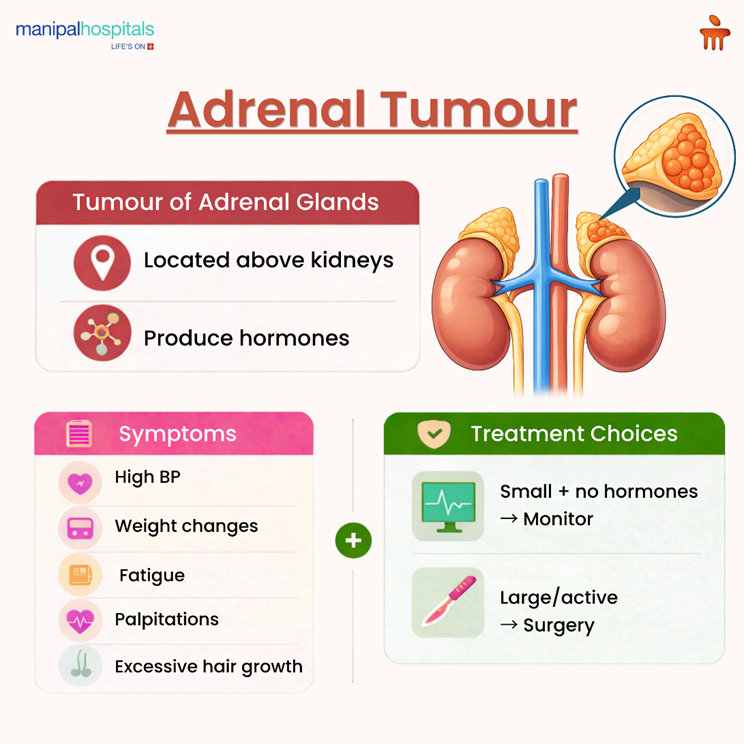
Types of Adrenal Tumours
There are different types of adrenal tumours, based on where they start and how active they are.
Common types include:
-
Adenomas: Usually benign and often do not cause symptoms
-
Pheochromocytoma: Produces excess adrenaline
-
Adrenocortical carcinoma: A rare type of cancerous tumour
-
Metastatic tumours: Tumours that spread from cancers elsewhere in the body
Depending on which hormones are involved, each type may have different symptoms of adrenal tumours.
Adrenal Tumour Symptoms
Not all tumours cause noticeable symptoms. Many are found by accident during scans. When symptoms do appear, they are usually caused by hormone imbalances from the adrenal tumour.
Common adrenal tumour symptoms:
-
High blood pressure
-
Unexplained weight gain or loss
-
Fatigue
-
Excess hair growth (particularly in females)
-
Anxiety or rapid heartbeat
Other adrenal gland tumour symptoms may include:
-
Severe headaches
-
Sweating episodes
-
Palpitations
-
Abdominal pain
Recognising early signs of adrenal gland tumours helps guide timely diagnosis and find the right treatment quickly.
What Causes Adrenal Tumours?
People often do not know what causes adrenal gland tumours. However, some factors can raise the risk.
Common adrenal gland tumour causes:
-
Genetic conditions (like Multiple Endocrine Neoplasia syndrome)
-
Family history of tumours
-
Certain inherited or endocrine conditions
-
Certain cancers can spread to the adrenal glands
Most cases are sporadic, but some are linked to genetic syndromes. Since the causes of adrenal gland tumours are often unknown, it’s important to have regular health check-ups.
How Are Adrenal Tumours Diagnosed?
Doctors use several tests to confirm an adrenal tumour and find out what type it is.
Common diagnostic tests:
-
Blood and urine tests (to check hormone levels)
-
CT scan or MRI
-
PET scan (in suspected cancer cases)
-
Biopsy is rarely performed due to the risk of hormone-producing tumours
These tests help doctors decide the best way to manage adrenal tumour symptoms.
Adrenal Tumour Treatment Options
The size, type, and symptoms of the adrenal gland tumour determine the treatment plan. Tumours of size greater than 4 cm (commonly used threshold) have a higher malignancy risk.
Common adrenal gland tumour treatment options:
1. Monitoring (Watchful Waiting)
-
Small non-functioning tumours may not need to be treated right away.
-
Regular scans monitor changes in size and function.
2. Medications
-
Used to manage symptoms of adrenal tumours related to hormones
-
Useful for conditions like pheochromocytoma
3. Surgery (Adrenalectomy)
-
Surgery is often the most effective way to treat adrenal gland tumours.
-
Doctors recommend surgery for tumours that are large or produce hormones.
-
This surgery can often be done using a laparoscope, which requires only a minimally invasive (laparoscopic) surgery.
4. Cancer Treatment
-
Chemotherapy or radiation for cancerous tumours.
People in Bhubaneswar who need treatment for adrenal tumours have access to expert care and advanced surgical and diagnostic facilities.
Recovery After Adrenal Tumour Treatment
The type of treatment you receive for an adrenal gland tumour will affect how quickly you recover.
|
Phase |
What to Expect |
Care Tips |
|
First few days |
Mild pain, fatigue |
Rest and medications |
|
1–2 weeks |
Gradual recovery |
Light activity, healthy diet |
|
3–4 weeks |
Improved energy |
Resume routine slowly |
|
Long-term |
Normal life for most |
Regular follow-ups |
Recovery may vary from 2 to 6 weeks, depending on laparoscopic vs. open surgery. Most patients recover well after receiving the right treatment from urology experts at Manipal Hospital, Bhubaneswar, for adrenal tumours in Bhubaneswar, with few complications.
Interesting Facts About Adrenal Tumours
-
Many adrenal tumours are found by accident during scans.
-
Not every tumour needs surgery.
-
Tumours that produce hormones can affect several systems in the body.
-
Early detection greatly improves outcomes.
Understanding these points may help reduce anxiety if you are diagnosed with an adrenal tumour.
Warning Signs You Should Not Ignore
If you have the following symptoms of an adrenal tumour that persist, medical evaluation is recommended.
-
Uncontrolled high blood pressure
-
Sudden weight changes
-
Hormonal changes (like irregular periods)
-
Frequent headaches or palpitations
Finding adrenal gland tumour symptoms early leads to better outcomes.
Conclusion
Most adrenal tumours are treatable, but early diagnosis is key, especially in hormone-producing tumours. Knowing the symptoms, possible causes, and treatment options can help you make informed decisions about your health.
With advanced medical care and specialised Urology care at Manipal Hospital Bhubaneswar, patients can receive timely diagnosis and effective treatment. Regular check-ups, staying informed, and seeking expert advice can help you support long-term health.
FAQ's
No, most adrenal tumours are benign and do not spread, except for a few that may produce hormones or increase in size, needing treatment. A prompt evaluation can help figure out if the tumour is cancerous.
High blood pressure, fatigue, weight changes, and hormonal imbalances are some of the first signs of an adrenal tumour. Some tumours don't show any signs and are found during routine imaging tests.
In rare cases, symptoms of an adrenal gland tumour may come back, especially if the tumour comes back or hormone levels change. Regular follow-ups and monitoring help detect any recurrences early and ensure effective treatment.
The size of the tumour, hormone activity, and whether it is cancerous all affect how to treat an adrenal gland tumour. Depending on the patient's condition and symptoms, they may be able to choose between monitoring, medications, or surgery.
Yes, treating adrenal tumours in Bhubaneswar works due to advanced diagnostic tools, minimally invasive surgery, and a team of experienced doctors. Early diagnosis and personalised care make treatment outcomes much better.
Share this article on:


.webp "ଅଙ୍ଗ ଦାନର ଗୁରୁତ୍ୱ: ମୃତ୍ୟୁ ପରେ କେଉଁ ଅଙ୍ଗ ଦାନ କରାଯାଇପାରିବ?")