9 Min Read
Moving around seems simple, but it actually takes a lot of back-and-forth talk between your brain and your muscles. If the parts of the brain that control movement get hurt while a baby is still growing, those signals get mixed up. This is what causes cerebral palsy.
Out of all the different forms, spastic cerebral palsy is the one people get diagnosed with most often, making up about 80% of all cases. It causes high muscle tone, meaning the muscles stay tight and stiff instead of relaxing when they should, which makes movements look rigid or awkward.
Even though the disorder is a lifelong condition, spastic cerebral palsy doesn't get worse over time because the original brain injury stays the same. Getting an early check from a doctor and starting steady therapy can change everything for a child. This blog explores different types of spastic cerebral palsy, how they affect the body, what signs to look for, and the treatment choices available.
Synopsis
What is Spastic Cerebral Palsy?
This condition happens when there is damage to the motor cortex or the pathways in the brain that send out movement commands. In a typical body, these pathways tell a muscle exactly when to tighten up and when to let go. In a child with spastic cerebral palsy, the brain keeps sending constant signals that tell the muscles to contract, so they rarely get a chance to relax.
Because the muscles stay locked like this for months, they can eventually become short and stiff. As a child grows, this constant pulling can drag on their joints and developing bones. These conditions can cause joints to slip out of place or become painful if they do not receive professional medical care.
Causes of Spastic Cerebral Palsy
The brain damage that causes this stiffness happens while the brain is still growing, either before birth, during delivery, or in the first few years of life. Common causes include:
-
Lack of Oxygen: Brain injury affecting movement pathways may occur before birth, during delivery, or shortly after birth. Reduced oxygen supply is one possible cause among several others.
-
Pregnancy Infections: If a mother gets an infection while pregnant, it can cause inflammation that changes how the baby's brain develops.
-
Premature Birth: Babies born very early have delicate blood vessels and face a higher risk for brain bleeds or a lack of blood flow to the pathways that route movement signals.
-
Early Childhood Illnesses: Severe health problems in infancy, like meningitis, serious untreated jaundice, or a significant head injury, can cause permanent damage to these nerve pathways.
Major Types of Spastic Cerebral Palsy
The condition does not look the same in everyone. It depends entirely on which part of the brain was hurt. Doctors look at which limbs are stiff to find the specific types of spastic cerebral palsy:
-
Spastic Diplegia: The stiffness is mostly in the legs. The arms and upper body usually have very little tightness or none at all. Children with diplegia often struggle to walk because the tight muscles pull their legs close together, turning the knees inward.
-
Spastic Hemiplegia: This type affects just one side of the body. Usually, the arm is tighter and stiffer than the leg. The affected arm might stay bent at the elbow or wrist, and the child will often walk with an uneven step.
-
Spastic Quadriplegia: This is the most severe form, causing muscle stiffness in all four limbs, the torso, and the muscles that control the face, mouth, and tongue. It makes voluntary movement very difficult and often interferes with swallowing and talking.
Common Spastic Cerebral Palsy Symptoms
The signs of this condition usually show up more clearly as a child grows and tries to learn new ways to move around. Spotting these spastic cerebral palsy symptoms early allows families to start therapy before the muscles and joints tighten up permanently.
Early Signs in Babies
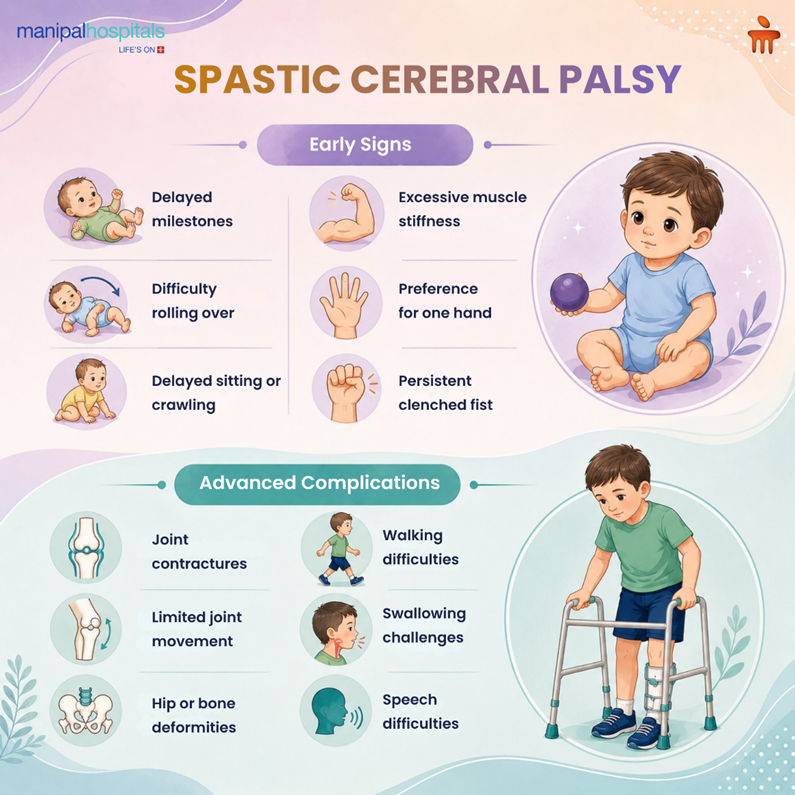
With babies, you usually notice it first when they take longer to do everyday things like rolling over, sitting up, or crawling. Many times, parents say the baby feels really stiff when they try to dress them or pick them up from the cot. You might also notice an older baby reaching for everything with just one hand while keeping their other hand closed up in a tight fist.
Advanced Motor Symptoms
As children grow into toddlers and older kids, the constant muscle tightness causes more distinct challenges:
-
Overactive Reflexes: Muscles twitch or tighten up suddenly when stretched, making smooth, coordinated movements hard to manage.
-
Scissor Walk: Tightness in the inner thighs pulls the legs across each other like a pair of scissors when walking, and children often walk high on their tiptoes.
-
Fixed Joints: Over time, tight muscles can shorten tendons permanently, locking joints like the hips, knees, or ankles in a bent position.
-
Fine Motor Troubles: Small tasks like writing, using a spoon, or buttoning a shirt are difficult because the fingers and hands are stiff.
Diagnostic and Assessment Protocols
The following assessments help identify the cause of the problem, rule out other conditions, and guide the most appropriate treatment plan:
|
Diagnostic Tool |
Clinical Evaluation Focus |
|
Neurological Exam |
Checking muscle tone, testing reflexes, watching posture, and tracking developmental milestones. |
|
Brain Scans (MRI or CT) |
Taking clear pictures of the inside of the brain. |
|
Gait Analysis |
Using special sensors to track exactly how a child walks and how their joints move. |
Comprehensive Spastic Cerebral Palsy Treatment and Therapy Approaches
Managing high muscle tone takes a team effort from pediatric neurologists, physical therapists, and orthopedic doctors. A good spastic cerebral palsy treatment plan combines different therapies to lower muscle tightness, make daily movement easier, and protect the joints from long-term damage.
Physical Therapy
Regular physical therapy is the most important part of long-term care. Therapists work directly with kids on simple stretching and strengthening exercises to keep their joints moving freely, build up their core strength, and help them find better balance when they are walking around. These regular sessions help train the muscles to resist tightening up.
Occupational Therapy
Occupational therapists look at everyday, practical skills. They work with kids on basic tasks like eating, writing, and getting dressed so they can be more independent. They also show families how to use simple, handy tools, like chunky spoons, weighted pencils, or button hooks, that make it much easier for kids to do things on their own at home and school.
Speech and Language Therapy
When stiffness affects the muscles in the face, mouth, or throat, speech therapists provide support. They use targeted exercises to strengthen the muscles needed for talking, which helps improve clarity. They also help ensure a child can swallow safely and can introduce communication devices if talking is too difficult.
Bracing and Medical Management
If physical exercises are not enough to manage severe muscle stiffness, medical teams can use extra tools:
-
Orthotic Braces: Custom splints, leg braces, or shoe inserts hold the feet and legs in the right position. This keeps the muscles stretched out and provides a stable, safe base for standing and walking.
-
Oral Medications: Muscle relaxants can help lower overall muscle tone across the body by calming the signals coming from the central nervous system.
-
Targeted Injections: Injections given directly into a tight muscle group can temporarily quiet down hyperactive nerve signals. This relaxes the muscle for a few months, making physical therapy sessions much more effective.
Surgical Interventions
When chronic tightness causes permanent joint stiffness or changes the way bones grow, surgery can become a helpful option:
-
Orthopaedic Surgery: Surgeons can lengthen short, tight tendons, move muscles to improve joint balance, or realign bones in the hips and legs to make walking smoother and more comfortable.
-
Selective Dorsal Rhizotomy (SDR): This is a specialised surgery on the lower spine where specific misfiring nerve paths are cut. It can permanently reduce stiffness in the legs for carefully selected children.
Conclusion
If you notice constant muscle stiffness, missed milestones, or an unusual walking pattern, it is important to seek medical attention early. Identifying these signs and understanding how stiffness affects daily activities can help protect a child’s long-term health and development. Consult a top neurosurgeon in Bhubaneswar.
Booking a consultation for spastic cerebral palsy treatment in Bhubaneswar supports early diagnosis and timely intervention for better outcomes for the best care visit one of the best neurosurgery hospitals in Bhubaneswar, with access to the best neurosurgery doctors in Bhubaneswar for advanced neurological care and rehabilitation support.
FAQ's
No, the actual injury to the brain doesn't change. But if you leave the muscle stiffness alone, it can cause real problems later, like locked joints or bones pulling out of place.
Normal stiffness from running around or playing goes away after some rest. Hypertonia doesn't stop because the nerves keep forcing the muscles to stay tight and rigid all day.
It really depends on how much the condition affects them and which limbs are stiff. Many children learn to walk by themselves, while others do really well with things like leg braces, walking frames, or crutches.
Braces keep the feet and legs in the right position. This stops the tight muscles and tendons from shortening permanently over time, and it gives kids the steady support they need to sit, stand, or walk safely.
There is no cure for the brain injury itself. But using a mix of physical therapy, regular medicines, and orthopaedic surgeries works incredibly well to lower stiffness, protect the joints, and help kids do much more on their own.
Share this article on:


_-_Symptoms,_Causes_and_Recovery.webp "Guillain-Barré Syndrome (GBS): Symptoms, Causes & Recovery")


.webp "ଅଙ୍ଗ ଦାନର ଗୁରୁତ୍ୱ: ମୃତ୍ୟୁ ପରେ କେଉଁ ଅଙ୍ଗ ଦାନ କରାଯାଇପାରିବ?")