8 Min Read
While the monsoon brings relief from intense summer heat, it also increases the risk of several seasonal infections. The conditions during the monsoon make it easy for many infections and illnesses to thrive. Monsoon illnesses increase due to stagnant water, mosquito breeding, contaminated food and water, and environmental conditions that promote the spread of infectious diseases. Children, older adults, pregnant women, and individuals with weakened immune systems are particularly vulnerable.
Monsoon sicknesses normally start off with the same signs, which include fever, stomach pain, body ache, coughing, and fatigue. Some infections are mild and self-limiting, while others may require prompt medical attention. Being aware of the monsoon diseases and prevention measures can keep your family safe from many illnesses and other health issues. This blog highlights common monsoon diseases, their symptoms, some practical prevention measures, and when to consult a doctor.
Synopsis
- Why Are Diseases More Common During Monsoon?
- Common Diseases in Monsoon
- Dengue Fever: A Major Monsoon Threat
- Waterborne Infections & Viral Fevers
- Fungal and Skin Infections During Monsoon
- Smart Prevention of Monsoon Diseases
- Foods That Help Strengthen Immunity During Monsoon
- Monsoon Hygiene Tips for Families
- Proactive Prevention to Stay Safe
- Signs You Should See a Doctor Immediately
- Conclusion
Why Are Diseases More Common During Monsoon?
Rainy days just make it way too easy to catch something. All that wet weather outside gives germs the perfect excuse to spread around and get everyone sick:
-
Dirty Water: Heavy rain overflows right into the drains, dumping nasty bacteria straight into drinking water.
-
More Mosquitoes: Puddles, clogged gutters, and any standing water turn into massive breeding grounds for the mosquitoes that carry dengue and malaria.
-
High Humidity: Persistent moisture and warmth speed up the growth of bacteria, viruses, and fungi on skin and surfaces.
-
Dirty Food: Wet weather and more pests mean street food and raw items get dirty and spoil superfast.
-
Lower Immunity: Going from hot sun to cold rain stresses your body, making it way easier to catch a bug.
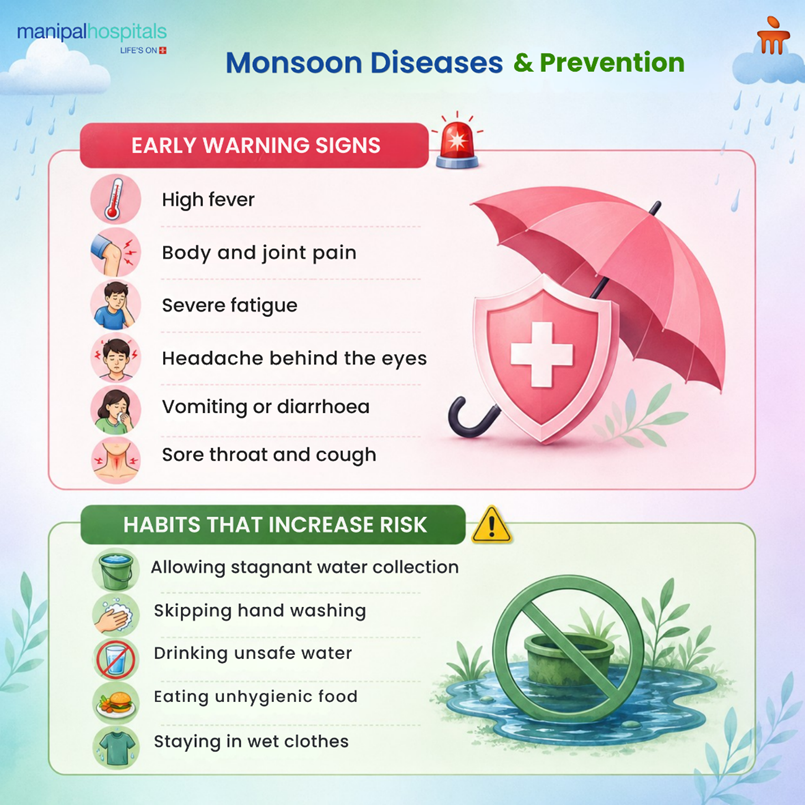
Common Diseases in Monsoon
Monsoon season is the perfect time for infections to thrive. Illnesses that occur with the seasons often increase due to stagnant water, humidity, mosquitoes, and contaminated food or water.
|
Disease |
Common Cause |
Common Symptoms |
|
Dengue |
Mosquito bites |
Fever, body pain, rash |
|
Malaria |
Infected mosquitoes |
Chills, sweating, fever |
|
Typhoid |
Contaminated food/water |
Fever, weakness, stomach pain |
|
Viral Fever |
Seasonal viruses |
Fever, cough, tiredness |
|
Cholera |
Unsafe water |
Severe diarrhoea, dehydration |
|
Leptospirosis |
Floodwater exposure |
Fever, muscle pain |
|
Gastroenteritis |
Food contamination |
Vomiting, loose stools |
Most infections during the monsoon season begin with mild symptoms but can worsen quickly if left untreated. If you have a fever that does not go away, you are not drinking enough fluids, or you feel very weak, you should see a health care provider.
Dengue Fever: A Major Monsoon Threat
Dengue comes from mosquito bites and hits you out of nowhere, completely wiping out even the healthiest people. They actually call it “breakbone fever” because the joint and muscle pain feels so bad.
Key Symptoms to Watch For
-
Sudden high fever and severe headache
-
Intense joint, muscle, and behind-the-eye pain
-
Nausea, vomiting, and extreme weakness
-
Skin rashes developing a few days after fever onset
IMPORTANT NOTE: If treatment is delayed, dengue can cause severe complications, including internal bleeding and a dangerous drop in blood platelet levels.
Quick Prevention Action Points
-
Eliminate Habitats: Empty or cover any containers holding stagnant water around the house weekly.
-
Secure Sleep: Use bed nets and keep window screens intact, as these mosquitoes are highly active during the day.
Waterborne Infections & Viral Fevers
Contaminated water, poor sanitation, and unhygienic food are major causes of severe gastrointestinal illnesses during the rainy season.
Common Waterborne Illnesses
Typhoid & Cholera: Bacterial infections causing high fever or acute diarrhoea.
Gastroenteritis & Hepatitis A: Viral or bacterial threats causing stomach pain, vomiting, or liver inflammation.
Typhoid Fever: Symptoms to Watch For
Typhoid bacteria spread rapidly through contaminated food and water. Children and older adults are particularly vulnerable.
-
Persistent, gradually rising fever
-
Severe weakness and headache
-
Abdominal pain and loss of appetite
-
Constipation or diarrhea
Viral Fevers During Monsoon
Sudden weather shifts allow seasonal respiratory and systemic viruses to spread quickly.
-
Typical Symptoms: Low-to-moderate fever, sore throat, dry cough, runny nose, and generalised body aches.
-
Care Tip: While most viral fevers improve with rest and hydration within 3 to 5 days, a persistent or rising fever requires proper medical evaluation.
Fungal and Skin Infections During Monsoon
Excess moisture and sweating increase fungal growth on the skin.
Common problems include the following:
-
Ringworm
-
Athlete’s foot
-
Itching
-
Skin rashes
-
Nail infections
Keeping skin dry and clean helps reduce infection risk.
Smart Prevention of Monsoon Diseases
Preventing seasonal illnesses starts with simple, consistent daily habits. Protect your household by focusing on these core areas:
-
Drink Safe Water: Consume only filtered or boiled water. Avoid ice from unknown water sources.
-
Eliminate Mosquito Breeding: Regularly empty stagnant water from flowerpots, coolers, and open containers around the house.
-
Practice Hand Hygiene: Wash hands thoroughly with soap and water before meals and after touching outdoor surfaces to stop germ transmission.
-
Prioritise Fresh Food: Eat freshly prepared, hot meals. Avoid raw salads, pre-cut fruits, and uncovered street food during rainy months.
-
Keep Surroundings Clean: Ensure local drains are unblocked and garbage is tightly covered to prevent pest infestations.
-
Support Immune Health: Eat nutrient-dense foods, stay properly hydrated, and ensure adequate sleep to help your body naturally fight off seasonal infections.
Foods That Help Strengthen Immunity During Monsoon
A healthy immune system reduces infection risk significantly.
Immunity-Boosting Foods Include:
-
Citrus fruits
-
Turmeric milk
-
Ginger
-
Garlic
-
Yogurt
-
Green leafy vegetables
-
Nuts and seeds
Hydration is also extremely important during humid weather.
Monsoon Hygiene Tips for Families
Families can reduce seasonal illness risk through better hygiene habits.
Everyday Monsoon Hygiene Tips
-
Washing hands: Prevents the spread of infection
-
Drying clothes properly: Reduces fungal growth
-
Wearing clean footwear: Prevents skin infections
-
Covering food: Prevents contamination
-
Cleaning water containers: Reduces mosquito breeding
Consistent hygiene habits play a major role in preventing monsoon diseases.
Proactive Prevention to Stay Safe
Taking basic steps can stop you from catching something during the rainy season. Since some sicknesses get bad fast, these tips help keep the whole family safe:
-
Avoid Crowds: Stay out of packed, stuffy rooms when bugs are going around so you don't get sick.
-
Monitor Symptoms Early: Never ignore a sudden temperature spike. Track fevers, body aches, or chills carefully right from day one.
-
Drink Plenty of Water: Sip clean, safe water throughout the day to keep your energy up.
-
Take Your Medicines: If you have an ongoing health issue, do not skip your daily doses, as a seasonal illness can make things worse.
-
See a Doctor: Take a health checkup and seek medical advice if symptoms develop or if you have underlying medical conditions that increase your risk of complications.
Signs You Should See a Doctor Immediately
Some symptoms may indicate a serious infection, so you should consult the best internal medicine doctor in Bhubaneswar:
Warning Signs Include:
-
High fever lasting several days
-
Breathing difficulty
-
Severe vomiting
-
Blood in stool
-
Extreme weakness
-
Dehydration
-
Persistent abdominal pain
-
Reduced urination
Conclusion
Families can enjoy the monsoon without worrying about any diseases by taking precautions at the right time. Monsoon brings heavy rains that can cause monsoon diseases in Bhubaneswar. It is important to know about the common monsoon diseases to stay healthy. Knowledge about the symptoms, proper hygiene, and early identification of the disease helps avoid the problem. Seeking timely care from a trusted internal medicine hospital in Bhubaneswar can also help in the early diagnosis and effective management of seasonal infections.
Our internal medicine specialists at Manipal Hospital Bhubaneswar recommend early evaluation of persistent fever, safe drinking water practices, mosquito control measures, and timely diagnostic testing when required. Schedule a consultation today for expert care and peace of mind throughout the monsoon season.
FAQ's
Bacteria multiply well in hot, humid, dirty water. The risk of food poisoning, stomach infection, diarrhoea, and digestive upset is therefore much higher.
Air conditioners that are not in good shape cause dust, mould, and allergies, which irritate the breathing system or worsen existing conditions during the monsoon period.
It is okay to have immunity drinks with ingredients like ginger, turmeric, tulsi, or lemons as long as you maintain hygiene and have healthy eating habits alongside.
Monsoon rains leave standing water everywhere, by houses, on roads, at building sites, and in blocked drains. These puddles are exactly where mosquitoes breed and multiply.
Yes, absolutely. Fungi thrive in warm, damp places. Sitting in damp clothes or wet socks keeps moisture trapped against your skin, which can quickly trigger skin irritation, intense itching, and infections like ringworm or athlete's foot. It also makes it much easier for an old infection to flare up again.
Share this article on:


.webp "ଅଙ୍ଗ ଦାନର ଗୁରୁତ୍ୱ: ମୃତ୍ୟୁ ପରେ କେଉଁ ଅଙ୍ଗ ଦାନ କରାଯାଇପାରିବ?")