6 Min Read
_-_Symptoms,_Causes_and_Recovery.webp "Guillain-Barré Syndrome (GBS): Symptoms, Causes & Recovery")
Weakness, numbness, or trouble walking can be alarming, especially if such symptoms occur out of nowhere. Guillain-Barré Syndrome (GBS) is one such neurological condition that many people want to understand better. Recognising the signs early matters, as timely treatment can make a real difference in recovery.
Guillain-Barré Syndrome affects the peripheral nerves, which are responsible for sending signals between the spinal cord, brain, and muscles. When these nerves are affected, muscle strength may decline, and sensations such as tingling or numbness may appear. Understanding GBS syndrome symptoms and treatment options helps patients seek timely care. This blog explains the causes, diagnosis, treatment, and expected GBS syndrome recovery timeline, along with guidance on accessing Guillain-Barré syndrome treatment in Bhubaneswar.
Synopsis
- What Is GBS Guillain-Barré Syndrome?
- Types of Guillain-Barré Syndrome
- Causes and Triggers
- GBS Syndrome Symptoms
- How Guillain-Barré Syndrome Is Diagnosed
- Treatment Options
- Hospital Care and Monitoring
- GBS Syndrome Recovery Timeline
- Rehabilitation and Physiotherapy
- Factors Affecting Recovery
- Possible Complications
- Long-Term Outlook
- When to Seek Medical Attention
- Conclusion
What Is GBS Guillain-Barré Syndrome?
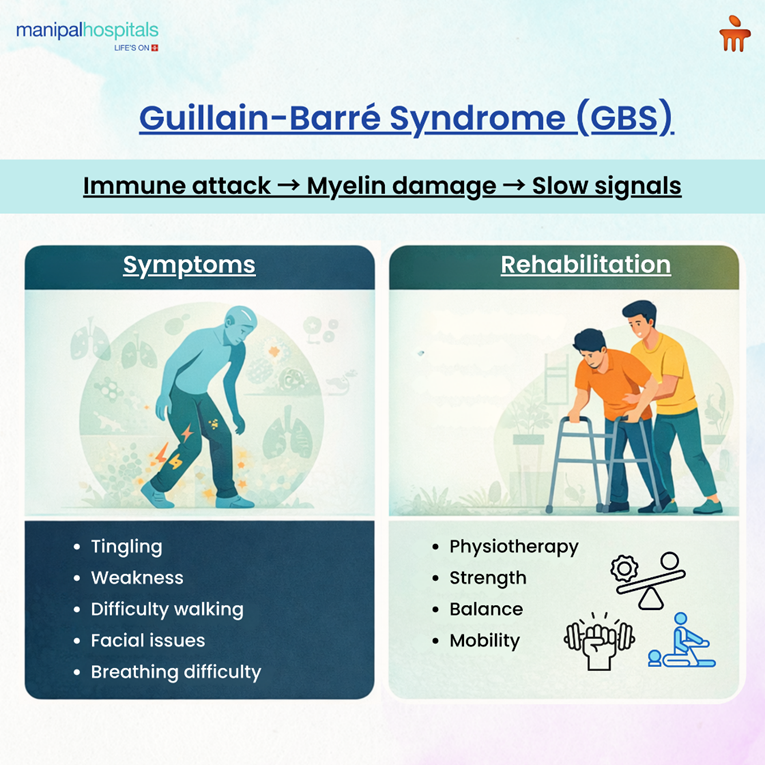
Guillain-Barré Syndrome is an autoimmune condition. In this condition, the immune system starts attacking the peripheral nerves by mistake. This damages the outer layer of the nerves, called myelin, and slows down how signals pass.
As nerve conduction slows down, muscles may become weak. In some cases, sensation is also affected. The disease typically follows a recognised pattern. Symptoms begin gradually, worsen over several days, and then stabilise before recovery begins.
There are 3 main phases:
-
Progressive phase with increasing weakness
-
Plateau phase, where symptoms stabilise
-
The recovery phase, where nerve healing occurs
These stages are important when discussing GBS syndrome recovery.
Types of Guillain-Barré Syndrome
GBS can show up in a few different forms. The way it affects the nerves and how symptoms begin can vary from person to person.
-
AIDP (Acute Inflammatory Demyelinating Polyneuropathy): This condition is the most common type. It affects the outer covering of the nerves, which slows down signals. Weakness usually starts in the legs and then moves upward.
-
AMAN (Acute Motor Axonal Neuropathy): This type mainly affects movement. People may notice sudden weakness, but sensation is usually less affected.
-
AMSAN (Acute Motor and Sensory Axonal Neuropathy): A more severe form affects both movement and sensation. Recovery may take longer in these cases.
-
Miller Fisher Syndrome (MFS): This type is less common and usually starts a bit differently, with problems in eye movement, balance issues, and reduced reflexes.
Causes and Triggers
The exact cause is not always known, but several triggers are associated with the development of GBS. These include:
-
Respiratory infections
-
Gastrointestinal infections
-
Recent surgery
-
Immune responses after illness
-
Certain bacterial infections, particularly Campylobacter jejuni
In many cases, GBS syndrome symptoms appear within a few weeks after an infection. The immune system response that fights infection may mistakenly attack nerve tissues.
GBS Syndrome Symptoms
Recognising GBS syndrome symptoms early can lead to quicker diagnosis and treatment. Symptoms typically begin in the lower limbs and may move upward.
Common GBS syndrome symptoms include:
-
Tingling in toes or fingers
-
Weakness in the legs
-
Difficulty climbing stairs
-
Reduced reflexes
-
Muscle pain
-
Facial weakness
-
Trouble speaking or swallowing
-
Breathing difficulty in severe cases
An ascending pattern of weakness is commonly considered GBS. Some individuals may also have issues with blood pressure or heart rate because of the involvement of autonomic nerves.
How Guillain-Barré Syndrome Is Diagnosed
Diagnosis is based on clinical examination and supportive tests. A neurologist evaluates:
-
Muscle strength
-
Reflexes
-
Pattern of weakness
-
Progression timeline
Investigations may include:
-
Nerve conduction studies
-
Electromyography
-
Lumbar puncture
-
Blood tests to exclude other conditions
These tests help confirm the disease and rule out other neurological disorders.
Treatment Options
Timely treatment helps reduce immune-mediated nerve damage. Some of the primary treatment measures are listed below:
-
Intravenous Immunoglobulin - Intravenous immunoglobulin prevents harmful antibodies from attacking your nerves. It is widely used in moderate to severe cases.
-
Plasma Exchange - Plasma exchange removes antibodies from the bloodstream. This treatment is effective in reducing immune-mediated nerve damage.
-
Supportive Care - Supportive care is essential for GBS syndrome recovery. This includes:
-
Respiratory monitoring
-
Pain control
-
Prevention of complications
-
Nutritional support
-
Physiotherapy
-
Centres providing Guillain-Barré syndrome treatment in Bhubaneswar offer multidisciplinary care, including neurology, physiotherapy, and rehabilitation.
Hospital Care and Monitoring
Some individuals require hospital admission. Monitoring focuses on:
-
Breathing capacity
-
Heart rate
-
Blood pressure
-
Swallowing ability
-
Mobility
In severe cases, some people may need temporary breathing support. Watching the condition closely early on can help avoid problems and aid recovery.
GBS Syndrome Recovery Timeline
The timeline for GBS syndrome recovery varies between individuals. Recovery usually begins after the plateau phase.
General recovery pattern:
-
Up to 4 weeks: progression of weakness
-
Weeks 4 to 6: stabilisation
-
Months 2 to 6: gradual improvement
-
Months to years: continued recovery
Some individuals recover faster, while others require longer rehabilitation. Physiotherapy plays a key role in GBS syndrome recovery.
Rehabilitation and Physiotherapy
Rehabilitation supports nerve healing and muscle strength. Therapy may include:
-
Passive movement exercises
-
Strengthening exercises
-
Balance training
-
Gait training
-
Occupational therapy
Regular physiotherapy improves independence and supports GBS syndrome recovery.
Factors Affecting Recovery
Recovery varies depending on:
-
Severity of nerve damage
-
Age of the patient
-
Early treatment
-
Respiratory involvement
-
Complications
Patients receiving timely Guillain-Barré syndrome treatment in Bhubaneswar often benefit from comprehensive rehabilitation services.
Possible Complications
Complications may occur in severe cases:
-
Respiratory weakness
-
Blood clots
-
Pressure injuries
-
Persistent weakness
-
Fatigue
-
Nerve pain
Early treatment and rehabilitation reduce these risks and improve GBS syndrome recovery.
Long-Term Outlook
Most people improve slowly over time, but recovery can take months or even longer. Many are able to walk on their own again, though some may still feel tired or have slight weakness. Continued physiotherapy and follow-up help maximise recovery.
Understanding what GBS is allows patients to recognise symptoms and seek care promptly.
When to Seek Medical Attention
Seek immediate medical help if:
-
Weakness spreads quickly
-
Breathing becomes difficult
-
Swallowing problems develop
-
Balance worsens
-
Severe pain occurs
Early intervention improves the chances of successful GBS syndrome recovery.
Conclusion
Guillain-Barré Syndrome is a serious condition, but recognising the signs early and getting the right care can make a real difference. Understanding what is GBS Guillain-Barré syndrome, identifying its symptoms, and starting treatment promptly can improve outcomes. Many individuals experience gradual recovery with appropriate treatment and rehabilitation. Consultation with experienced neurologists at Manipal Hospital, Bhubaneswar. Access to specialised Guillain-Barré syndrome treatment in Bhubaneswar ensures comprehensive neurological care and rehabilitation support. For expert neurological evaluation and treatment, visit Manipal Hospital Bhubaneswar.
FAQ's
Guillain-Barré syndrome (GBS) is a condition in which the body’s immune system mistakenly attacks the nerves. This can lead to weakness, tingling, and trouble moving. These symptoms may worsen in a short time.
Early signs of GBS often start with tingling in the feet or hands. After that, weakness in the legs can set in, making it harder to walk or move around as usual.
Recovery from GBS can take time and is different for everyone. Some people start improving in a few weeks, while others may take several months or longer, depending on how severe the condition was.
Yes, GBS can be treated, especially when it is recognised early. Treatment may include IVIG, plasma exchange, and care in a hospital to manage symptoms and support recovery as the body heals.
Many people with GBS recover well with time and proper care. Some may still feel mild weakness or tiredness for a while, but most are able to return to their usual daily activities gradually.
Share this article on:


.webp "ଅଙ୍ଗ ଦାନର ଗୁରୁତ୍ୱ: ମୃତ୍ୟୁ ପରେ କେଉଁ ଅଙ୍ଗ ଦାନ କରାଯାଇପାରିବ?")