7 Min Read
You might be curious about what a C-reactive protein (CRP) test shows regarding inflammation and cardiovascular risk when your doctor suggests one. Is it just another routine test, or does it give you more information about your health?
The truth is that this blood test measures general inflammation in the body. In cardiology, it is used alongside other tests to assess cardiovascular risk. Knowing what C-reactive protein means and how it relates to heart health can help you take steps to avoid serious health problems like heart attacks and strokes.
In this blog, we'll explain everything you need to know about the CRP blood test, such as what it means, what normal levels are, and when those levels might be a cause for concern.
Synopsis
- What Is a CRP Blood Test?
- What Does a High C-Reactive Protein Level Indicate?
- Why Is CRP Important for Heart Health?
- What Is the Normal Range for hs-CRP
- What CRP Levels Are Considered High?
- Causes of High CRP Levels
- Symptoms Related to Conditions Associated with High CRP
- What Happens in the Body When CRP Levels Are High
- Who Should Have a CRP Blood Test?
- How to Get Ready for a CRP Blood Test
- When Should You See a Doctor?
- Conclusion
What Is a CRP Blood Test?
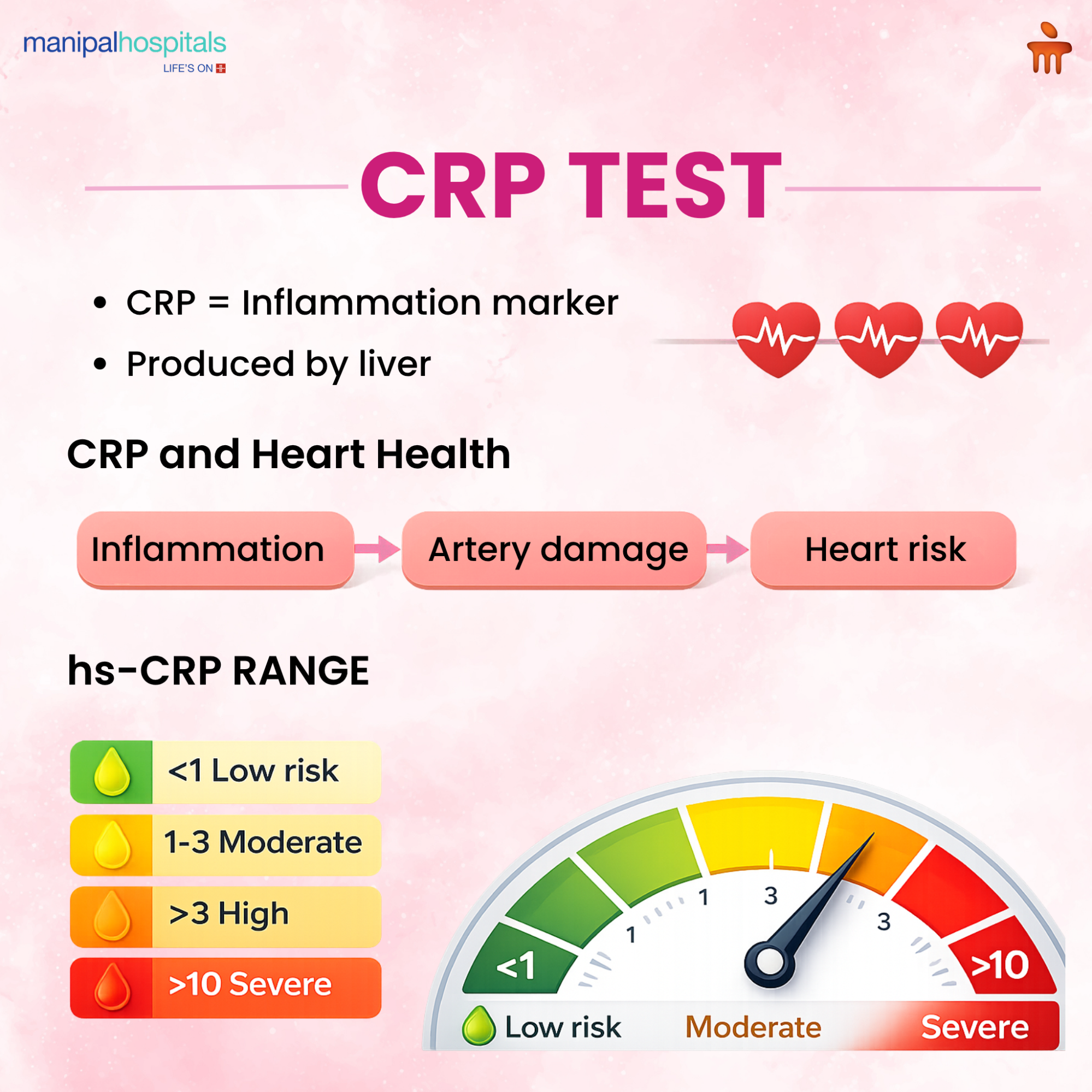
A CRP test checks how much C-reactive protein is in your blood. When there is inflammation, the liver makes this protein.
When your body is inflamed, whether from an infection, an injury, or a long-term illness, your CRP levels go up. That's why doctors often use the CRP blood test as a marker of inflammation that may require further evaluation. CRP cannot diagnose heart disease alone. It should be interpreted with a lipid profile, ECG test, and clinical history for a clear analysis.
What Does a High C-Reactive Protein Level Indicate?
-
It refers to inflammation in the body.
-
It does not specify the exact cause.
-
May indicate an increased risk of cardiovascular disease when assessed with other factors
High-sensitivity CRP (hs-CRP) is specifically used to assess cardiovascular risk at lower levels of inflammation.
Why Is CRP Important for Heart Health?
Inflammation plays a significant role in the development of atherosclerosis. Inflammation plays a role in atherosclerosis, where fatty deposits accumulate in artery walls and may become unstable. This scenario is when it becomes important to know what a CRP test means.
High levels of CRP may mean:
-
Increased risk of cardiovascular events such as heart attack and stroke
-
Chronic vascular inflammation
Research indicates that individuals exhibiting elevated C-reactive protein levels are at a greater risk of developing cardiovascular issues, even in the presence of normal cholesterol levels.
What Is the Normal Range for hs-CRP
Knowing the normal range for hs-CRP will help you better understand your test results.
|
hs-CRP Level (mg/L) |
What It Means |
What You Should Do |
|
Less than 1 |
Low risk |
Maintain a healthy lifestyle |
|
1 to 3 |
Moderate risk |
Monitor overall health conditions |
|
Above 3 |
High risk |
Consult a doctor |
|
Above 10 |
Severe risk |
Immediate evaluation |
Important Note -
Different labs may have slightly different normal ranges for CRP, but these ranges are commonly used for hs-CRP in cardiovascular risk assessment.
What CRP Levels Are Considered High?
C-reactive protein (CRP) is a sign that your body is inflamed. Doctors often use it to see if someone has an infection or is at risk for heart disease.
Understanding CRP Levels
-
Above 3 mg/L: Indicates greater risk of heart disease
-
Above 10 mg/L: Indicate acute inflammation, infection, or significant tissue injury
-
Values that stay high: Requires clinical evaluation
Doctors often order hs-CRP (high-sensitivity CRP) to check on heart health. This test is better at finding smaller changes. If your CRP is high, it doesn't always mean something bad, but it does mean that your doctor may want to do more tests to find out what's wrong.
Causes of High CRP Levels
A CRP blood test does not tell you what is wrong; it only shows that there is inflammation. Several things can cause levels to rise.
Common reasons for high C-reactive protein:
-
Cardiovascular disease and associated inflammation
-
Infections (bacterial or viral)
-
Obesity
-
Smoking
-
Diabetes
-
Autoimmune disorders (like rheumatoid arthritis)
Stress and unhealthy habits can even slightly raise CRP levels.
Symptoms Related to Conditions Associated with High CRP
CRP by itself does not cause any symptoms. Instead, the symptoms depend on the condition that is causing the inflammation.
But when it comes to heart health, you might notice:
-
Chest discomfort
-
Fatigue
-
Reduced exercise tolerance
These symptoms are related to underlying conditions such as heart disease, not CRP itself.
What Happens in the Body When CRP Levels Are High
Your body's defence system goes into overdrive when inflammation starts.
-
Blood vessels become inflamed, which can impair normal function.
-
Inflammation contributes to plaque formation and instability within arterial walls.
-
This process may increase long-term cardiovascular risk.
When CRP levels are high, it indicates an underlying inflammatory process that requires evaluation.
Who Should Have a CRP Blood Test?
If you have any of the following, your doctor may suggest a CRP blood test:
-
A family history of cardiovascular disease
-
Are you overweight or obese
-
Have diabetes or high cholesterol
-
Have lifestyle risk factors such as smoking or physical inactivity
-
Have signs of long-term inflammation
The CRP test is very helpful for people who look healthy but may have hidden heart problems.
How to Get Ready for a CRP Blood Test
The CRP blood test is easy to do and doesn't need much prep work.
Before the test:
-
Usually, you don't have to fast
-
Inform your doctor about medications
-
Avoid hard workouts before the test
During the test:
-
A small blood sample is taken from your arm
-
The procedure is quick and painless
When Should You See a Doctor?
Consult your doctor if:
-
Your CRP test shows consistently high levels
-
You have symptoms like chest pain or fatigue
-
You have multiple risk factors for heart disease
Early evaluation helps avoid problems and makes sure treatment is done on time.
Conclusion
The CRP test is more than just a regular blood test; it provides useful information about inflammation and helps assess cardiovascular risk when used with other tests. Patients can spot risks early and take steps to avoid them if they know what the CRP test means. A single CRP blood test result may not be enough to make a full diagnosis, but when used with other tests, it can give you useful information. Monitoring your CRP normal range, making healthy choices, and staying informed can all contribute to reducing your risk of heart disease, and consulting experienced cardiologists at Manipal Hospital Bhubaneswar for further evaluation can help guide the next steps in care.
A CRP test today at Cardiology care in Manipal Hospital, Bhubaneswar, can help prevent a serious heart problem tomorrow.
FAQ's
A CRP test checks for inflammation in the body by measuring the levels of C-reactive protein. When looked at along with clinical findings and other tests, it can help find infections, chronic diseases, and risks to the heart.
No, high levels of C-reactive protein can be caused by infections, injuries, or autoimmune diseases. But if levels stay high, they may mean a higher risk of heart problems and should be checked by a doctor.
How often you need a CRP blood test depends on how healthy you are. People with heart risks may need to be tested regularly, while others may only need to be tested during certain medical evaluations.
Yes, with proper treatment, CRP levels can return to the normal CRP range. Lifestyle changes, taking medicines, and dealing with the root causes can help lower the elevated CRP levels effectively.
If you want to know how high a CRP level is dangerous, levels above 3 mg/L raise the risk of heart problems, and levels above 10 mg/L usually mean serious inflammation that needs to be treated right away.
Share this article on:


.webp "ଅଙ୍ଗ ଦାନର ଗୁରୁତ୍ୱ: ମୃତ୍ୟୁ ପରେ କେଉଁ ଅଙ୍ଗ ଦାନ କରାଯାଇପାରିବ?")