7 Min Read
Waking up with a stabbing pain near the heel can make even a short walk across the room uncomfortable. In many cases, this discomfort in the feet points to plantar fasciitis, a condition that develops due to strain and irritation in the foot and affects millions of people worldwide. One common question is, “Can plantar fasciitis be cured?” The excellent news is that most people improve significantly with the right treatment and consistent care.
In this blog, we’ll cover everything from causes and diagnosis to effective plantar fasciitis heel pain treatment and typical recovery times.
Synopsis
- What Is Plantar Fasciitis?
- What Causes That Sharp Heel Pain
- What Are the Early Symptoms?
- Plantar Fasciitis Diagnosis
- Can Plantar Fasciitis Be Cured?
- Home Remedies for Plantar Fasciitis That You Can Try
- Plantar Fasciitis Heel Pain Treatment: Medical Options
- Recovery Timeline: How Long Does It Take
- When Should You See a Doctor
- Preventing Plantar Fasciitis Recurrence
- Conclusion
What Is Plantar Fasciitis?
The plantar fascia is a thick band of tissue that runs from the heel bone to the base of the toes. This tissue acts as a supporting structure for your arch and helps your foot support body weight while walking and running.
Repetitive strain on this tissue can cause it to form tiny tears. This can cause pain and stiffness as time goes on. Although inflammation may occur, many cases involve degeneration and microtears caused by repeated strain.
Here’s an interesting fact: when you walk, your plantar fascia takes on forces that are 2-3 times your body weight. That is a lot of pressure for such a small part of your foot.
What Causes That Sharp Heel Pain
The first step to selecting the best plantar fasciitis heel pain treatment is to know the cause.
-
Overuse: Excess walking, running, or standing for long hours can put repeated stress on the foot.
-
Flat Feet and High Arches: Flat feet or very high arches can place extra strain on the plantar fascia.
-
Obesity: The extra weight creates more pressure on the heel.
-
Ill-fitting footwear: Footwear with poor arch support may cause strain.
-
Stiff calf muscles: They limit ankle movement, which causes strain.
-
Standing for long periods of time: This condition is common in certain occupations, e.g., teaching or working in a factory.
-
Tight Achilles Tendon: A shortened tendon can increase stress on the heel.
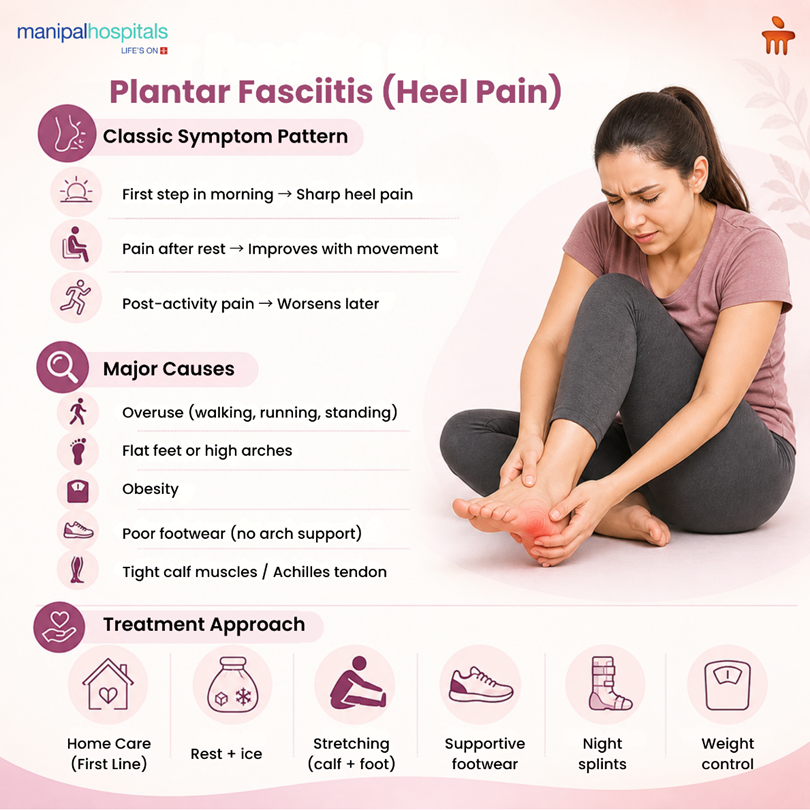
What Are the Early Symptoms?
Detecting the symptoms at the early stage can help in faster recovery and offer effective remedies for plantar fasciitis.
-
Morning heel pain: Fascia tightens overnight, and pain appears at dawn.
-
Pain after rest: Stiff fascia flares when movement resumes.
-
Post‑workout pain: Ache arrives after exercise, not during.
-
Stiff foot arch: Arch rigidity signals fascia under strain.
-
Heel tenderness: The back of the heel feels sore and sensitive.
-
Numbness: Possible nerve entrapment reduces sensation.
-
Night pain: Discomfort may stem from other causes.
Ignoring these signs can alter your walking pattern over time and stress your knees and hips.
Plantar Fasciitis Diagnosis
You should get a proper diagnosis of plantar fasciitis before starting treatment. Doctors commonly use the following:
-
Physical Examination: Identifies pain points and foot mechanics
-
X-ray: Rules out fractures or bone spurs
-
Ultrasound: Detects inflammation in fascia
-
MRI: Rarely needed, reserved for persistent or unclear cases
A formal diagnosis of plantar fasciitis will ensure you receive targeted care and not unnecessary therapies.
Can Plantar Fasciitis Be Cured?
Patients often ask, “Can I get rid of plantar fasciitis?” The good news is that most cases improve and may go away completely within 6–12 months with proper care. However, the downside is that you will prolong your period of healing by disregarding the signs and symptoms.
Therefore, can plantar fasciitis be cured? In most cases, yes, it can be healed with effective treatment measures.
Home Remedies for Plantar Fasciitis That You Can Try
Here are some easy remedies for plantar fasciitis that will help to relieve pain before going to a doctor or specialist:
-
Stretching Exercises: Concentrate on exercising your feet and calves
-
Shoe Adjustment: Wear soft and comfortable footwear
-
Night Splints: Keep your foot stretched while sleeping
-
Lose Weight: Lightens the pressure on the fascia
-
Rest & Ice Therapy: Can reduce inflammation
These plantar fasciitis remedies are highly effective at the beginning stages and can help prevent further progression of your condition.
Plantar Fasciitis Heel Pain Treatment: Medical Options
If home remedies do not work, you may need more aggressive treatment for plantar fasciitis heel pain.
-
Medications: NSAIDs to reduce pain and inflammation
-
Physiotherapy: Stretching, strengthening, and mobility training
-
Orthotic Devices: Custom insoles for arch support
-
Steroid Injections: May provide short-term relief, but are used cautiously
-
PRP Therapy: Promotes natural healing using platelets
-
Shockwave Therapy: Stimulates tissue repair
-
Surgery: Rare, only for chronic cases
The current treatment for plantar fasciitis heel pain focuses on conservative (non-surgical) measures first for safe and effective recovery.
Recovery Timeline: How Long Does It Take
One of the most common questions is how long recovery takes. The following table elucidates the timeline:
|
Stage |
Timeline |
What Happens |
|
Early Stage |
2 - 6 weeks |
Rest and remedies reduce the pain |
|
Moderate |
6 - 12 weeks |
Physiotherapy helps you move better |
|
Chronic |
3 - 6 months |
May need advanced treatments |
|
Full Recovery |
6 - 12 months |
Complete recovery in most cases |
|
Persistent Cases |
12 - 18 months |
Recovery may take longer in severe cases |
It is very common for the symptoms to recur even with the best treatment plan. The consistency in remedies and medical care for plantar fasciitis is a big factor in the speed of recovery.
When Should You See a Doctor
It’s important to seek medical help from the best orthopaedic doctor in Bhubaneswar if you notice any of the following:
-
Pain that lasts more than 2 - 3 weeks
-
Difficulty walking or putting weight on your foot
-
Pain that continues even after rest or home care
-
Symptoms that are getting worse instead of improving
-
Swelling, redness, or stiffness in the heel area
Getting it checked early can help prevent the condition from becoming more persistent and improve the outcome of treatment for plantar fasciitis heel pain.
Preventing Plantar Fasciitis Recurrence
Prevention is the key after recovery as well. Try the following habits:
-
Wear supportive shoes every day
-
Stretch your feet and calves frequently
-
Don’t stand for long
-
Keep a healthy weight
-
Trade in worn-out shoes
Conclusion
You don’t have to live with heel pain. With the right best orthopaedic care in Bhubaneswar, most people return to normal walking and often faster than they expect. Plantar fasciitis may begin as a minor irritation, but if left untreated, it can have a major impact on your daily activities. Here’s something reassuring: with the right approach, curing plantar fasciitis is not a question of doubt but a reality for most patients.
There are several effective treatment options available today, from basic treatments for plantar fasciitis to more sophisticated forms of medical assistance. You may consult the best orthopaedic doctors in Bhubaneswar at Manipal Hospitals to obtain the right plantar fasciitis treatment and support your recovery.
FAQ's
Yes, people who are 30-60 years old frequently develop this condition, particularly if they lead an active lifestyle and are involved in professions where they need to stand and walk for hours on end daily.
Yes, flat shoes with no arch support will increase the strain in the plantar fascia and can worsen your condition if you wear them all day at home on a hard floor.
No, it actually can hinder recovery. It is advisable to use supportive shoes to prevent strain on your foot while the condition heals.
Athletes should adjust activity levels and avoid high-impact exercises. Safer low-impact activities during plantar fasciitis recovery include swimming or cycling.
Plantar fasciitis commonly affects one foot but can be a two-foot issue, especially in people with poor biomechanics, bad footwear habits, or prolonged standing.
Share this article on:


.webp "ଅଙ୍ଗ ଦାନର ଗୁରୁତ୍ୱ: ମୃତ୍ୟୁ ପରେ କେଉଁ ଅଙ୍ଗ ଦାନ କରାଯାଇପାରିବ?")