6 Min Read
The gradual onset of kidney disease can lead to poor toxin clearance, fluid regulation, and electrolyte regulation within the body. In cases where the kidneys are failing at an advanced level, it becomes necessary to undertake dialysis therapy. Of all the methods of renal replacement therapy, one of the available dialysis options is peritoneal dialysis.
Peritoneal dialysis awareness is important since it aids people psychologically and physically in getting ready for the treatment. In this blog, we discuss how peritoneal dialysis works and the advantages of the technique, as well as possible side effects of peritoneal dialysis, while providing information about peritoneal dialysis in Bhubaneswar. This discussion is rooted in renal sciences.
Synopsis
- What Is Peritoneal Dialysis?
- How the Peritoneal Dialysis Procedure Works?
- Types of Peritoneal Dialysis
- Benefits of Peritoneal Dialysis
- Who Can Opt for Peritoneal Dialysis?
- Preparation Before Starting Treatment
- Peritoneal Dialysis Complications
- Lifestyle During Peritoneal Dialysis
- Diet and Nutrition Considerations
- Monitoring and Follow-Up
- When to Seek Medical Attention?
- Conclusion
What Is Peritoneal Dialysis?
To understand what peritoneal dialysis is, it is helpful first to consider the role of the kidneys. Healthy kidneys filter waste products, remove excess water, and regulate minerals such as sodium and potassium. When kidney function is significantly reduced, toxins accumulate in the bloodstream, leading to symptoms such as fatigue, swelling, and nausea.
In peritoneal dialysis, the peritoneal membrane acts as a semipermeable surface for exchange. During the peritoneal dialysis procedure, a dialysis solution is introduced into the abdomen. This fluid draws waste products and extra fluid from the blood through the peritoneal membrane. The fluid is drained and then replaced by fresh fluid after a certain period.
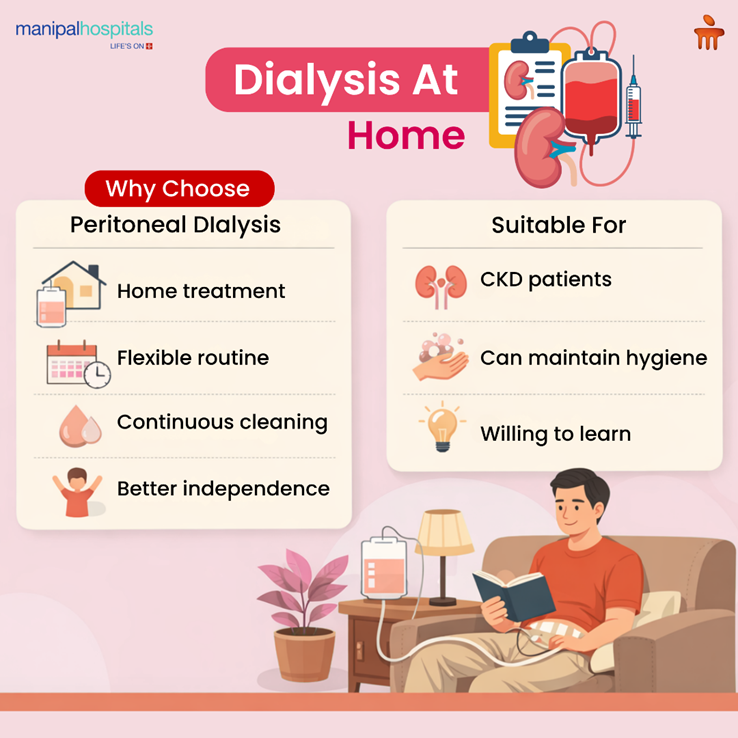
Haemodialysis is usually performed in a hospital or dialysis centre, while peritoneal dialysis can be performed at home. Peritoneal dialysis offers convenience, making it an appropriate treatment option for those seeking independence, especially in Bhubaneswar.
How the Peritoneal Dialysis Procedure Works?
The peritoneal dialysis procedure happens in a few steps to help remove waste and keep fluid levels balanced.
-
Catheter Placement - The first step is placing a catheter in the abdomen. The catheter is used to allow dialysis fluid to flow in and out of the body. The insertion is normally surgical, and the wound is given time to heal.
-
Filling Phase - During the procedure, sterile dialysis fluid is infused into the abdominal cavity via the catheter. The solution contains glucose, which helps draw waste products and excess fluid from the bloodstream.
-
Dwell Phase - The fluid remains in the abdomen for a fixed duration known as dwell time. During this period, toxins pass through the peritoneal membrane into the dialysis solution. This phase is central to peritoneal dialysis effectiveness.
-
Drain Phase - The used fluid is drained out and replaced with a fresh solution. This procedure is performed several times each day according to the treatment regimen. Individuals receiving peritoneal dialysis in Bhubaneswar are well-trained in performing such procedures at home.
Types of Peritoneal Dialysis
There are two main types of peritoneal dialysis, each following the same principle but differing in technique.
1. Continuous Ambulatory Peritoneal Dialysis (CAPD)
CAPD involves manual exchanges performed several times a day. Patients carry out the peritoneal dialysis procedure without a machine. This method offers flexibility and mobility.
2. Automated Peritoneal Dialysis (APD)
APD employs a machine that carries out the exchange procedure during the nighttime. Many patients prefer this method because it allows them to continue daily activities. CAPD and APD depend on individual preferences and advice from clinicians.
Benefits of Peritoneal Dialysis
Peritoneal dialysis offers several advantages that make it suitable for long-term renal care:
-
Home-based treatment reduces hospital visits
-
Continuous toxin removal
-
Greater independence for patients
-
Fluid removal is usually more gradual compared to haemodialysis
-
Better preservation of residual kidney function
-
Flexible daily routine
Because of these benefits, more patients are considering peritoneal dialysis in Bhubaneswar as part of their treatment plan.
Who Can Opt for Peritoneal Dialysis?
Not every patient is suitable for peritoneal dialysis. A nephrologist evaluates various factors before recommending this therapy. Suitable candidates generally include:
-
Patients with chronic kidney disease requiring dialysis
-
Individuals capable of maintaining hygiene
-
Patients with adequate abdominal membrane function
-
Those willing to learn the procedure
-
Patients without extensive abdominal scarring
Preparation Before Starting Treatment
Preparation is essential for safe and effective peritoneal dialysis. Patients usually undergo:
-
Blood investigations
-
Imaging of the abdomen
-
Catheter insertion planning
-
Education about peritoneal dialysis complications
-
Training on sterile technique
-
Diet and fluid counselling
Peritoneal Dialysis Complications
Although it is effective, patients should be aware of potential risks. Recognising peritoneal dialysis complications early helps prevent serious outcomes.
-
Peritonitis
-
Exit Site Infection
-
Hernia
-
Fluid Imbalance
-
Electrolyte Changes
Lifestyle During Peritoneal Dialysis
Patients undergoing peritoneal dialysis can maintain an active lifestyle. Recommendations include:
-
Follow sterile technique during exchanges
-
Maintain proper catheter care
-
Monitor daily weight
-
Follow renal diet guidelines
-
Attend scheduled medical reviews
With proper management, patients receiving peritoneal dialysis in Bhubaneswar can continue routine activities.
Diet and Nutrition Considerations
Diet plays an important role in supporting peritoneal dialysis patients. Because some protein is lost during treatment, intake must be adjusted.
Key recommendations:
-
Increase high-quality protein intake
-
Limit sodium to control fluid retention
-
Monitor potassium intake
-
Maintain adequate calories
-
Drink fluids as advised
Dietary guidance complements the peritoneal dialysis procedure and supports overall health.
Monitoring and Follow-Up
Regular monitoring ensures the success of peritoneal dialysis. Follow-up typically includes:
-
Monthly blood tests
-
Dialysis adequacy checks
-
Catheter site examination
-
Assessment for peritoneal dialysis complications
-
Blood pressure monitoring
When to Seek Medical Attention?
You should seek medical attention when you have:
-
Fevers
-
Belly pain
-
Cloudy dialysis fluid
-
A leaky catheter
-
Swelling and/or fast weight gain
-
Decreased fluid output
These symptoms can indicate a problem with peritoneal dialysis that requires prompt evaluation.
Conclusion
Peritoneal dialysis is an effective treatment option for advanced kidney disease. Peritoneal dialysis, understanding how the procedure works, and complications of peritoneal dialysis are some of the important aspects that should be known to enhance the quality of therapy. When patients are well trained, hygienic, and undergo regular follow-ups, they can successfully control their kidney failure without disturbing their normal activities. Individuals who want to get treated through peritoneal dialysis in Bhubaneswar can approach specialised Renal Science care at Manipal Hospital Bhubaneswar.
FAQ's
It is a type of dialysis used when the kidneys are not functioning properly. Peritoneal dialysis uses the lining of the abdomen to clear waste and extra fluid from the body.
The procedure involves filling the abdomen with dialysis fluid, allowing it to absorb toxins, and draining it after a set time. This cycle may be repeated multiple times a day or done overnight.
Yes, peritoneal dialysis is generally safe when proper hygiene and technique are followed. Regular monitoring helps reduce risks and ensure effectiveness.
Common complications include infection, hernia, and fluid imbalance. Early detection and treatment can help manage these issues.
Yes, many patients perform peritoneal dialysis at home after training. It offers flexibility and independence compared to hospital dialysis.
Share this article on:


.webp "ଅଙ୍ଗ ଦାନର ଗୁରୁତ୍ୱ: ମୃତ୍ୟୁ ପରେ କେଉଁ ଅଙ୍ଗ ଦାନ କରାଯାଇପାରିବ?")