6 Min Read
Many individuals worry: ‘Will I become weak without protein if I go vegan?’ This belief is a myth that prevails.
Many vegan foods are rich in protein and can supply all necessary nutrients without the need for any animal products. A vegan diet can support muscle strength, weight management, and heart health. This blog explains how much protein your body needs and gives you a list of the best high-protein vegan foods that you can use to plan your meals easily.
Synopsis
- What Are High-Protein Vegan Foods?
- Why Is Proper Protein Intake Important?
- Best High-Protein Vegan Foods
- How to Build a High-Protein Vegan Meal?
- Are Plant Proteins Complete?
- How Much Protein Do You Need?
- How to Increase Protein Intake on a Vegan Diet?
- When Should You Consult a Doctor or Dietitian?
- Conclusion
What Are High-Protein Vegan Foods?
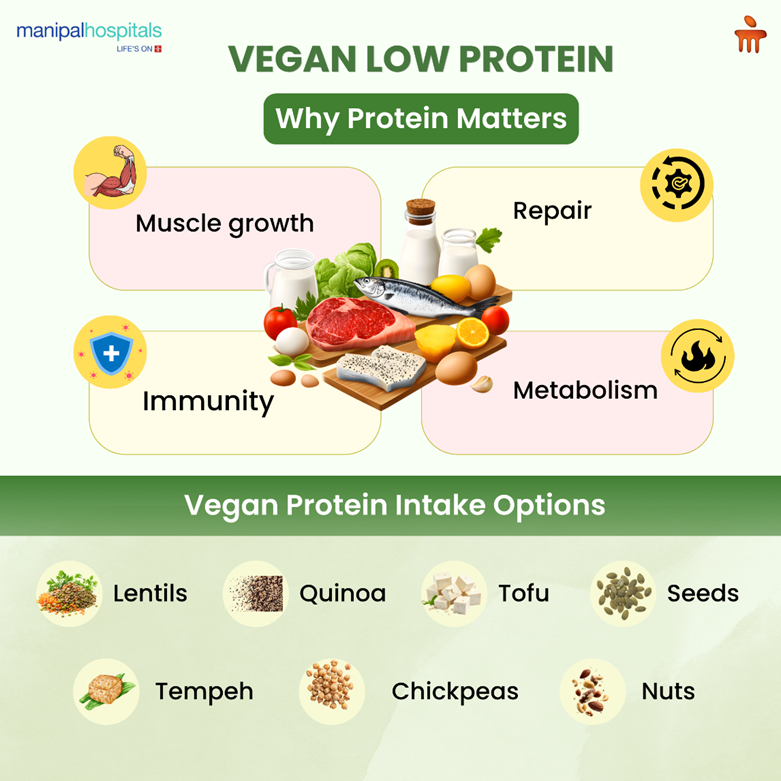
Plant-based foods that are high in protein are called high-protein vegan foods. Protein is necessary for the following reasons:
-
Building and repairing tissues
-
Helping muscles grow
-
Boosting the immune system
-
Making hormones and enzymes
Plant-based proteins can meet nutritional needs when consumed in appropriate combinations and quantities.
Interesting Fact
By eating a variety of plant foods, like rice and beans, you obtain all essential amino acids, making them ‘complete proteins.' Did you know that a cup of cooked lentils provides almost the same protein as two eggs, without cholesterol?
Why Is Proper Protein Intake Important?
Everyone needs protein, as it:
-
Helps maintain muscle mass
-
Keeps you full longer
-
Supports weight management with calorie control.
-
Keeps blood sugar levels steady
-
Supports overall metabolic function
Adding high-protein, low-calorie vegan foods to the diet can be very helpful for people who are trying to lose weight, control their diabetes, or have heart problems.
Best High-Protein Vegan Foods
This is a carefully chosen list of high-protein vegan foods that are good for you and easy to add to your daily meals.
Top Plant-Based Protein Sources
|
Food |
Protein (per 100g) |
Benefits |
|
Lentils |
~9g |
Rich in fibre and iron |
|
Chickpeas |
~8.9g |
Supports digestion |
|
Tofu |
~8g |
A good source of high-quality plant protein |
|
Tempeh |
~19g |
Supports muscle maintenance |
|
Quinoa |
~4g |
Contains all amino acids |
|
Almonds |
~21g |
Healthy fats + protein |
|
Chia Seeds |
~17g |
Omega-3 rich |
This list of high-protein vegan foods shows that there are many plant-based foods that are high in protein. Protein values may vary depending on whether foods are cooked or raw.
How to Build a High-Protein Vegan Meal?
Planning meals can be simple with the best high-protein vegan foods.
Simple meal ideas:
-
Breakfast: Oats with chia seeds and almond butter
-
Lunch: Quinoa salad with chickpeas and vegetables
-
Dinner: Tofu stir-fry with brown rice
-
Snacks: Veggies with hummus or roasted peanuts
Using a variety of foods from your list of high-protein vegan foods will help you get all the nutrients you need. If you’re someone trying to lose weight, replacing paneer with tofu may help reduce calorie intake while maintaining protein intake.
Common mistakes in vegan protein intake:
-
Relying mainly on refined carbohydrates such as bread and rice
-
Not including legumes daily
-
Skipping protein in breakfast
-
Over-relying on processed vegan foods
Are Plant Proteins Complete?
A common worry is whether vegan foods that are high in protein give you all the protein you need.
Key point:
Some plant proteins are lower in certain amino acids, but eating a variety ensures complete nutrition. Putting them in a mix (like grains and legumes) helps provide a complete amino acid profile.
Examples:
-
Rice + lentils
-
Whole wheat + peanut butter
-
Hummus + pita bread
This combination makes it easy to get all the nutrients you need from the best high-protein vegan foods.
How Much Protein Do You Need?
The amount of protein you need changes with your age, activity level, and health.
General guideline:
-
Sedentary adults: 0.8 g/kg body weight
-
Active individuals: 1.0-1.2 g/kg
-
Athletes: 1.2-1.6 g/kg
Eating enough vegan foods that are high in protein and low in calories can help you meet these needs without eating too much fat.
How to Increase Protein Intake on a Vegan Diet?
Here are some useful tips for adding more high-protein vegan foods to your diet:
-
Add lentils or beans to every meal.
-
Have nuts and seeds as a snack.
-
Replace dairy with soy-based products.
-
Use plant-based protein powders if needed.
-
Plan meals using a balanced food plan
Consistency is important when choosing high-protein vegan foods. Plant protein digestibility is slightly lower, so vegans may need ~10% more protein intake.
When Should You Consult a Doctor or Dietitian?
High-protein vegan foods are beneficial for you, but you may need professional help if you:
-
Have chronic illnesses (like kidney disease)
-
Are you pregnant or breastfeeding
-
Experience fatigue or weakness
-
Have unexplained weight loss
A dietitian can help you develop a personalised nutrition plan of high-protein vegan foods that are right for you.
Conclusion
A well-planned vegan diet can meet protein requirements when you switch to a plant-based diet. You can easily get all the nutrients you need each day from plant-based high-protein foods if you know what to do and plan ahead. A well-planned vegan diet isn’t limiting; it's empowering. With the right choices, you can nourish your body, protect your heart, and feel your best every day. Eating a variety of high-protein vegan foods can help you stay healthy, lose weight, and keep your heart healthy.
Keep in mind that consistency and balance are important. If you're thinking about indulging in a vegan diet or looking into dietary support, visiting the gastrointestinal science speciality in Manipal Hospital Bhubaneswar, speaking with an experienced dietician or nutritionist at Manipal Hospital Bhubaneswar can help you feel more informed and confident about your next step.
FAQ's
Yes, you can get all the protein you need from high-protein vegan foods if you eat a wide range of legumes, grains, nuts, and seeds. Meal planning correctly makes sure you meet protein needs within a balanced diet.
Lentils, tofu, tempeh, chickpeas, quinoa, and nuts are some of the best high-protein vegan foods. These are easy to add to meals every day to get the amino acids your body needs for good health.
Yes, the best high-protein vegan foods are good for your heart because they are low in saturated fat and high in fibre. When eaten regularly, they can help lower cholesterol levels and support cardiovascular health.
A well-planned list of high-protein vegan foods can help most people get enough protein. You should talk to a professional before taking supplements to see if you really need them.
Eating rice and lentils or hummus and whole grains together helps ensure adequate protein intake. A varied list of high-protein vegan foods helps you get all the amino acids you need naturally.
Share this article on:


_need_Surgery__Expert_Guide_.webp "Expert guide on gallbladder polyps and treatment options")

7.png)


.webp "ଅଙ୍ଗ ଦାନର ଗୁରୁତ୍ୱ: ମୃତ୍ୟୁ ପରେ କେଉଁ ଅଙ୍ଗ ଦାନ କରାଯାଇପାରିବ?")