7 Min Read
Morning habits are where some bodily alterations may present themselves subtly. Foam in urine and leg swelling may seem insignificant initially, but such minor indicators can sometimes signify alterations in kidney function.
When there is an excessive amount of protein in the urine due to the body's filtration process being compromised, this condition is referred to as proteinuria. Proteinuria is sometimes temporary and resolves on its own. Still, prolonged leakage of proteins into the urine can indicate an underlying kidney problem requiring further medical attention.
The development of proteinuria often occurs subtly in many individuals, making it essential to identify the early proteinuria symptoms for prompt diagnosis and treatment. Knowing the proteinuria treatment types will also aid in managing and alleviating the cause and lowering the burden on the kidneys. This blog explores the causes, types, symptoms, and management of proteinuria.
Synopsis
- What is Proteinuria: Why Does It Happen?
- Common Causes of Proteinuria
- Proteinuria Symptoms: What Should You Watch For
- Proteinuria Levels: How Much is Too Much?
- How is Proteinuria Diagnosed?
- Can Proteinuria Be Treated
- Proteinuria Treatment Options
- How Proteinuria Affects Long-Term Health?
- When Should You See a Doctor?
- Preventing Proteinuria: Simple Steps That Help
- Conclusion
What is Proteinuria: Why Does It Happen?
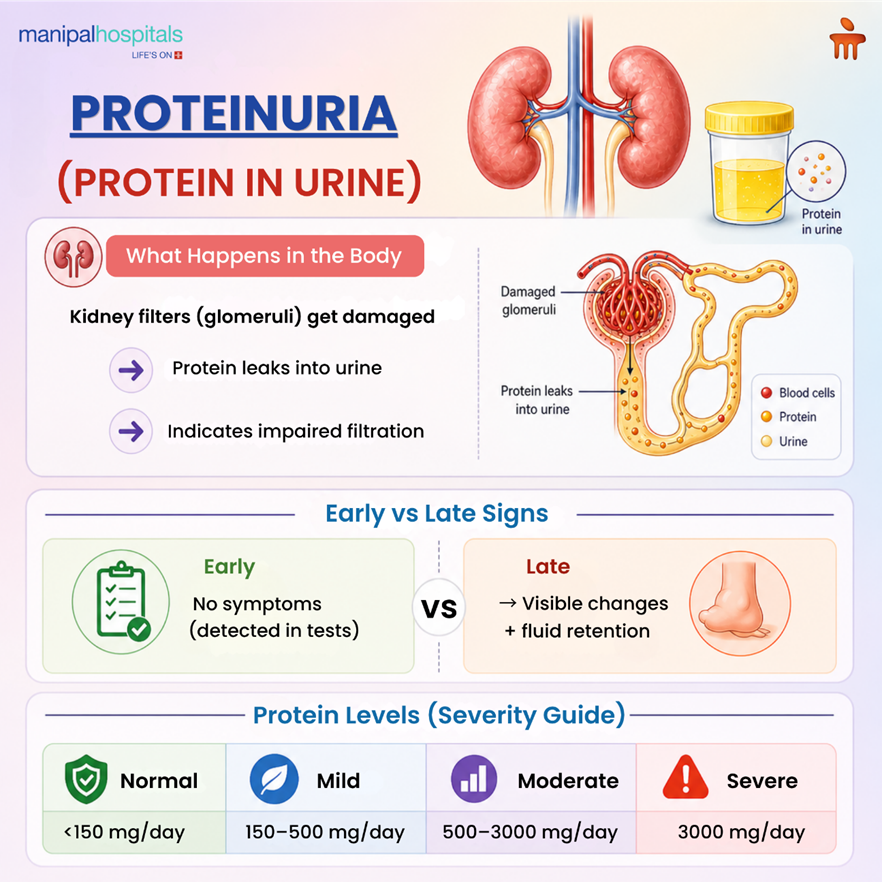
To know what proteinuria is, it is important to first understand how the kidneys work. Kidneys filter blood through specialised structures that retain essential proteins while removing waste products. These filters, called glomeruli, become damaged or inflamed, and protein leaks into the urine. That’s when proteinuria happens.
Your healthy kidneys filter about 180 litres of fluid a day, and almost no protein gets through. Persistent or increasing protein levels may indicate early kidney damage. Early diagnosis can help prevent kidney problems in the long run.
Common Causes of Proteinuria
There are many reasons why protein can appear in urine. Some are short-term, while others require medical attention.
-
Diabetes: Elevated blood glucose levels for a prolonged period can cause kidney filtration dysfunction
-
Hypertension: Increased blood pressure interferes with the kidneys’ filtration mechanism
-
Kidney disease: Kidney diseases will cause damage to the kidney walls, resulting in leakage of proteins
-
Infection: Short-term kidney inflammation
-
Dehydration: Dehydration can result in increased protein in urine temporarily
-
Pregnancy: This can potentially indicate preeclampsia
-
Exercises: Protein in the body increases temporarily
-
Glomerulonephritis: Kidney wall inflammation results in protein leakage
-
Autoimmune diseases: The immune system damages the kidney walls
-
Orthostatic proteinuria: Upright posture increases protein leakage
The cause should be identified so that the appropriate treatment for proteinuria can be chosen.
Proteinuria Symptoms: What Should You Watch For
Early stages of proteinuria often have no apparent signs. Some patients only discover this condition during routine health check-ups, without any symptoms at all.
That’s why routine screenings are important.
With the progression of the condition, symptoms of proteinuria may include the following:
-
Foamy or bubbly urine
-
Swelling of the feet, ankles or face
-
Tiredness or weakness
-
Loss of appetite
-
Fluid retention resulting in weight gain
These signs may seem minor, but they can indicate ongoing kidney stress. Many patients overlook these symptoms of proteinuria as trivial, but catching them early can make a big difference.
Proteinuria Levels: How Much is Too Much?
Measuring protein levels helps doctors understand the severity of the condition, monitor changes over time, and assess how well treatment is working. The table below explains what different proteinuria levels may indicate:
|
Level |
Protein in Urine (mg/day) |
What It Means |
|
Normal |
Less than 150 |
Healthy kidney function |
|
Mild |
150–500 |
Early or temporary issue |
|
Moderate |
500–3000 |
Risk of kidney damage |
|
Severe |
Above 3000 mg/day |
Severe kidney disease |
Proteinuria evaluation will be essential in tracking the progress of the condition as well as the effectiveness of its treatment.
How is Proteinuria Diagnosed?
To diagnose proteinuria, doctors use simple and effective tests:
-
Urine dipstick test: Rapid screening
-
24-hour urine test: Measures total protein
-
Urine albumin-to-creatinine ratio (ACR): More accurate assessment
-
Blood tests: Evaluate kidney function
-
Imaging (if needed): Helps identify structural abnormalities in the kidneys
The right treatment for proteinuria will be started early with a proper diagnosis.
Can Proteinuria Be Treated
Yes, and often with success. The key is identifying the underlying cause. When patients ask how long they can live with proteinuria, the answer depends on the cause and how early it is treated. Many people live normal, healthy lives with prompt treatment.
Proteinuria Treatment Options
Treatment aims to reduce protein loss and preserve kidney function.
-
Medications (ACE inhibitors/ARBs): Decreasing protein leakage
-
Blood sugar control: Essential for diabetic patients
-
Control blood pressure: Protects kidney filters
-
Dietary changes: Limit protein and salt intake
-
Lifestyle changes: Weight control, exercise
-
Treat underlying conditions: Infection or inflammation
Modern management of proteinuria is highly effective if begun early and followed consistently.
How Proteinuria Affects Long-Term Health?
This is one of the most common concerns people have. So, how long can you live with proteinuria?
The answer depends on the cause and how early it is managed. In some cases, proteinuria is temporary and settles on its own. In others, it may be linked to an ongoing condition that needs long-term care.
-
Transient proteinuria may go away once the underlying trigger is resolved
-
Chronic cases can often be managed for many years with proper treatment
-
Early diagnosis and treatment can help protect kidney function over time
With the right care, regular monitoring, and lifestyle changes, many people with proteinuria are able to live normal, active lives without major limitations.
When Should You See a Doctor?
These signs can be easy to brush off at first, but if they keep coming back, it’s better to get them checked. You should see a top urology specialist in Bhubaneswar if you notice:
-
Foamy urine that doesn’t settle
-
Swelling in your legs, face, or around the eyes
-
Feeling more tired than usual
-
Changes in your urination
-
You already have diabetes or high blood pressure, and something feels different
-
Reports showing protein in urine more than once
If something doesn’t feel right or isn’t improving, don’t ignore it. Early detection will assist in managing the problem using appropriate proteinuria treatment.
Preventing Proteinuria: Simple Steps That Help
Although not all cases can be prevented, these habits can help reduce risk:
-
Regulate blood sugar and blood pressure.
-
Keep yourself well-hydrated. Drink plenty of fluids.
-
Follow dietary advice carefully.
-
Keep a healthy weight. Indulge in regular physical activity in the form of walking, jogging, or even swimming.
-
Schedule routine health check-ups yearly or bi-yearly.
These steps are helpful in maintaining kidney health and reducing the need for intensive proteinuria treatment in Bhubaneswar.
Conclusion
Knowing ‘what is proteinuria’ is the first step towards taking care of your kidney health. It may seem like something to be wary of, but with early detection and the right treatment for proteinuria, you can be well on your way to avoiding this serious problem. The sooner you take care of it, the easier it will be for you to protect your kidneys in the future. If you need expert care, consult experienced urology specialists near Bhubaneswar for the diagnosis and treatment of proteinuria.
We provide our patients with accurate diagnosis and management of proteinuria levels, personalised medication regimens, diet and lifestyle recommendations, and long-term kidney care support through specialised urology services at Manipal Hospital Bhubaneswar.
FAQ's
Not always. Fever, stress, or exercise may cause temporary proteinuria, but persistent proteinuria may indicate kidney problems and should be evaluated by a medical professional.
Yes, mild or transient proteinuria can often resolve without treatment, especially if linked to dehydration, fever, or intense physical activity, but persistent proteinuria requires proper diagnosis and medical management.
At first, proteinuria may not affect your day-to-day life. But over time, if it’s not treated, it can lead to fatigue, swelling, and reduced kidney function.
Yes, children can get proteinuria, and it’s frequently due to infections or temporary issues. However, persistent protein in urine should always be investigated promptly by a specialist.
Proteinuria may be reversible in some cases, especially if due to temporary factors. Early treatment and lifestyle changes can significantly cut down on, or even get rid of, protein leakage
Share this article on:


.webp "ଅଙ୍ଗ ଦାନର ଗୁରୁତ୍ୱ: ମୃତ୍ୟୁ ପରେ କେଉଁ ଅଙ୍ଗ ଦାନ କରାଯାଇପାରିବ?")