7 Min Read
Have you ever noticed a mouth ulcer that just wouldn’t heal or a white patch inside your mouth that seemed unusual? Most of us tend to ignore these changes, assuming they are harmless. However, in some cases, these seemingly minor symptoms could be early signs of oral cancer.
Oral cancer is one of the most common cancers in India, largely due to tobacco use, smoking, alcohol consumption, and certain viral infections. The encouraging news is that oral cancer is highly treatable when diagnosed early. Recognising oral cancer symptoms and seeking timely medical attention can make a significant difference in treatment outcomes.
At Manipal Hospital Baner, our specialists emphasise the importance of awareness and regular oral health checks. Understanding the warning signs can help you take action before the disease progresses.
Synopsis
- What Is Oral Cancer?
- Why Early Detection Matters
- Common Oral Cancer Symptoms You Should Never Ignore
- Additional Oral Cancer Warning Signs
- Who Is at Risk of Developing Oral Cancer?
- How to Perform a Self-Examination
- Tips to Reduce Your Risk of Oral Cancer
- Expert Oral Cancer Care at Manipal Hospital Baner
What Is Oral Cancer?
Oral cancer refers to cancer that develops in any part of the mouth, including the lips, tongue, gums, inner cheeks, roof of the mouth, floor of the mouth, and throat. It usually begins when cells in these areas start growing abnormally and form a tumour.
According to health experts, thousands of new oral cancer cases are diagnosed every year in India. Unfortunately, many patients seek medical help only after the disease has reached an advanced stage. This is why recognising the early signs of oral cancer is so important.
Why Early Detection Matters
One of the biggest challenges with oral cancer is that its symptoms are often painless during the initial stages. Many people ignore these signs because they do not interfere with daily activities.
However, when detected early, the chances of successful treatment improve significantly. Early diagnosis often means less extensive treatment, faster recovery, and better quality of life.
Regular self-examinations and routine dental check-ups can help identify abnormalities before they become serious.
Common Oral Cancer Symptoms You Should Never Ignore
Knowing what to look for can help you identify potential problems early.
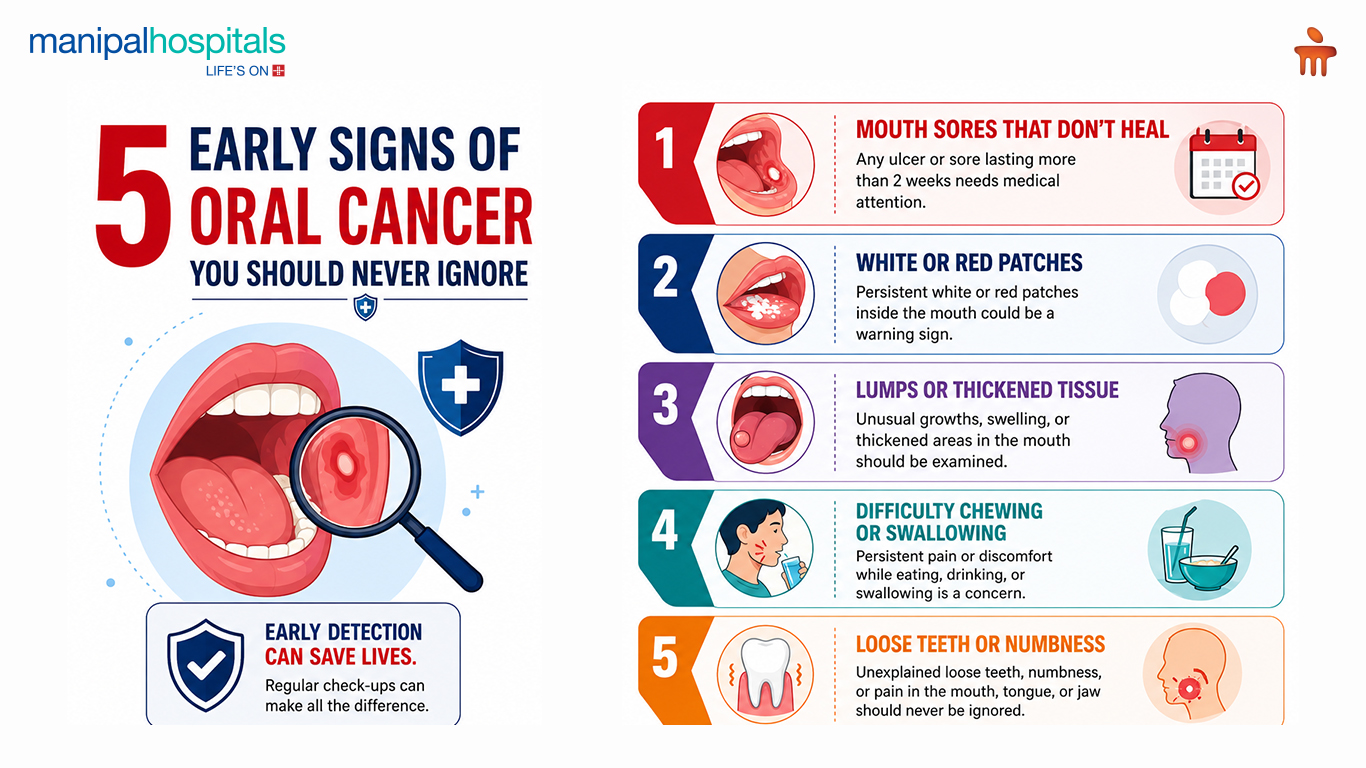
1. Persistent Mouth Sores
A mouth ulcer that does not heal within two weeks should never be ignored.
Most common mouth ulcers heal naturally within a few days. However, a sore that continues to grow, bleed, or remain unchanged could be a warning sign of oral cancer.
Cancer-related sores may appear:
-
On the tongue
-
Inside the cheeks
-
On the gums
-
Under the tongue
-
On the roof of the mouth
Unlike regular ulcers, these sores may not be painful in the beginning.
2. White Patches in the Mouth
One of the most recognised oral cancer symptoms is the presence of white patches in the mouth, medically known as leukoplakia.
These patches:
-
Cannot be scraped away
-
Often appear thick and rough
-
May develop on the tongue, gums, or inner cheeks
-
Can be linked to tobacco use and chronic irritation
Although not all white patches are cancerous, some may become pre-cancerous over time. This is why professional evaluation is essential.
3. Red Patches Inside the Mouth
Red patches, called erythroplakia, are another important warning sign.
These lesions often appear:
-
Bright red in colour
-
Smooth or velvety in texture
-
Persistent for several weeks
Research has shown that red patches are more likely than white patches to contain cancerous or pre-cancerous cells. Any unexplained red area should be examined promptly.
4. Lumps or Thickened Areas
A lump, swelling, or thickened area anywhere in the mouth should be investigated.
You may notice:
-
A hard lump on the tongue
-
Thickening of cheek tissue
-
Swelling of the gums
-
A persistent growth inside the mouth
Many patients first discover these abnormalities during routine oral hygiene practices such as brushing their teeth.
5. Difficulty Chewing or Swallowing
As oral cancer develops, it may interfere with everyday activities.
Some people experience:
-
Pain while chewing
-
Difficulty swallowing food
-
A sensation of food getting stuck in the throat
-
Discomfort while speaking
If these symptoms persist, medical assessment is recommended.
Additional Oral Cancer Warning Signs
Apart from visible changes, several other symptoms may indicate oral cancer.
-
Persistent Sore Throat - A sore throat that continues for weeks without improvement should not be ignored.
-
Numbness in the Mouth or Face- Loss of sensation or persistent numbness may indicate nerve involvement and requires immediate medical attention.
-
Loose Teeth - Teeth becoming loose without gum disease or trauma can sometimes be associated with oral cancer affecting surrounding tissues.
-
Voice Changes - Persistent hoarseness or changes in speech may occur when cancer affects nearby structures.
-
Unexplained Weight Loss- Sudden weight loss without changes in diet or exercise may indicate an underlying health condition, including cancer.
Who Is at Risk of Developing Oral Cancer?
Several factors increase the likelihood of developing oral cancer.
-
Tobacco Use- Smoking cigarettes, cigars, bidis, or chewing tobacco remains the leading risk factor.
-
Excessive Alcohol Consumption- Heavy alcohol use significantly increases oral cancer risk, particularly when combined with tobacco use.
-
Human Papillomavirus (HPV)- Certain strains of HPV have been linked to cancers of the mouth and throat.
-
Poor Oral Hygiene- Untreated dental issues and chronic irritation can contribute to long-term oral health problems.
-
Sun Exposure- Excessive sunlight exposure increases the risk of lip cancer.
-
Age - Although oral cancer can occur at any age, it is more commonly diagnosed in individuals over 40 years.
How to Perform a Self-Examination
A simple self-check once a month can help detect abnormalities early.
-
Step 1- Stand in front of a mirror in a well-lit room.
-
Step 2- Inspect your lips, tongue, gums, cheeks, and roof of the mouth.
-
Step 3- Look for:
- White patches
- Red patches
- Ulcers
- Swelling
- Unusual growths
-
Step 4- Feel inside your mouth for lumps or thickened areas.
-
Step 5- Check your neck for swollen lymph nodes.
If you notice any changes lasting longer than two weeks, consult a healthcare professional.
Tips to Reduce Your Risk of Oral Cancer
While not all cases can be prevented, adopting healthy habits can lower your risk.
Do's
-
Maintain good oral hygiene
-
Visit your dentist regularly
-
Eat plenty of fruits and vegetables
-
Protect your lips from excessive sun exposure
-
Seek medical advice for persistent oral symptoms
Don'ts
-
Avoid smoking and chewing tobacco
-
Limit alcohol consumption
-
Ignore unusual changes in your mouth
-
Delay medical consultation when symptoms persist
Expert Oral Cancer Care at Manipal Hospital Baner
At Manipal Hospital Baner, we believe that awareness and early diagnosis are the strongest tools in the fight against oral cancer. Our multidisciplinary team of oncologists, ENT specialists, oral surgeons, radiologists, and cancer care experts provides comprehensive screening, diagnosis, and treatment services under one roof.
Using advanced diagnostic technology and personalised treatment plans, we aim to detect oral cancer at the earliest possible stage and help patients achieve the best possible outcomes.
Oral cancer often begins with subtle signs such as a persistent mouth sore, white patches in the mouth, red lesions, or unexplained lumps. While these symptoms may appear minor, they should never be ignored.
Early recognition of oral cancer symptoms can lead to timely diagnosis, effective treatment, and improved survival rates. If you notice any unusual changes in your mouth that last longer than two weeks, seek professional medical advice without delay.
At Manipal Hospitals, our cancer care specialists in Baner, Pune, are committed to providing expert cancer care and supporting patients through every stage of diagnosis and treatment. Remember, early detection saves lives.
FAQ's
A persistent mouth ulcer or sore that does not heal within two weeks is one of the most common early symptoms of oral cancer.
No, not all white patches are cancerous. However, some may be pre-cancerous and should be evaluated by a healthcare professional.
Not always. Many early oral cancer symptoms are painless, which is why regular self-examinations are important.
Yes. Although tobacco use is a major risk factor, oral cancer can also occur due to HPV infection, genetics, and other causes.
If a mouth sore, lump, white patch, or red patch persists for more than two weeks, you should consult a specialist immediately.
Share this article on: