7 Min Read
In recent years, gut health has become one of the most talked-about topics in healthcare—and for good reason. Your gut does much more than digest food. It plays a major role in immunity, mental well-being, metabolism, skin health, and even energy levels. At Manipal Hospitals, specialists are increasingly seeing how improving gut health can positively influence overall wellness and quality of life.
The human digestive system contains trillions of microorganisms, collectively known as the gut microbiome. These microbes help break down food, absorb nutrients, protect against harmful bacteria, and support the immune system. When this balance is disturbed due to stress, poor diet, infections, lack of sleep, or antibiotic use, it can lead to digestive discomfort and other health problems.
This is where probiotics, prebiotics, and postbiotics come into the picture. Together, they help restore and maintain a healthy gut environment.
Synopsis
- Why Gut Health Matters More Than Ever
- Understanding the “Biotics” Trio
- Benefits of Probiotics
- Natural Sources of Probiotics
- Prebiotics: Food for Healthy Gut Bacteria
- Benefits of Prebiotics
- Foods Rich in Prebiotics
- Postbiotics: The New Frontier in Digestive Wellness
- What Exactly Are Postbiotics?
- Benefits of Postbiotics
- Simple Lifestyle Tips for Better Gut Health
- When Should You See a Gastroenterologist?
- A healthy gut is the foundation of a healthy life.
Why Gut Health Matters More Than Ever
Many people associate gut health only with bloating or constipation. However, research now shows that an unhealthy gut can affect multiple body systems. Frequent acidity, irregular bowel movements, fatigue, low immunity, food intolerance, and even mood changes can sometimes be linked to poor gut balance.
A healthy gut supports:
-
Better digestion
-
Stronger immunity
-
Improved nutrient absorption
-
Healthy metabolism
-
Balanced mood and mental health
-
Reduced inflammation
At Manipal Hospital, gastroenterologists in Baner, Pune often advise patients to focus on long-term gut care instead of only treating symptoms temporarily.
Understanding the “Biotics” Trio
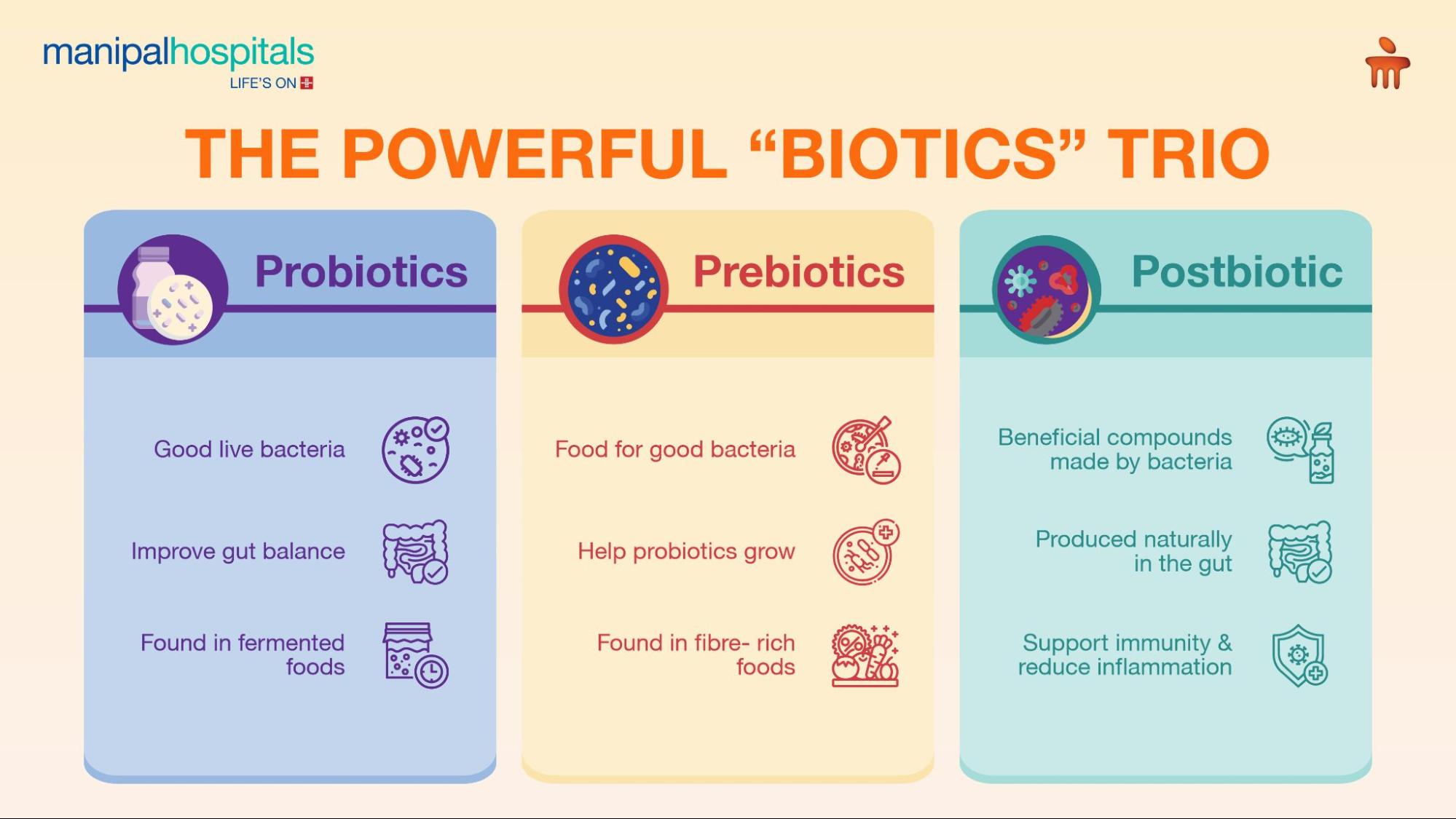
To truly improve digestive wellness, it is important to understand the difference between probiotics, prebiotics, and postbiotics.
Probiotics: The Good Bacteria Your Gut Needs
Probiotics are live beneficial microorganisms that support digestive balance. They are often referred to as “good bacteria” because they help maintain harmony in the gut microbiome.
These healthy bacteria naturally exist in the body, but their numbers can reduce because of:
-
Frequent antibiotic use
-
Stress
-
Poor eating habits
-
Excess sugar intake
-
Processed foods
-
Infections
Common Types of Probiotics
Some widely known probiotic strains include:
-
Lactobacillus
-
Bifidobacterium
-
Saccharomyces boulardii
Each strain supports different digestive and immune functions.
Benefits of Probiotics
1. Improve Digestion
Probiotics help maintain healthy digestion and reduce common issues such as:
-
Gas
-
Indigestion
-
Constipation
Many patients notice improved bowel regularity after consistently including probiotic-rich foods in their routine.
2. Strengthen Immunity
Nearly 70% of the immune system is linked to the gut. Healthy gut bacteria help the body fight harmful microbes and support stronger immune responses.
3. Help After Antibiotic Use
Antibiotics kill both harmful and beneficial bacteria. Taking digestive health probiotics after antibiotic treatment may help restore microbial balance faster.
4. Support Mental Well-being
There is a strong connection between the gut and brain, known as the gut-brain axis. Studies suggest that balanced gut bacteria may positively affect mood, stress levels, and mental clarity.
5. Improve Nutrient Absorption
Probiotics assist the body in absorbing important nutrients such as:
-
Calcium
-
Magnesium
-
Vitamin B12
-
Iron
Natural Sources of Probiotics
You can naturally improve gut bacteria through fermented foods such as:
-
Yogurt
-
Kefir
-
Buttermilk
-
Kimchi
-
Sauerkraut
-
Miso
-
Tempeh
At Manipal Hospitals, nutrition experts often recommend incorporating homemade fermented foods into daily meals for long-term gut wellness.
Prebiotics: Food for Healthy Gut Bacteria
While probiotics are the beneficial bacteria themselves, prebiotics are the nutrients that feed them.
Prebiotics are non-digestible fibres that travel through the digestive tract and nourish healthy bacteria in the colon. Without prebiotics, probiotics cannot function effectively.
Think of probiotics as seeds and prebiotics as the fertiliser that helps them grow.
Benefits of Prebiotics
1. Promote Growth of Good Bacteria
Prebiotics stimulate the growth of healthy microbes and improve gut diversity.
2. Improve Digestive Regularity
As a form of dietary fibre, prebiotics support smoother bowel movements and help prevent constipation.
3. Support Blood Sugar Balance
Certain prebiotic fibres may help regulate blood sugar by slowing digestion and improving insulin response.
4. Enhance Mineral Absorption
Prebiotics can improve calcium and magnesium absorption, supporting bone health.
Foods Rich in Prebiotics
Many everyday foods naturally contain prebiotics, including:
-
Garlic
-
Onion
-
Leeks
-
Bananas
-
Apples
-
Oats
-
Barley
-
Whole grains
-
Lentils
-
Chickpeas
-
Asparagus
Adding these foods regularly to meals can significantly improve gut health over time.
Postbiotics: The New Frontier in Digestive Wellness
Postbiotics are the beneficial compounds produced when probiotics break down prebiotics in the gut.
Although they are relatively new in medical discussions, postbiotics are becoming increasingly important because they directly contribute to many health benefits associated with a healthy microbiome.
What Exactly Are Postbiotics?
Postbiotics include:
-
Short-chain fatty acids (SCFAs)
-
Enzymes
-
Organic acids
-
Peptides
-
Bioactive compounds
One important postbiotic called butyrate helps nourish the cells lining the intestine and supports gut barrier integrity.
Benefits of Postbiotics
1. Reduce Inflammation
Postbiotics possess anti-inflammatory properties that may help protect against digestive inflammation.
2. Strengthen the Gut Barrier
A strong intestinal lining prevents harmful substances from leaking into the bloodstream.
3. Support Immunity
Postbiotics interact with immune cells and help regulate immune function naturally.
4. Improve Metabolic Health
Emerging research suggests postbiotics may support healthy blood sugar control and metabolism.
Simple Lifestyle Tips for Better Gut Health
Improving gut health does not always require complicated supplements. Daily lifestyle habits make a huge difference.
Dos for a Healthy Gut
Eat More Fibre
Consume plenty of fruits, vegetables, legumes, and whole grains.
Include Fermented Foods
Add curd, buttermilk, or probiotic-rich foods to your daily diet.
Drink Enough Water
Hydration supports digestion and bowel regularity.
Exercise Regularly
Physical activity improves gut microbiome diversity and digestion.
Sleep Well
Poor sleep negatively affects gut bacteria and overall health.
Manage Stress
Stress can directly impact digestion and worsen symptoms like acidity and bloating.
Yoga, meditation, deep breathing, and walking can help.
Don’ts for Gut Health
Avoid Excessively Processed Foods
Processed foods often contain preservatives, unhealthy fats, and refined sugar that disturb gut balance.
Limit Sugary Drinks
Excess sugar may encourage harmful bacteria growth.
Do Not Overuse Antibiotics
Take antibiotics only when medically necessary and always under medical guidance.
Avoid crash diets.
Extreme diets may deprive healthy gut bacteria of essential nutrients.
Ignore Persistent Digestive Symptoms
Chronic bloating, abdominal pain, constipation, diarrhea, or unexplained weight loss should never be ignored.
At Manipal Hospitals, gastroenterologists provide advanced diagnosis and personalised digestive care for patients experiencing ongoing gut-related symptoms.
When Should You See a Gastroenterologist?
You should consult a digestive health expert if you experience:
-
Frequent acidity
-
Persistent bloating
-
Irregular bowel habits
-
Chronic constipation
-
Recurrent diarrhoea
-
Stomach pain
-
Food intolerance
-
Sudden weight loss
-
Blood in stools
Early diagnosis can help identify underlying digestive disorders and prevent complications.
A healthy gut is the foundation of a healthy life.
Your gut health influences far more than digestion. From immunity and energy levels to mental well-being and metabolism, a balanced microbiome supports overall wellness in countless ways.
By including probiotics, prebiotics, and postbiotics in your lifestyle, you can nourish your digestive system naturally and improve long-term health outcomes.
Small daily changes such as eating more fibre, reducing processed foods, staying active, and managing stress can create a significant positive impact over time.
At Manipal Hospitals, experienced gastroenterologists and nutrition specialists are committed to helping patients achieve better digestive wellness through personalised guidance and advanced care.
Disclaimer: This article is intended for educational purposes only and should not replace professional medical advice. Please consult a qualified healthcare expert for personalised guidance regarding your digestive health.
FAQ's
Yes. Since a large portion of the immune system is connected to the gut, probiotics may help strengthen immune function and support the body’s natural defence system.
Most probiotic supplements are safe for healthy individuals. However, people with severe illnesses or weakened immunity should consult a doctor before taking them.
Some people notice improvements within a few weeks, while long-term gut healing may take several months, depending on diet and lifestyle habits.
Yogurt, kefir, bananas, oats, garlic, onions, lentils, fruits, vegetables, and fermented foods naturally support gut health.
Probiotics are beneficial live bacteria, while prebiotics are fibres that feed and nourish these healthy bacteria.
Yes. Chronic stress can disturb gut bacteria balance and worsen digestive symptoms such as acidity, bloating, and constipation.
Share this article on: