6 Min Read
Hearing the words “kidney cancer” can instantly make anyone anxious. Questions about treatment, surgery, recovery, and future health begin to flood the mind. However, with modern medical advancements and early diagnosis, kidney cancer treatment today has become far more successful and patient-friendly than ever before. At Manipal Hospitals Baner, experienced urologists and cancer specialists provide advanced treatment options designed to remove cancer effectively while preserving overall kidney health whenever possible.
One of the most important decisions during kidney cancer treatment is choosing between a partial nephrectomy and a radical nephrectomy. While both procedures aim to remove cancer, they differ in how much of the kidney is preserved. Understanding these surgical approaches can help patients and families feel more confident while making treatment decisions.
Synopsis
- Understanding Kidney Cancer
- What is Partial Nephrectomy?
- Benefits of Partial Nephrectomy
- Who is Suitable for Partial Nephrectomy?
- What is Radical Nephrectomy?
- Benefits of Radical Nephrectomy
- Can You Live Normally with One Kidney?
- How Doctors Decide Between Partial and Radical Nephrectomy
- Advanced Surgical Techniques for Kidney Cancer
- Recovery After Kidney Cancer Surgery
- Why Choose Manipal Hospitals Baner for Kidney Cancer Treatment?
- Conclusion
Understanding Kidney Cancer
Kidney cancer develops when abnormal cells grow uncontrollably inside the kidney. In many cases, the condition may not show symptoms during the early stages. Some people only discover it accidentally during scans for unrelated health concerns.
Common symptoms may include:
-
Blood in the urine
-
Persistent back or side pain
-
Fatigue
-
Unexplained weight loss
-
Fever without infection
-
Swelling in the legs or ankles
The good news is that early-stage kidney cancer often responds very well to surgery. In fact, localised kidney cancer has survival rates above 90% when treated at the right time.
At Manipal Hospitals Baner, specialists use advanced imaging and diagnostic technology to identify tumours accurately and create personalised treatment plans for every patient.
What is Partial Nephrectomy?
A partial nephrectomy is also called kidney-sparing surgery. In this procedure, surgeons remove only the cancerous tumour along with a small margin of healthy tissue while preserving the remaining kidney.
This surgery has become increasingly popular because it helps maintain kidney function without compromising cancer control.
Benefits of Partial Nephrectomy
Preserves Healthy Kidney Tissue
One of the biggest advantages of partial nephrectomy is preserving kidney function. Keeping healthy kidney tissue reduces the chances of chronic kidney disease later in life.
Effective Cancer Treatment
For smaller and localised tumours, partial nephrectomy offers cancer control rates similar to complete kidney removal.
Better Long-Term Health
Healthy kidneys support:
-
Blood pressure control
-
Heart health
-
Proper waste filtration
-
Overall energy levels
Preserving kidney tissue can improve long-term quality of life.
Faster Recovery
Many partial nephrectomies are performed using minimally invasive techniques such as laparoscopic or robotic-assisted surgery. Patients usually experience:
-
Smaller scars
-
Less pain
-
Shorter hospital stay
-
Faster recovery
Who is Suitable for Partial Nephrectomy?
Doctors usually recommend a partial nephrectomy for:
-
Small kidney tumours
-
Patients with one functioning kidney
-
Patients with diabetes or hypertension
-
Individuals with reduced kidney function
-
Tumours located away from major blood vessels
At Manipal Hospitals Baner, expert surgeons carefully evaluate whether kidney-sparing surgery is the safest and most effective option.
What is Radical Nephrectomy?
A radical nephrectomy involves removing the entire kidney along with surrounding tissues if needed. This procedure may also include the removal of nearby lymph nodes or adrenal glands, depending on the tumour spread.
Although the idea of losing a kidney sounds frightening, most people continue to live healthy lives with one functioning kidney.
Benefits of Radical Nephrectomy
Complete Tumour Removal
For large or aggressive tumours, removing the entire kidney may offer the best chance of eliminating cancer.
Lower Risk of Recurrence
In advanced cases, radical nephrectomy reduces the possibility of cancer returning locally.
Safer for Complex Tumours
Some tumours grow deep inside the kidney or close to major blood vessels. In such situations, radical nephrectomy may be technically safer than partial surgery.
Can You Live Normally with One Kidney?
Yes, absolutely. Many people live long and healthy lives with a single kidney. The remaining kidney usually adapts and performs enough filtration for the body.
However, maintaining a healthy lifestyle becomes especially important after surgery.
How Doctors Decide Between Partial and Radical Nephrectomy
The decision is never based on a single factor. Specialists at Manipal Hospitals Baner evaluate every patient carefully before recommending surgery.
Tumour Size
Smaller tumours are usually suitable for partial nephrectomy, while larger tumours may require radical nephrectomy.
Tumour Location
Tumours located near the outer edge of the kidney are easier to remove partially. Deep or centrally located tumours may require complete kidney removal.
Kidney Function
Patients with weak kidney function are often prioritised for kidney-sparing surgery.
Overall Health
Conditions like diabetes, hypertension, obesity, and heart disease also influence surgical planning.
Surgeon’s Expertise
Advanced robotic-assisted surgery requires specialised skills. Experienced surgeons can often preserve more kidney tissue safely.
Advanced Surgical Techniques for Kidney Cancer
Modern kidney cancer surgery has improved tremendously over the years.
Open Surgery
Traditional surgery with a larger incision. Usually used for highly complex tumours.
Laparoscopic Surgery
A minimally invasive approach using tiny instruments and cameras through small cuts.
Benefits include:
-
Less pain
-
Reduced blood loss
-
Faster healing
-
Shorter hospital stay
-
Robotic-Assisted Surgery
-
Robotic surgery offers:
-
Better precision
-
Enhanced visibility
-
Greater surgical control
-
Better kidney preservation
At Manipal Hospitals Baner, robotic-assisted kidney surgeries are performed using advanced technology to ensure accurate tumour removal and faster patient recovery.
Recovery After Kidney Cancer Surgery
Recovery varies depending on the surgical method and the patient’s health.
Most patients recover faster after minimally invasive procedures.
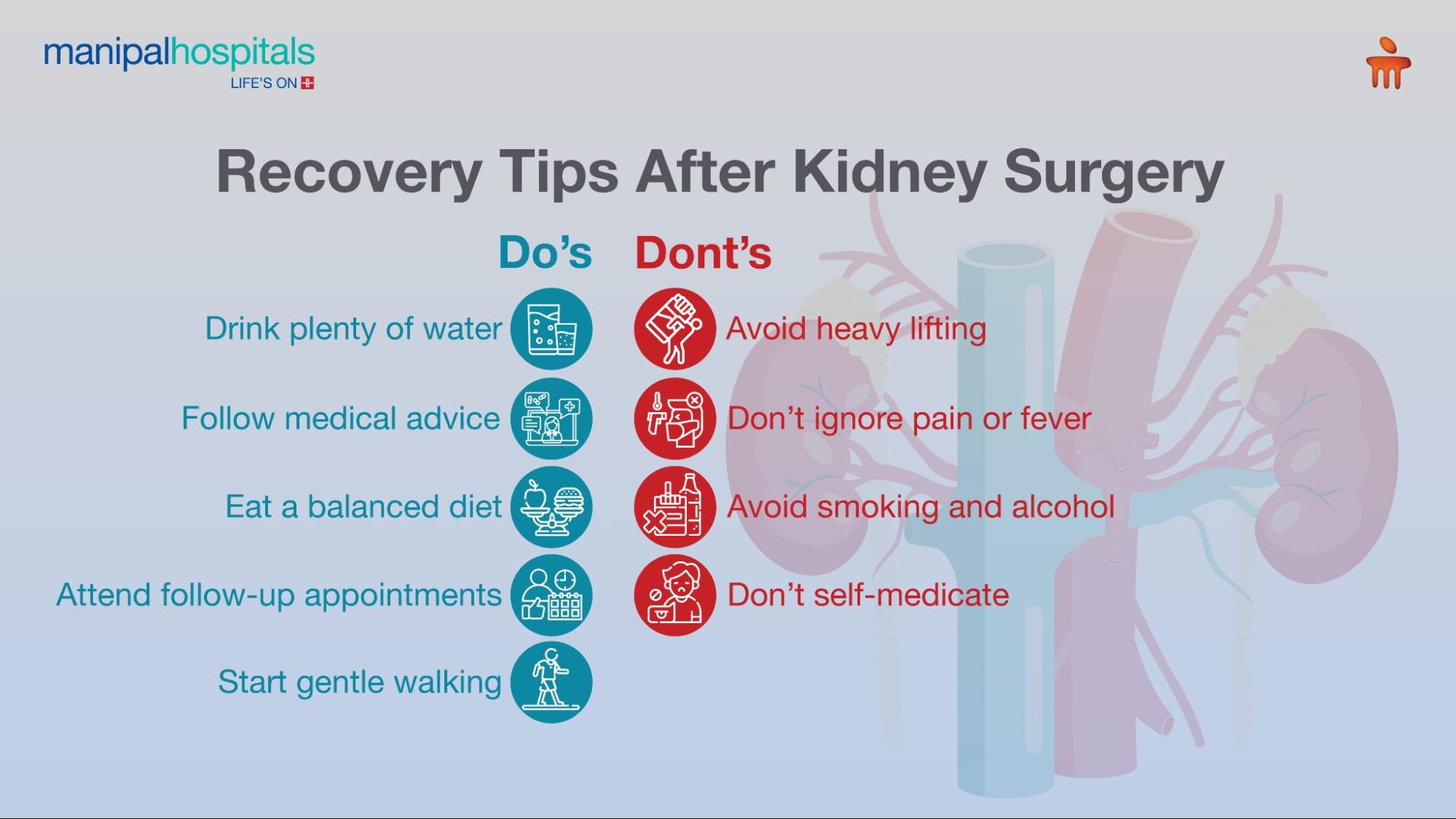
Important Do’s After Surgery
-
Follow all medical advice carefully
-
Drink enough water
-
Eat nutritious meals
-
Start gentle walking early
-
Attend regular follow-up appointments
-
Monitor blood pressure and kidney health
Important Don’ts After Surgery
-
Avoid heavy lifting
-
Don’t ignore unusual symptoms
-
Avoid smoking and alcohol
-
Do not take medicines without medical advice
-
Avoid excessive physical strain during recovery
Why Choose Manipal Hospitals Baner for Kidney Cancer Treatment?
Patients trust Manipal Hospitals Baner because of:
-
Experienced urology and oncology specialists
-
Advanced robotic surgery facilities
-
Personalised treatment planning
-
Multidisciplinary cancer care
-
Compassionate patient support
-
Modern diagnostic and surgical infrastructure
The goal is always to provide the safest and most effective treatment while preserving quality of life.
Conclusion
Choosing between partial nephrectomy and radical nephrectomy can feel overwhelming, but modern surgical advancements have made kidney cancer treatment more successful than ever before. The right approach depends on the tumour, the patient's kidney function, and the patient's overall health.
At Manipal Hospitals Baner, patients receive expert guidance, advanced surgical care, and compassionate support throughout every stage of treatment. With timely diagnosis and the right treatment plan, many kidney cancer patients go on to live healthy and fulfilling lives.
Disclaimer: This article is for informational purposes only and should not replace medical advice. Please consult a qualified healthcare professional for personalised diagnosis and treatment.
FAQ's
Yes, especially when diagnosed early. Surgery offers excellent cure rates for localised kidney cancer.
It depends on the tumour size, location, and kidney health. Doctors recommend the safest and most effective option individually.
Most patients recover within a few weeks after minimally invasive surgery, while open surgery may take longer.
Recurrence is possible, which is why regular follow-up scans and check-ups are important.
Yes, robotic-assisted surgery is considered safe and highly precise when performed by experienced specialists.
Most patients with one healthy kidney do not require dialysis after radical nephrectomy.
Share this article on: