6 Min Read
Life often gets so busy that we tend to ignore small changes in our health. Feeling tired after a long day, getting breathless while climbing stairs, or noticing swelling in the feet may seem harmless at first. Many people assume these are simply signs of stress, ageing, or exhaustion. However, these symptoms can sometimes be early warning signs of heart failure, a condition that needs timely medical attention.
At Manipal Hospitals Baner, specialists believe that recognising symptoms early can help patients receive proper treatment before complications become serious. Understanding these signs can make a major difference in protecting your heart health and improving your quality of life.
Heart failure does not mean the heart has completely stopped working. It means the heart is unable to pump blood efficiently enough to meet the body’s needs. As a result, fluid may build up in different parts of the body, leading to symptoms such as breathlessness, swelling, and extreme fatigue. The condition can develop slowly, making it easy to overlook during the early stages.
Synopsis
Understanding Heart Failure
The heart pumps oxygen-rich blood throughout the body. When the heart muscle becomes weak or stiff, it struggles to perform this function effectively. This condition is known as heart failure.
Several health conditions can contribute to heart failure, including:
-
High blood pressure
-
Previous heart attack
-
Diabetes
-
Obesity
-
Valve disorders
-
Long-term smoking habits
When the heart cannot pump properly, blood flow slows down and fluid starts accumulating in the lungs, legs, ankles, and abdomen. This leads to the symptoms people commonly experience.
The good news is that early diagnosis and treatment can help control the condition effectively. Many patients who seek treatment early are able to continue leading active and fulfilling lives.
Breathlessness: One of the Earliest Warning Signs
Breathlessness, also known as 'dyspnoea', is among the most common symptoms of heart failure. This happens because fluid builds up inside the lungs, making breathing more difficult.
You may first notice shortness of breath during physical activities such as the following:
-
Climbing stairs
-
Walking quickly
-
Carrying groceries
-
Exercising
-
Performing household chores
As the condition progresses, breathing difficulty may occur even while resting.
Some patients also experience:
Breathlessness While Lying Down
People with heart failure often feel uncomfortable lying flat because fluid shifts towards the lungs. Many begin using extra pillows while sleeping to breathe comfortably.
Waking Up Suddenly at Night
Some individuals wake up gasping for air in the middle of the night and need to sit upright to breathe better.
Persistent breathlessness should never be ignored, especially if it gradually worsens over time.
Swelling in the Feet, Legs, and Abdomen
Another common symptom is swelling, medically known as 'oedema'. Since the heart cannot pump blood effectively, fluid leaks into nearby tissues.
Swelling is commonly seen in:
-
Feet
-
Ankles
-
Legs
-
Abdomen
You may notice:
-
Tight shoes or socks
-
Puffy ankles by evening
-
Marks left behind from footwear
-
Sudden weight gain
In some cases, pressing a finger onto the swollen area leaves a dent for a few seconds, called 'pitting oedema'.
Many people ignore swelling, assuming it is due to standing for long hours or tiredness. However, persistent swelling combined with breathlessness and fatigue may indicate heart failure.
At Manipal Hospitals, cardiologists in Baner encourage patients to seek evaluation early when these symptoms appear.
Constant Tiredness and Weakness
Feeling tired all the time is another important sign that should not be overlooked.
When the heart cannot circulate enough oxygen-rich blood, the body’s muscles and organs receive less oxygen and nutrients. As a result, even simple tasks may feel exhausting.
You may experience:
-
Low energy throughout the day
-
Difficulty completing daily work
-
Reduced stamina
-
Weakness during walking
-
Feeling drained despite adequate sleep
This kind of fatigue can affect work performance, social life, and emotional well-being.
Many patients describe this tiredness as different from normal exhaustion because it persists even after resting.
Other Symptoms You Should Watch For
Apart from breathlessness, swelling, and fatigue, heart failure may also cause:
Persistent Cough or Wheezing
Fluid accumulation in the lungs may lead to coughing, especially at night.
Rapid or Irregular Heartbeat
The heart may beat faster in an attempt to compensate for reduced pumping ability.
Frequent Urination at Night
Fluid retained during the day may return to circulation at night, increasing urine production.
Loss of Appetite
Fluid around the digestive organs may cause nausea or fullness.
Difficulty Concentrating
Reduced blood supply to the brain can affect focus and memory.
If multiple symptoms appear together, medical consultation becomes extremely important.
Why Early Diagnosis Matters
Many people delay seeking medical help because symptoms appear gradually. Unfortunately, untreated heart failure can worsen over time and lead to severe complications.
Early diagnosis offers several benefits:
-
Better symptom control
-
Improved quality of life
-
Reduced hospital admissions
-
Slower disease progression
-
Better heart function management
With modern cardiac care, medications, lifestyle changes, and regular monitoring, many patients can manage heart failure successfully.
Simple Lifestyle Tips for Better Heart Health
Do’s
Follow a Low-Salt Diet
Excess salt increases fluid retention and places additional strain on the heart.
Stay Physically Active
Light exercise, walking, and doctor-approved physical activity can improve circulation.
Monitor Weight Daily
Sudden weight gain may indicate fluid buildup.
Take Medicines Properly
Always follow your doctor’s treatment plan carefully.
Attend Regular Check-Ups
Routine monitoring helps doctors adjust treatment when needed.
Don’ts
Do Not Ignore Symptoms
Persistent breathlessness or swelling should always be evaluated.
Avoid Smoking and Excess Alcohol
These habits can significantly worsen heart health.
Do Not Self-Medicate
Some over-the-counter medicines may interfere with heart medications.
Avoid Excessive Physical Strain
Overexertion can worsen symptoms.
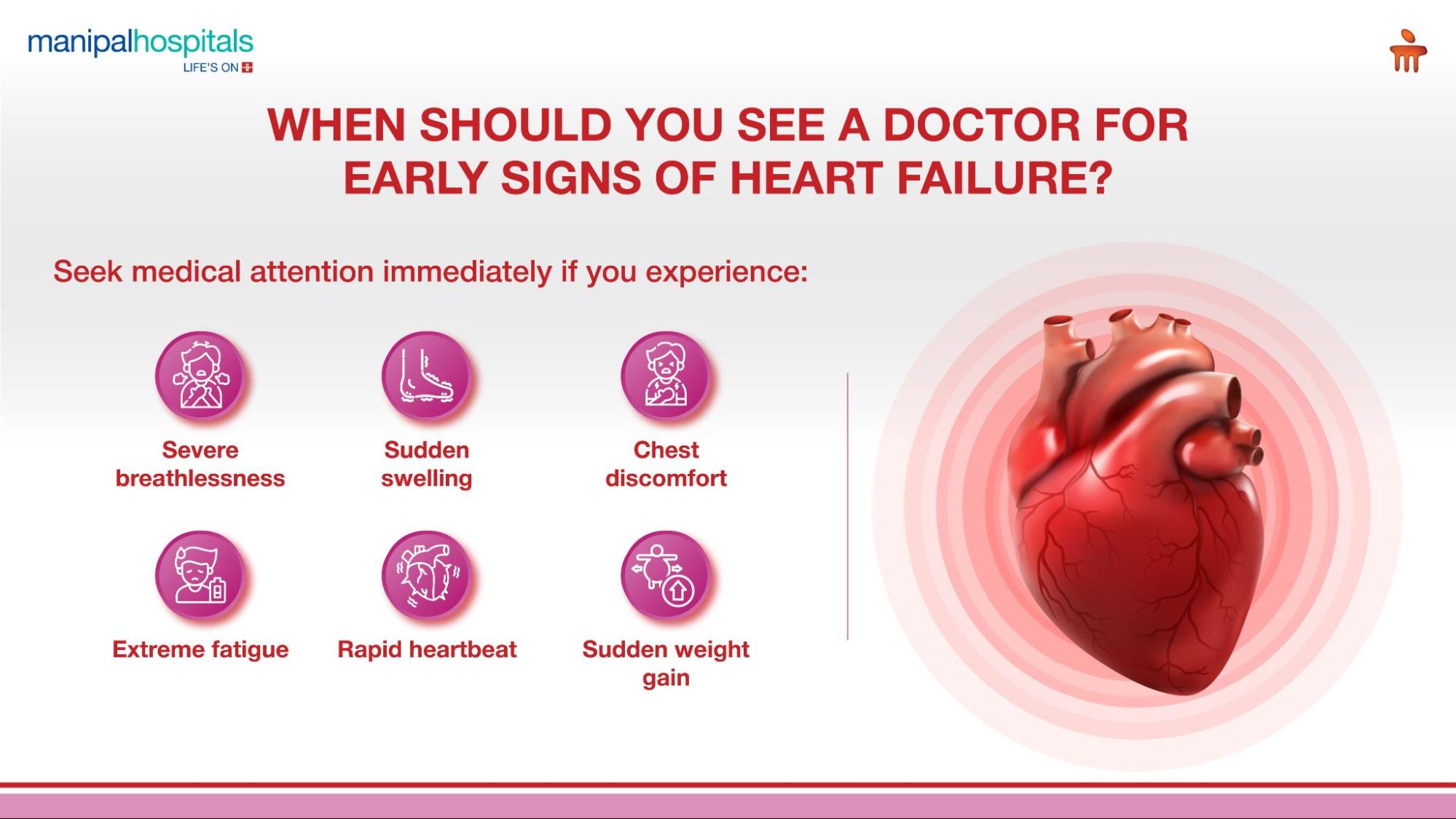
You should seek immediate medical attention if you experience:
-
Severe shortness of breath
-
Sudden swelling
-
Chest discomfort
-
Rapid heartbeat
-
Extreme tiredness
-
Sudden weight gain
At Manipal Hospitals Baner, experienced cardiologists provide advanced diagnostic and treatment options for patients with heart-related conditions. Early care can help prevent complications and improve overall well-being.
FAQ's
No. A heart attack occurs suddenly due to blocked blood flow, while heart failure is a long-term condition where the heart gradually weakens.
Yes. Although heart failure is usually chronic, proper treatment and lifestyle changes can help manage symptoms effectively.
Fluid accumulates in body tissues because the heart cannot pump blood efficiently.
Not always, but persistent fatigue combined with breathlessness or swelling should be medically evaluated.
Doctors may recommend:
-
ECG
-
Echocardiogram
-
Blood tests
-
Chest X-ray
-
Stress testing
Yes. Healthy eating, exercise, controlling blood pressure, and avoiding smoking greatly reduce the risk.
Share this article on: